
Rupiah Exchange Rate Hit by The Fed's Decision
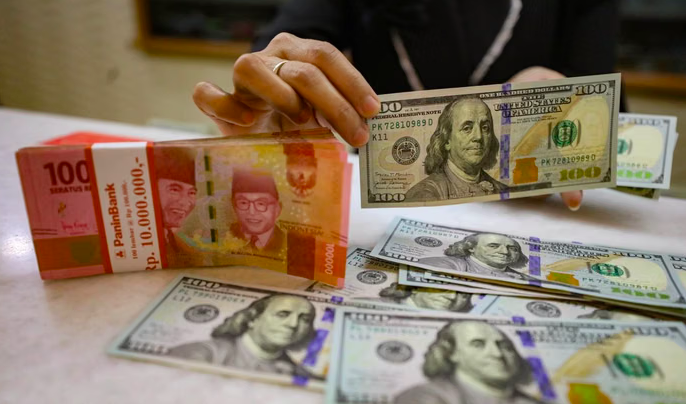
The rupiah exchange rate against the US dollar weakened by 57 points or 0.32% to Rp17,753 per US dollar at the close of trading on Thursday (17/9), compared to the previous close of Rp17,696 per US dollar.
Currency analyst and Director of Laba Forexindo Berjangka, Ibrahim Assuabi, assessed that the rupiah’s weakness was influenced by the Federal Reserve’s decision to raise the Federal Funds Rate (FFR).
“The Federal Open Market Committee (FOMC) unanimously decided to raise the benchmark federal funds rate to a range of 3.75% to 4.0% on Wednesday (16/9). This marks the first interest rate hike by the US central bank since July 2023,” he stated in a written statement in Jakarta on Thursday.
In a press conference, Fed Chair Kevin Warsh emphasised his concerns regarding inflation, noting that too many categories of products and services are showing annual price increases above 3% over 6 and 12-month periods. Consequently, Warsh hinted at further rate hikes in the coming months.
“However, US President Donald Trump on Wednesday (16/9) demanded that the US central bank cut interest rates to 1% or lower, just hours after The Fed announced its first rate hike since 2023. This indicates ongoing friction between the White House and the independent Fed,” Ibrahim added.
The Jakarta Interbank Spot Dollar Rate (JISDOR) from Bank Indonesia also moved weaker to the level of Rp17,753 per US dollar from the previous Rp17,712 per US dollar.
Earlier in the week, the rupiah also closed slightly weaker at Rp17,763 per US dollar on Wednesday, triggered by rising US Treasury yields and the contraction in the August Manufacturing PMI. Analysts also noted that the weakening was influenced by escalating tensions between the US and Iran.
Regarding the broader economic landscape, Bank Indonesia official Destry explained that the central bank fundamentally supports the government in achieving higher economic growth. Despite a widening current account deficit, the overall performance of Indonesia’s Balance of Payments (BOP) remains stable.