
Rupiah Exchange Rate and the High Price of Trust
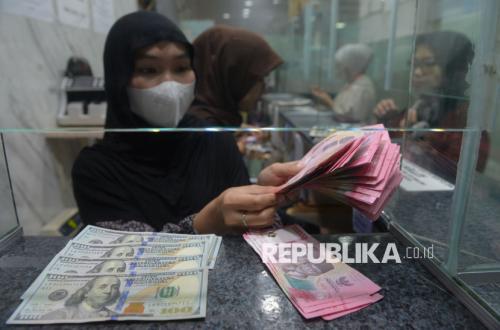
Currency is ultimately not just an economic matter. It is a matter of trust. When the public believes the economy will grow, they dare to invest, start businesses, buy homes, and plan for the future. When market players are confident that the government has a clear policy direction and public institutions work credibly, capital will flow and economic activity will move with optimism. Conversely, when trust begins to weaken, caution turns into anxiety, optimism turns into speculation, and the market moves in the shadow of uncertainty. Kenneth Arrow, a Nobel laureate in Economics, explained that trust is one of the foundations that allows economic and social systems to work effectively. In an increasingly complex modern world, trust is not merely a moral value, but a highly decisive economic asset. Perhaps this is what we should reflect upon as the rupiah breaches the psychological level of Rp18,000 per US dollar. That figure is not just a statistical record. It is a signal conveying a deeper message about how the market views Indonesia’s current economic conditions and how it assesses Indonesia’s future. Of course, the rupiah’s depreciation does not occur in a vacuum. Global uncertainty still overshadows the world economy. Protracted geopolitical conflicts are driving up energy prices and disrupting international supply chains. At the same time, the relatively tight monetary policy of the United States keeps the US dollar as the primary destination for global investors. International capital flows are thus moving towards assets perceived as safer, putting pressure on various developing country currencies, including Indonesia. However, the question is whether the rupiah’s depreciation is solely the result of external factors. I think it is not that simple. In recent months, the market has not only been talking about the Federal Reserve’s interest rates or world oil prices. Investors have also begun to scrutinise the direction of national economic policy, the quality of public institutional governance, and the government’s ability to maintain stability amidst global uncertainty. In other words, what is being assessed is not just Indonesia’s current economic condition, but also confidence in Indonesia’s future. This is where we need to understand that the exchange rate is actually more than just a number moving on a trading screen. The exchange rate is a reflection of trust. The market does not punish a country simply for facing problems. No country is completely free of issues. What concerns the market is whether the country has the capacity, credibility, and consistency to solve the problems it faces. This view aligns with the rational expectations theory developed by Robert Lucas (1972). According to Lucas, economic actors do not make decisions based solely on current conditions. They form expectations about the future and act based on those expectations. Investors do not merely buy assets. They buy hope for the future. Therefore, exchange rate depreciation is often a psychological phenomenon before it becomes an economic one. When confidence in the future begins to weaken, the market reacts first, even before economic indicators show significant changes. This perspective explains why two countries with relatively similar economic indicators can receive different market responses. The difference often lies not in the macroeconomic figures, but in the level of trust held by their respective public institutions. In modern economics, trust is no longer a complementary factor. It has become a strategic asset. Michael Spence (1973), through signalling theory, explained that when information is not perfectly available, the public and the market will use various signals to assess the quality of an institution. In the context of a country, these signals can be economic policy, the quality of government governance, the independence of state institutions, or the consistency of public communication. The market does not have access to all available information. Therefore, they read signals. When the signals received indicate certainty of direction and policy consistency, the level of trust will increase. Conversely, when the signals that emerge are ambiguous or even contradictory, uncertainty will grow. For years, communication was often viewed as merely a means of conveying information to the public. This view is no longer adequate. In contemporary economic practice, communication has evolved into a policy instrument in itself. Recent studies show that central bank communication plays an important role in shaping expectations and reducing market uncertainty. The effectiveness of monetary policy is determined not only by the decisions taken, but also by the ability to explain those decisions clearly, consistently, and credibly to the public. This means that a good policy will not necessarily produce a good impact if it fails to be communicated convincingly. Conversely, credible communication can strengthen policy effectiveness even when economic conditions are under pressure. Therefore, Indonesia’s economic challenge today is not solely about maintaining exchange rate stability or controlling inflation. An equally important challenge is maintaining credibility. Douglass North (1990) reminded us that institutions are the main foundation for economic activity. Credible institutions create certainty, lower transaction costs, and increase trust. Conversely, institutions that lose credibility will raise transaction costs and weaken the foundations of the economy.