
Rupiah Ends in the Red, US Dollar Climbs to Rp17,930
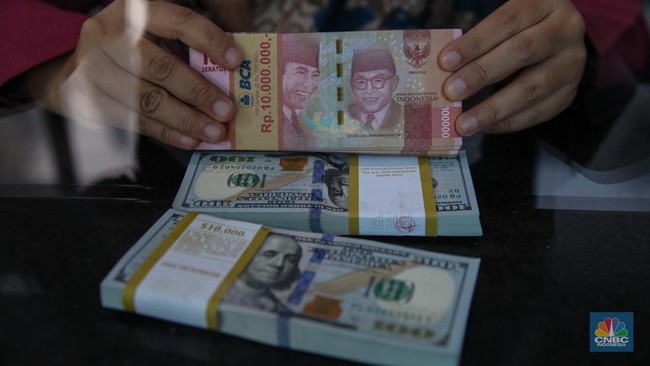
The rupiah closed weaker against the US dollar on Wednesday (1/7/2026), ending the day down 0.31% at Rp17,930/US.Thedepreciationcameamidthereleaseofseveraldomesticeconomicdata, includinginflationandIndonesia′stradebalance.Thecurrencyopenedsharplylower, falling0.42, and touched an intraday low of Rp17,980/US$ before paring some losses. Meanwhile, the US dollar index (DXY) strengthened 0.16% to 101.351 as of 15:00 WIB. The rupiah’s decline was driven by negative domestic data. The Central Statistics Agency (BPS) announced that Indonesia’s trade balance recorded a deficit of US$1.61 billion in May 2026, with exports at US$23.20 billion and imports at US$24.81 billion. This marks the first trade deficit in six years, breaking a 72-month surplus streak since April 2020. The deficit was the deepest since April 2019, when it reached US$2.33 billion. BPS Deputy for Distribution and Services Statistics Ateng Hartono explained that the deficit was primarily caused by oil and gas commodities, which recorded a shortfall of US$3.76 billion, mainly from oil products and crude oil. Additionally, BPS reported that Indonesia’s monthly inflation reached 0.44% in June 2026, with an annual rate of 3.34%, higher than the 0.28% recorded in May. The transportation sector experienced the highest inflation at 2.29%, contributing 0.28% to the overall figure. The inflation rate exceeded market expectations, which had forecast a monthly increase of 0.30% and an annual rate of 3.2%. Externally, the US dollar remained firm as market expectations grew for a potential Federal Reserve interest rate hike, supported by solid US job openings data. The US Bureau of Labor Statistics reported that job openings rose by 9,000 to 7.594 million in May, surpassing market expectations of 7.296 million. Following the Fed’s decision to hold rates at 3.50%-3.75% in June, market participants now see a 33.70% chance of a 25-basis-point rate hike at the July meeting.