
Rupiah Depreciation Impacts Prices of Imported Dairy Cattle
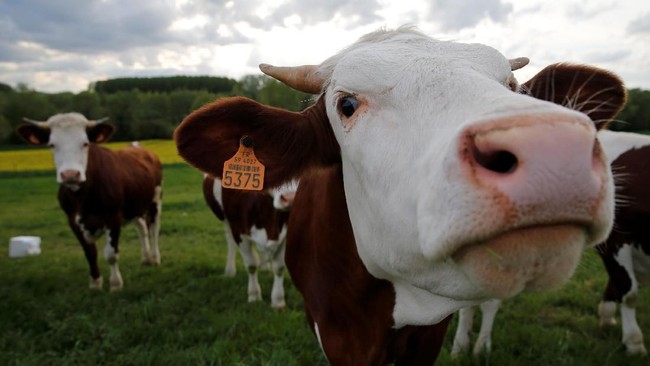
The depreciation of the Rupiah against the US Dollar has begun to impact the livestock sector, particularly in the procurement of imported dairy cattle. The Ministry of Agriculture has acknowledged that the prices of dairy cattle brought in from abroad have risen alongside the strengthening of the US Dollar.
The Director General of Livestock and Animal Health at the Ministry of Agriculture, Makmun, stated that the impact of the Rupable’s weakness is most felt in the government’s and business actors’ efforts to increase the national dairy cattle population to meet domestic milk demand. “Regarding the rise in the dollar price, we are motivated to increase the population. There is indeed a rise in the price of dairy cattle. Generally, we source them from Australia. Although countries like New Zealand and others are also available, we have no issues,” Makmun said during a press conference at the Ministry of Food Coordination Office in Jakarta.
He noted that Australia remains the primary source for dairy cattle imports due to geographical proximity and logistical ease. However, the rising dollar exchange rate has pushed up the price of imported cattle. Despite this, Makmun emphasised that the surge in prices remains relatively controlled and has not altered the government’s policy to strengthen the national dairy population. He explained that while the average price for pregnant dairy cattle was around Rp45 million per head last year, it has not yet reached Rp50 million per head this year.
Beyond livestock imports, the Rupiah’s weakness is also exerting pressure on the national dairy processing industry, which remains highly dependent on imported raw materials. Tjatur Lestijaman, General Manager of R&D Health and Wellness for the Dairy Division of PT Indofood CBP Sukses Makmur Tbk, revealed that approximately 80% of national milk raw material needs are still imported, making currency fluctuations unavoidable. “Because about 80% of milk needs are still imported, and the prices are tied to the dollar, there is certainly an impact on Indomilk’s raw material costs,” Tjatur said.
Despite rising raw material costs, the company is striving to ensure that the increase is not fully passed on to consumers through product price hikes. “We are committed to not passing 100% of this directly to consumers, as we recognise that the public’s purchasing power must remain affordable,” he added. To mitigate the impact, the company is implementing various efficiency programmes in its production facilities. Tjatur noted that by combining local milk absorption with operational efficiency, the impact on production costs could be kept below 10%.
Meanwhile, Widiastuti, Deputy for Coordination of Food and Agricultural Business at the Coordinating Ministry for Food, confirmed that the Rupiah’s weakness clearly impacts the national dairy sector. To reduce the risks of exchange rate fluctuations, the government is preparing several measures, including maintaining import supplies, establishing long-term purchase contracts, diversifying supplier countries, and improving supply chain efficiency. Furthermore, the government is encouraging increased domestic milk production through low-interest financing for farmers and the development of dairy cattle centres to reduce the current 80% dependency on imports.