
Rupiah Continues to Weaken Against US Dollar, Business Owners Warn of Potential Layoffs
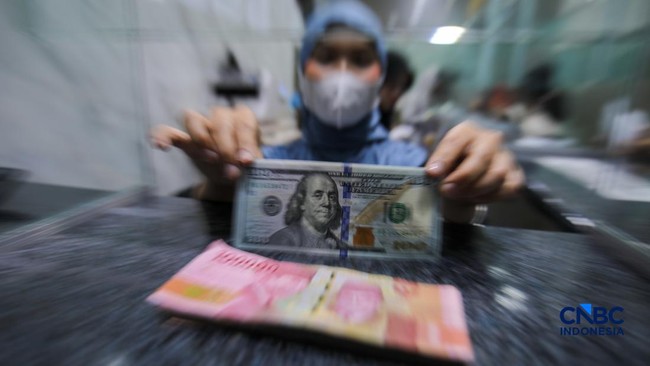
The weakening of the rupiah exchange rate has once again drawn the attention of the business world after the Garuda currency reached the level of Rp17,500 per US dollar, the weakest level in history. This is assessed to be starting to put pressure on national business activities, especially sectors dependent on imported raw materials and logistics.
“The rupiah exchange rate continues to weaken, even though it briefly strengthened somewhat. The rupiah is now recording the deepest weakening level in history, reaching Rp17,500 per US dollar. This condition is influenced by external and domestic factors,” said Deputy General Chairman of the Indonesian Chamber of Commerce and Industry (Kadin) Sarman Simanjorang in his statement on Wednesday (13/5/2026).
This condition not only impacts the financial markets but is also beginning to affect the psychology of business actors. The business world now faces uncertainty in maintaining operational stability and company cash flows. Exchange rate pressures will increase company production and operational costs due to the rise in prices of imported raw materials and logistics.
“This weakening of the rupiah will affect cash flow and operational and production costs because this increase will drive up imported raw materials and logistics. If this weakening continues, the resilience of business actors will be limited and there are concerns about price adjustments at the consumer level,” he said.
Price adjustments at the consumer level could potentially affect people’s purchasing power and drive inflation. At the same time, MSME actors become the most vulnerable group facing this pressure because increases in production and distribution costs may not necessarily be immediately passed on to selling prices.
“If product price increases undergo adjustments, it will certainly affect people’s purchasing power and inflation. MSME business actors will also be increasingly pressured because raw material prices, logistics, and distribution rise, while raising prices fully risks not selling,” he said.
To address this condition, the business world is starting to take various steps, from production cost efficiency, using local raw materials, to adjusting product sizes without raising selling prices, with the aim of remaining acceptable to the market.
“The business world has already sought mitigation efforts in the form of innovations in saving operational and production costs, trying domestic raw materials even though not all sectors can do so, including reducing product sizes without raising prices,” said Sarman.
He warned that prolonged rupiah weakening risks pressuring company turnover and driving labour efficiency measures.
“If this exchange rate weakening is prolonged, there are concerns that business actors’ turnover will be increasingly pressured and ultimately lead to worker rationalisation. This is certainly something we want to avoid. We fully support various government efforts, initiatives, and steps so that the strengthening of the rupiah exchange rate occurs soon,” he concluded.