
Rupiah Continues to Plummet; Borrowing from IMF and World Bank Cited as Most Realistic Recovery Option?
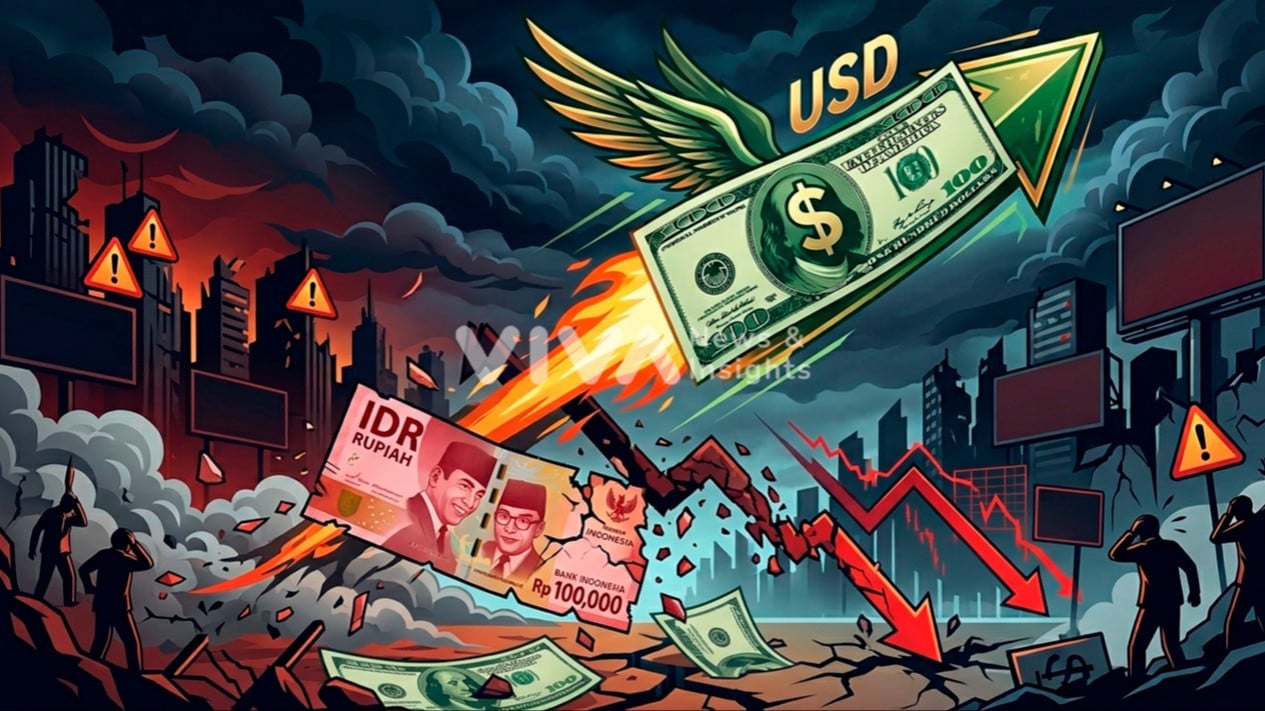
Jakarta – The collapse of the Rupiah’s value against the US Dollar has triggered serious scrutiny regarding the prospects for the national currency’s recovery in the near future. Amid increasing geopolitical pressures and global economic uncertainty, several observers believe the possibility for Rupiah appreciation remains open.
Nevertheless, the recovery process for the ‘Garuda’ currency is predicted to be difficult. Money and commodity market analyst, Ibrahim Assuaibi, assesses that the strengthening of the Rupiah depends heavily on the government’s ability to maintain the availability of US Dollars domestically and to bolster foreign exchange reserves.
According to him, one alternative that could be pursued is utilising access to financing, namely debt, from international financial institutions. “Will the Rupiah strengthen again? Yes, the Rupess will strengthen if it is prepared to seek new debt abroad,” Ibrahim stated, as quoted from tvOnenews.com on Tuesday (2/6/2026).
He noted that the International Monetary Fund (IMF) and the World Bank have previously signalled the possibility of providing financial support to Indonesia if required. However, Ibrahim emphasised that the decision to accept loans rests entirely with the government. As an analyst, he reminded that financing facilities from international institutions are generally accompanied by various policy requirements.
“We see that the IMF and the World Bank have provided a breath of fresh air for Indonesia, being ready to assist the government by providing loans,” he said. “It depends on whether the government is prepared to accept loans from the IMF or the World Bank.”
He added that if the government decides to take such loans, there would be various agreements to fulfil, particularly regarding subsidy policy reforms. “If accepted, there will be many MoUs that the government must sign, especially regarding the issue of subsidies. Subsidies must be removed; they must be abolished. That is the desire of the World Bank and the IMF. That is one of the ways to strengthen the Rupiah,” Ibrahim explained.
Beyond financing factors, Ibrahim assesses that the movement of the Rupiah is also heavily influenced by geopolitical conditions in the Middle East, particularly developments in the Strait of Hormuz, which serves as a vital route for global energy trade. “Secondly, there is the Strait of Hormuz. If the Strait of Hormuz is reopened and the war ends, the Rupiah will likely strengthen again,” he concluded.