
Rupiah Continues to Hit Record Lows: What's Causing the Slide?
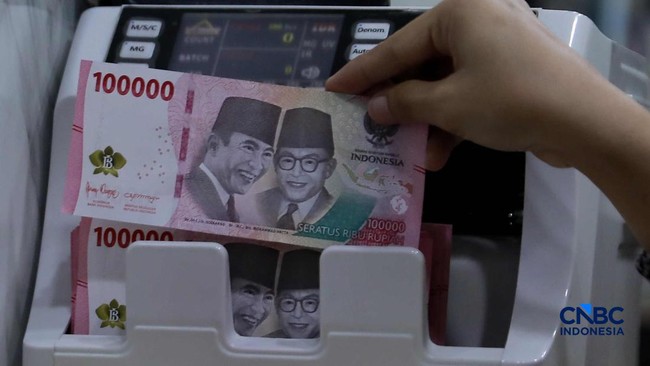
Jakarta, CNBC Indonesia - The rupiah has again breached its all-time low against the US dollar. According to Refinitiv data, on Tuesday’s (26 May 2026) closing trade, the rupiah weakened 0.28% to Rp17,780 per US dollar, marking a new all-time low.
The weakness extends the pressure seen in recent weeks, with the rupiah continuing to hit fresh lows amid strong US dollar pressure and rising investor concerns over global and domestic conditions.
Pressure on the rupiah persists despite Bank Indonesia (BI) implementing various stabilisation measures, including bond market interventions, direct spot market interventions, and offshore and domestic non-deliverable forward (NDF) market interventions.
BI has also deployed one of its strongest tools, raising the benchmark interest rate (BI Rate) by 50 basis points. This marks the first rate hike since April 2024, with the BI Rate now at 5.25%.
BI Governor Perry Warjiyo explained the decision was taken to strengthen the rupiah’s exchange rate stability against worsening global conditions due to the Middle East conflict, while keeping inflation for 2026 and 2027 within the 2.5±1% target.
However, the rupiah’s strengthening was short-lived. It initially strengthened on the rate hike announcement day but weakened the following day. As of now, the currency continues to breach new all-time lows.
This situation raises a major question: what is causing the rupiah to keep weakening even after BI raised interest rates?
Year-to-date (YTD), the rupiah has weakened approximately 6.63% against the US dollar. CNBC Indonesia outlines the key factors contributing to the sustained pressure on the rupiah.
- Geopolitical turmoil drives increased demand for US dollar
The first factor comes from abroad: geopolitical tensions from the US-Iran conflict in the Middle East, which has dominated global headlines since late February.
The conflict has caused global market anxiety as the Middle East plays a crucial role in global energy supply. A key concern is the Strait of Hormuz, a narrow waterway vital for global oil and gas trade.
When this region is disrupted, markets immediately perceive new risks. Energy prices could surge, global inflation might rise again, and the US Federal Reserve could find it harder to cut interest rates.
In such conditions, investors typically seek the safest assets, with the US dollar being a primary choice.
That is why the US Dollar Index (DXY) has strengthened again, briefly touching 100 during this period of uncertainty. When the DXY rises, pressure on other currencies typically increases, including the rupiah.
Many Asian currencies have also come under pressure as global markets seek refuge in the US dollar.
However, objectively, the rupiah’s depreciation is among the most severe compared to other Asian currencies, including Malaysia’s ringgit and Singapore’s dollar.
This means pressure on the rupiah is not just external; domestic factors make it more vulnerable than some regional currencies.
- Questionable fiscal credibility
The second factor stems from within: rising market concerns over the government’s fiscal policy direction.
Since the start of the year, market participants have closely monitored government management of the state budget. One trigger is the 2025 budget deficit reaching 2.92% of GDP, or approximately Rp695 trillion.
The figure is concerning as it is very close to the legal maximum budget deficit of 3% of GDP.
A deficit nearing the upper limit signals shrinking fiscal space. Concerns grow as government spending remains high while revenue is insufficient to offset it.
This situation has led investors to question whether the government can maintain fiscal discipline in the coming years.
These concerns are reflected in the downgrades of Indonesia’s outlook by two global rating agencies.
Moody’s first downgraded Indonesia’s outlook to negative from stable, while maintaining its Baa2 rating.
Moody’s cited reduced policy predictability, risks to policy effectiveness, and potential governance weaknesses.
The agency also highlighted increased spending not matched by higher revenue, and risks from the Danantara investment agenda that could add to government liabilities.
Subsequently, Fitch Ratings also downgraded Indonesia’s outlook to negative from stable, while keeping its BBB rating.
Fitch cited rising uncertainty and declining credibility in policy mix. It also forecasts Indonesia’s 2026 fiscal deficit to reach 2.9% of GDP, higher than the government’s 2.7% target.
A downgrade in outlook does not mean the credit rating is immediately lowered. However, it signals that Indonesia’s fiscal risks are under closer scrutiny.
If risk perception rises, investors typically demand higher yields for rupiah assets. This can lead to pressure in bond and equity markets, ultimately affecting the rupiah’s exchange rate.
- Investors increasingly sensitive to government policy direction
Beyond fiscal issues, markets are also monitoring the government’s economic policy direction, which is perceived as increasing state involvement.
Among the latest is the plan to strengthen government control over…