
Rupiah Closes Stronger at Rp 17,921 per US Dollar on Positive Business Data
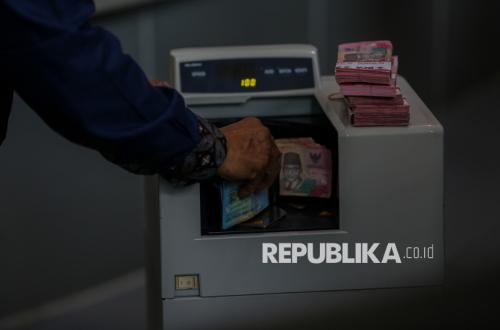
The rupiah exchange rate against the US dollar continued its strengthening trend, leaving the psychological level of Rp 18,000 per US dollar. The Garuda Currency’s appreciation followed the release of positive results from Bank Indonesia’s Business Activity Survey (SKDU) and Prompt Manufacturing Index (PMI-BI).
Quoting Bloomberg, the rupiah closed 65 points or 0.36 percent stronger at Rp 17,921 per US dollar on Friday (17/7/2026). In the previous trading session, the rupiah was at Rp 17,986 per US dollar.
Currency and Commodities Observer Ibrahim Assuaibi stated that Bank Indonesia released the SKDU results for the second quarter of 2026, showing increased business activity. BI reported a Weighted Net Balance (SBT) of 12.97 percent in Q2 2026, up from 10.11 percent in the previous quarter.
According to BI, the increase in business activity was driven by improved performance in the majority of main business fields, including agriculture, forestry, and fisheries; construction; and mining and quarrying. Additionally, the accommodation and food and beverage sector increased in line with sustained demand during the National Religious Holidays (HBKN) and the school holiday high season in Q2 2026.
In line with this, utilised production capacity in Q2 2026 was recorded at 73.8 percent, higher than the previous quarter’s 73.33 percent. The increase was mainly supported by agriculture, forestry, and fisheries; mining and quarrying; and electricity procurement.
Meanwhile, the financial condition of the business world generally remained sound in terms of liquidity and profitability, with easy access to credit. For Q3 2026, SKDU respondents expect business activity to slow slightly, with an SBT of 11.75 percent. Business fields expected to improve include the processing industry, wholesale and retail trade and vehicle repair, in line with sustained public demand, as well as construction with the continuation of various government and private projects.
Additionally, mining and quarrying business activity is also expected to increase, influenced by reduced rainfall which encourages a rise in mining activity.
Besides the generally positive SKDU data, BI also released PMI-BI data showing manufacturing activity remains in an expansionary zone. The PMI-BI recorded the processing industry’s performance at 51.43 in Q2 2026. Although lower than the previous quarter’s 52.03, its position remains above the 50 level, indicating an expansionary phase. BI noted the PMI-BI achievement was driven by the production volume component (53.81), finished goods inventory volume (53.00), and total order volume (52.77).
From abroad, Ibrahim assessed several external sentiments influencing the rupiah’s movement, ranging from geopolitical conflict dynamics in the Middle East to expectations regarding the US central bank’s interest rate policy. Another wave of US attacks against Iranian targets occurred on Thursday, a day after an attack damaged an oil tanker near Iran’s main export terminal. The renewed hostilities have extended the Middle East conflict into its fifth month, keeping crude oil prices high and reviving concerns that higher energy costs could reignite inflation.