
Rupiah Closes Stronger Against US Dollar at Rp17,910
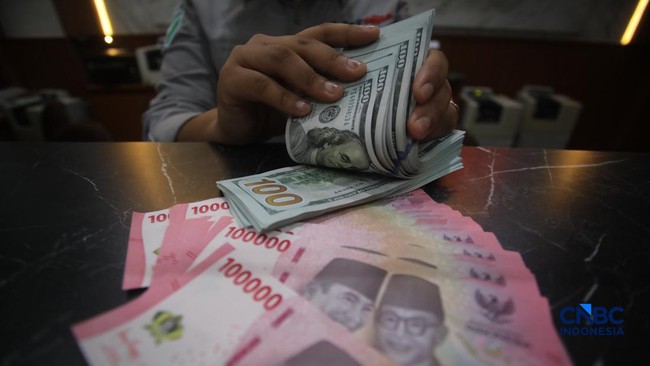
The Indonesian rupiah closed stronger against the United States dollar on Thursday, with the currency maintaining its gains despite a slight rebound in the US dollar index during afternoon trade. According to Refinitiv data, the rupiah appreciated by 0.08% to close at Rp17,910 per US dollar. This strengthening followed a sharp rise in the previous session, when the rupiah closed 0.50% higher at Rp17,925 per US dollar after Indonesia’s economic growth surpassed market forecasts. The rupiah had moved in positive territory since the market opened, strengthening 0.14% to Rp17,900 per US dollar. Throughout the day, the currency traded in a relatively stable range between Rp17,890 and Rp17,922 per US dollar. Although it weakened by 10 points from its opening level, the rupiah still ended 15 points stronger compared to the previous closing position. Meanwhile, the US Dollar Index, which measures the greenback’s strength against six major currencies, was seen edging up 0.07% to 99.749 as of 15:00 Western Indonesia Time. The rupiah’s appreciation was still influenced by positive sentiment from Indonesia’s second-quarter 2026 economic growth, which came in higher than market expectations. Statistics Indonesia recorded that the economy grew by 5.29% year-on-year in the second quarter of 2026, exceeding the consensus forecast of 5.12% from 15 institutions. However, this growth rate slowed compared to the 5.61% year-on-year expansion recorded in the first quarter of 2026. On a quarterly basis, the economy grew by 3.58%, rebounding from a contraction of 0.77% in the previous quarter. Bank Indonesia projects that economic growth for the full year 2026 will remain solid, within a range of 4.9% to 5.7% year-on-year. This outlook is supported by domestic demand and government and central bank policies aimed at boosting economic activity. Bank Indonesia Executive Director Ramdan Denny stated that the central bank continues to strengthen its policy mix through monetary, macroprudential, and payment system policies, in close synergy with government policies, to maintain stability while encouraging sustainable economic growth. On the external front, the US Dollar Index reversed to a slight gain in afternoon trade but remained below the psychological level of 100, having been pressured earlier by a decline in oil prices, which dampened inflation expectations, and weaker-than-expected US private employment data.