
Rupiah Closes Strong at Rp 17,865/US$, BI Governor Reveals Triggers
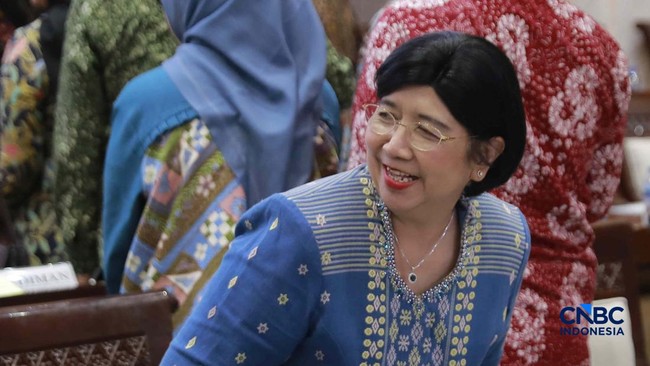
Bank Indonesia (BI) claims the strengthening of the rupiah exchange rate at the end of the week was driven by a positive market response to the central bank’s policies, including a rise in the benchmark interest rate, the BI Rate. Referring to Refinitiv data, the rupiah closed 0.61% stronger at Rp 17,865 per US dollar. This position moves the rupiah further away from the psychological level of Rp 18,000 per US dollar and closer to the Rp 17,800 per US dollar area.
Deputy Governor of BI Destry Damayanti emphasised that this development reflects a positive market response to Bank Indonesia’s policy mix. These policies include raising the BI Rate to 5.50%, strengthening the SRBI interest rate structure, providing hedging incentives for foreign investors, opening repo access to support banking liquidity, and increasing the intensity of rupiah and foreign exchange monetary operations.
“These steps are also supported by close synergy between Bank Indonesia and the Government,” Destry said in an official statement on Friday (12/6/2026). Following the BI Rate increase, Destry noted that foreign capital inflows experienced positive development, supported by the attractiveness of domestic financial instruments. High global investor interest was reflected in increased non-resident inflows into SRBI transactions and Government Securities (SBN), which on 10 and 11 June 2026 were recorded at Rp 15.11 trillion and Rp 3.91 trillion, respectively.
“Foreign capital inflows also occurred in Danantara’s international bonds, whose initial sale successfully reached Rp 26.9 trillion. This development demonstrates investor confidence in domestic assets,” she explained. Furthermore, Destry stated that external resilience is being strengthened through financial cooperation between Bank Indonesia, the People’s Bank of China (PBOC), and the Hong Kong Monetary Authority (HKMA). Three agreements were reached: synergy to strengthen not only each country’s financial resilience but also broader regional financial stability, strengthening of the Bilateral Currency Swap Agreement (BCSA), and reinforcing the commitment to use local currencies in bilateral transactions through the expansion of Local Currency Transaction (LCT).
“This step will reduce dependence on the US dollar and support rupiah exchange rate stability,” she explained. Destry assured that Bank Indonesia will continue to be present in the market, consistently and measurably optimising all policy instruments, and strengthening coordination with the Government and various stakeholders to maintain rupiah exchange rate stability and strengthen the Indonesian economy’s external resilience. “With these various developments, it is believed the rupiah will continue to strengthen against the US dollar towards its fundamental level,” Destry asserted.