
Rupiah Closes Strong as US Dollar Drops to Rp17,870
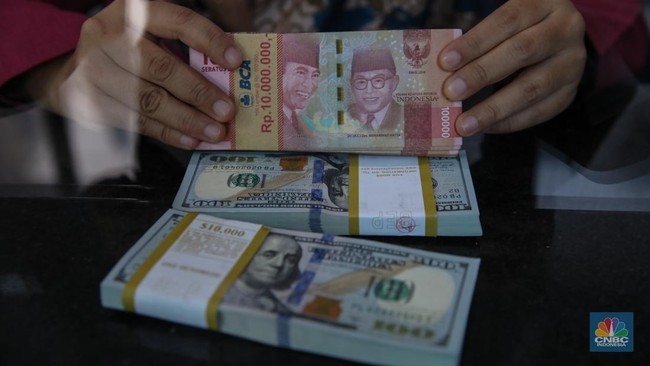
The Rupiah closed the final trading session of September with positive results. The ‘Garuda’ currency managed to strengthen sharply against the US Dollar, moving away from its recent psychological resistance levels.
According to Refinitiv data, the Rupbar ended trading on Wednesday (30/09/2026) with an appreciation of 0.50% to the position of Rp17,870/US.ComparedtoTuesday′scloseatRp17, 960/US, the Rupiah gained 90 points.
This strengthening brought the Rupiah further away from the Rp18,000/US$ level, which had been breached during intraday trading the previous day. The Rupiah had been trading in the green since the start of the session, opening at Rp17,910/US.ItsgainsexpandedfurthertotouchRp17, 825/US, which was its strongest position of the day.
Meanwhile, the US Dollar Index (DXY), which measures the strength of the greenback against six major world currencies, was observed to have weakened by 0.10% to 101.269 as of 15:00 WIB. The correction in the US Dollar Index provided room for other currencies, including the Rupiah, to appreciate. Improved market sentiment was also supported by easing concerns regarding conflicts in the Middle East and falling global oil prices.
M. Nafan Aji Gusta, Senior Technical Analyst at Mirae Asset Sekuritas Indonesia, assessed that market sentiment began to turn positive following news regarding the possibility of easing geopolitical tensions. “Market sentiment has shifted slightly positive following reports suggesting that the White House is open to considering a review of sanctions against Iran to ease geopolitical conflict tensions,” Nafan wrote in the Strategy Notes & JCI Technical View: Room for a Recovery report, cited on Wednesday.
This news eased concerns regarding energy supplies and pressured global oil prices downwards. At the close of Tuesday’s trading, WTI crude oil prices fell by 3.95% to US$88.95 per barrel, while Brent corrected by 1.99% to US$95.88 per barrel. The decline in oil prices also helped alleviate global inflationary pressures. Simultaneously, the 10-year US Treasury yield corrected by 0.10% to the 5.24% level.
Nevertheless, market participants are still awaiting several important US economic data points, ranging from the Personal Consumption Expenditures (PCE) price index to economic growth and non-farm payroll reports. This data will serve as a guide for the market in interpreting the direction of the Federal Reserve’s interest rates.
On an annual basis, headline PCE inflation is projected to remain at 3.7%, while core PCE is expected to be at 3.3%. Both remain above the Federal Reserve’s inflation target of 2%. Price pressures persist as US consumer spending remains strong; consumer spending in August is expected to grow by 0.8% month-on-month, significantly higher than the 0.2% increase in July. “The combination of still-high inflation and resilient consumption could signal that US domestic demand has not weakened enough to provide significant downward pressure on prices,” the report noted.