
Rupiah Closes at Rp18,055/US$, BI Optimises Triple Intervention and SRBI
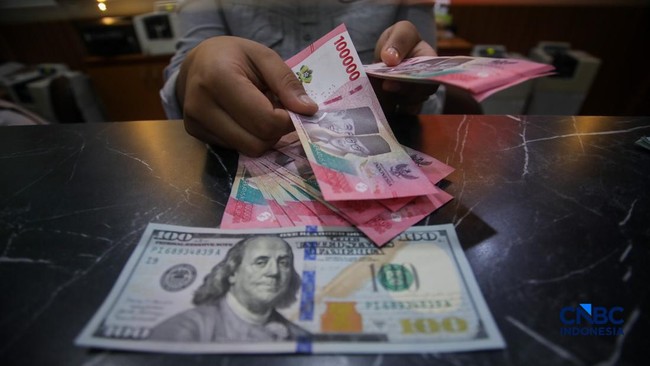
The rupiah has depreciated against the United States (US) dollar. The Garuda currency closed weaker against the greenback again in trading on Tuesday (28/7/2026).
According to Refinitiv data, the rupiah closed 0.31% lower at Rp18,055/US$. The weakening left the rupiah ending in the red zone for four consecutive trading days.
Senior Executive Director and Head of the Monetary and Securities Asset Management Department at Bank Indonesia (BI), Erwin Gunawan Hutapea, affirmed that the central bank remains committed to safeguarding stability as the primary prerequisite for supporting sustainable economic growth.
“Amid high global uncertainty, rupiah exchange rate stabilisation continues to be strengthened so that it consistently supports the achievement of inflation targets and encourages economic activity,” Erwin explained.
In addition, he assured that the optimisation of the monetary policy mix in maintaining rupiah exchange rate stability is being intensified. Rather than relying solely on the policy interest rate, other monetary instruments are also being sharpened.
“Various instruments, including triple intervention in the foreign exchange market (Spot, NDF and DNDF) as well as the optimisation of monetary instruments such as SRBI supported by swap incentive facilities and DNDF hedging, continue to be optimised to maintain exchange rate stability while supporting the inflow of foreign capital,” he said.
Furthermore, Erwin said BI also continues to safeguard the adequacy of money market and banking liquidity, which is being reinforced. He affirmed that SRBI positions are on a more controlled trend.
Going forward, Erwin assured that SRBI issuance will continue to be directed so as to align with liquidity management needs and to support the inflow of foreign capital in order to strengthen rupiah exchange rate stability. On the other hand, BI is also continuing to optimise various policy instruments to support economic growth.
“The implementation of the Macroprudential Liquidity Incentive Policy (KLM) will continue to be strengthened to encourage financing to priority sectors, including enhancing the liquidity redistribution mechanism in the financial sector so that the transmission of financing becomes increasingly effective,” Erwin said.
In addition, he noted that the digitalisation policy for the payment system continues to be accelerated so as to further drive economic growth.