
Rupiah Closes 0.15% Weaker, US Dollar Nears Rp17,000
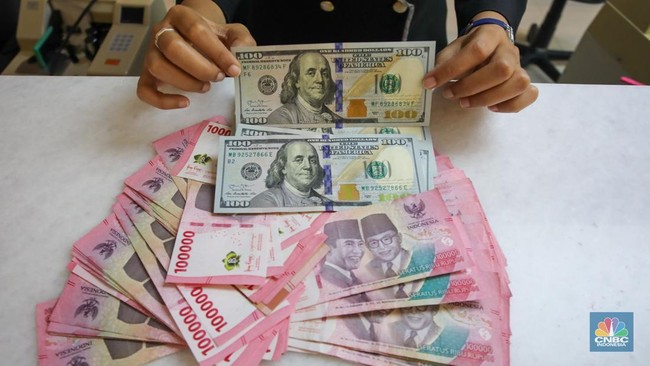
Jakarta, CNBC Indonesia — The rupiah exchange rate closed weaker against the US dollar on trading Monday (30/3/2026). This was in line with the strengthening of the US dollar in the global market.
According to Refinitiv data, the Garuda currency closed the first trading day of the week with a 0.15% weakening to the level of Rp16,985/US.ThispositionleavestherupiahjustaverythinmarginfromthepsychologicallevelofRp17, 000/US. This close also becomes the weakest level for the rupiah in the last two weeks.
Throughout the trading session, pressure on the rupiah was evident from the start. The rupiah opened 0.06% weaker at Rp16,970/US$, then the weakening continued to increase until the close.
Meanwhile, the US dollar index (DXY) at 3:00 PM WIB was still monitored in the green zone with a 0.10% strengthening to the level of 100.252.
The pressure on the rupiah in today’s trading is inseparable from the strengthening of the US dollar in the global market. The US dollar index, which measures the strength of the greenback against six major world currencies, has again broken through the 100 level, indicating that the US dollar is once again being sought after by investors. This condition ultimately puts pressure on other currencies, including the rupiah.
The strengthening of the US dollar occurred amid rising market concerns over conflicts in the Gulf region that could last longer. This situation has driven up oil prices and raised new concerns about inflation and the risk of a global economic slowdown.
Domestically, Bank Indonesia (BI) continues to strive to maintain rupiah stability. One of them is through the implementation of foreign exchange repo instruments with collateral of Bank Indonesia Foreign Currency Securities (SVBI) and Bank Indonesia Foreign Currency Sukuk (SUVBI), which took effect today, Monday (30/3/2026).
Head of the Monetary Management and Securities Assets Department of BI, Erwin Gunawan Hutapea, said this policy is part of strengthening market-oriented monetary operation strategies.
According to him, this new instrument is expected to provide additional alternatives for banks in managing foreign exchange liquidity while supporting the deepening of the domestic financial market.
“Thus, it also supports the deepening of the financial market and maintains the stability of the rupiah exchange rate amid ongoing global dynamics,” said Erwin.