
Rupiah Breaks Through Around Rp 17,700, Analysts Highlight Dependence on Food Imports
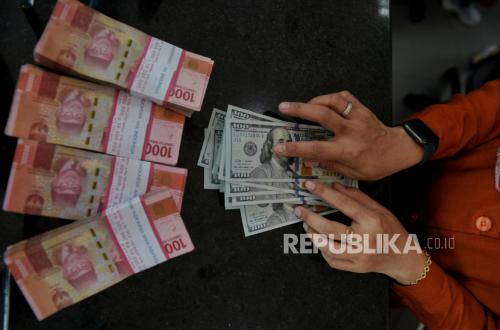
The rupiah continued its depreciation trend, breaking through the Rp 17,700 per US dollar level on Tuesday, 19 May 2026. It weakened 38 points or 0.22% to Rp 17,706 per US dollar at the close, from Rp 17,667.5 per US dollar the previous session, according to Bloomberg.
Currency and commodity analyst Ibrahim Assuaibi explained there are several factors affecting rupiah fluctuations today, including internal and external sentiment. “(Internal sentiment) The depreciation of the rupiah against the US dollar is beginning to test domestic food price resilience. The high reliance on food imports could transmit exchange-rate pressures to prices of foods consumed by the public such as instant noodles, bread, tofu-tempeh, milk, and other processed foods in the second half of 2026,” he said on Tuesday.
He explained the import dependence for several commodities is still very high. Wheat is fully imported, soybeans around 90% imported, garlic 95%, sugar around 60%, and beef and buffalo meat around 54% also imported.
“The depreciation of rupiah increases import costs since most transactions are denominated in US dollars. Ultimately, higher import costs risk pushing up domestic food prices. This condition gives rise to ‘imported inflation’ or inflation from imports, i.e., inflationary pressure arising from a weaker currency and high dependence on imports,” he said.
Ibrahim noted that the pass-through of rupiah weakness to consumer food prices varies by commodity. For wheat and soybeans, the impact can be felt within weeks as the processing industry directly faces higher raw material costs. “Rising raw material costs are transmitted to consumers in the form of higher product prices at the consumer level. The pressure is felt more quickly on processed foods than on raw materials due to downstream effects on production costs, energy, distribution, packaging, and logistics,” he explained.
Separately, external sentiment affecting rupiah today largely stems from dynamics of the Middle East conflict. The Iran vs US-Israel clash continues, though there are claims the war will soon end. “US President Donald Trump said he has delayed planned strikes against Iran to allow negotiations to end the Middle East war. Trump said on Monday there is a ‘very good chance’ the US can reach a deal with Iran to prevent Tehran obtaining nuclear weapons, hours after announcing the postponement of military action to allow talks,” he said.
The Middle East conflict effectively closed the Strait of Hormuz, a crucial waterway that carries about a fifth of global oil supplies, raising concerns about supply disruption. Iran’s Foreign Ministry spokesperson Esmaeil Baghaei on Monday confirmed Tehran’s position had been conveyed to the US via Pakistan, but did not provide further details.
A Pakistani official, speaking on condition of anonymity, said Islamabad has delivered a fresh proposal between the two sides but noted progress is slow. Meanwhile, semi-official Iranian agency Tasnim reported Washington had agreed to lift sanctions on Tehran’s oil exports during negotiations. A US official disputed the claim.
Separately, US Treasury Secretary Scott Bessent extended the sanctions waiver for 30 days to allow energy-dependent countries to continue buying Russian oil shipped by sea.
Other external sentiment concerns include the policy stance of the US Federal Reserve. A White House official said Trump will appoint Kevin Warsh as Fed Chair on Friday, after the Senate voted to confirm him for a four-year term replacing Jerome Powell.
“Investors remain cautious as markets evaluate how the direction of Fed policy may develop under new leadership,” Ibrahim said.
In his analysis, Ibrahim predicts the rupiah will continue its depreciation into the next trading day, Wednesday (20/5/2026). “For trading tomorrow, the rupiah is expected to be volatile but to close weaker in the Rp 17,700—Rp 17,750 per US dollar range,” he concluded.