
Rupiah breaches Rp1,790 per US Dollar, analysts highlight several factors
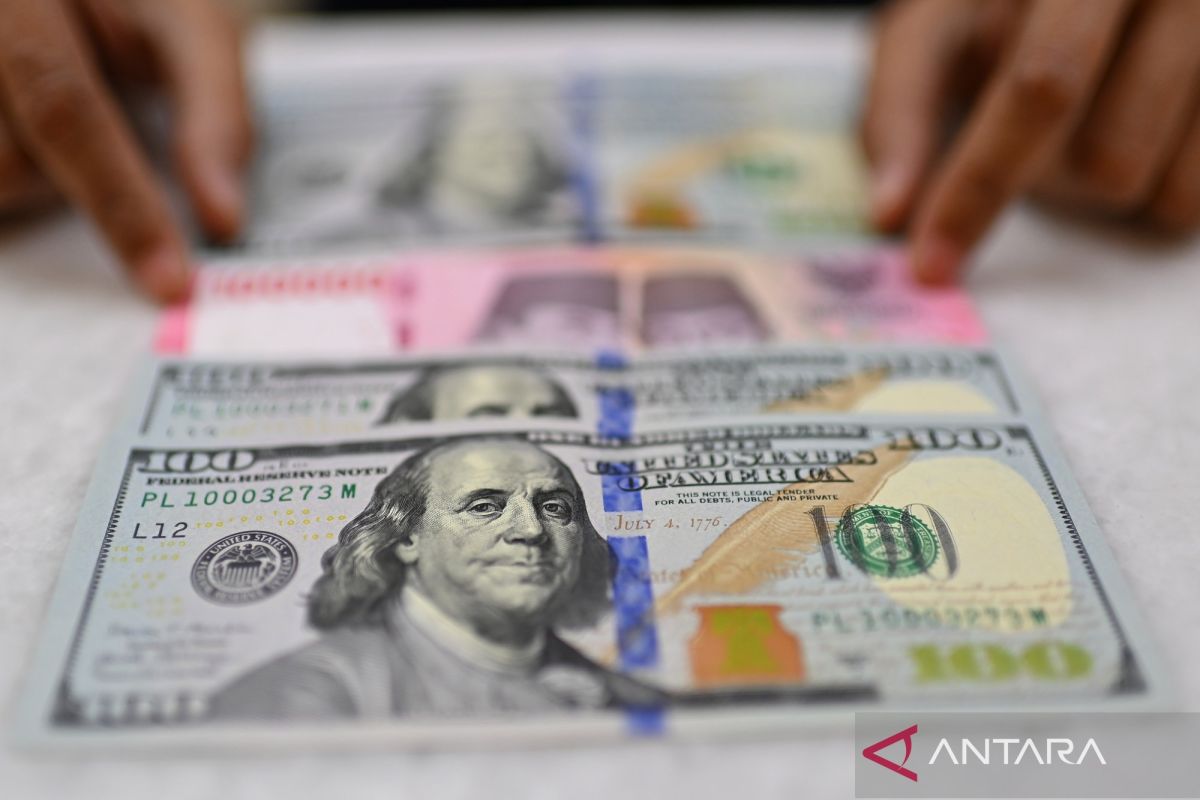
Jakarta (ANTARA) - The Rupiah exchange rate has come under renewed pressure, breaching the level of Rp1,7926 per US Dollar today. Money market observer Ibrahim Assuaibi assessed that the Rupiah’s depreciation was triggered by increasing geopolitical tensions in the Middle East, which have driven up global oil prices and strengthened the US Dollar’s position.
“Today, the Rupiah has weakened again due to the strengthening of global crude oil, with WTI at 94.58 (US Dollars per barrel), and Brent crude oil also rising to 96.72,” Ibrahim stated in Jakarta on Wednesday. Furthermore, the deadlock in negotiations between the US and Iran has increased uncertainty in global markets. Tensions between Iran and Israel have also worsened market sentiment. These conditions have triggered concerns regarding the global energy supply, thereby keeping oil prices high.
The rise in energy prices, he continued, has the potential to maintain US inflationary pressures and lead the US central bank, the Federal Reserve, to maintain high interest rates, with the possibility of another rate hike this year. “We see that one US central bank official, Hammack, stated that immediate action might be necessary if the inflation trend does not subside. This indicates a high probability of a single interest rate hike in 2026,” said Ibrahim.
From a domestic perspective, Ibrahim assessed that high oil prices increase the demand for US Dollars for energy imports. Additionally, the need for foreign exchange to pay dividends and maturing debt obligations has added further pressure to the Rupiah. He also highlighted the tendency of some members of the public to shift savings into foreign currency-based instruments, which has increased the domestic demand for US Dollars.
To mitigate the pressure on the Rupiah, Ibrahim believes the government needs to maintain domestic economic stability and public purchasing power through various policies. The government must ensure the availability of goods, especially imported goods affected by the exchange rate increase, and strengthen targeted social assistance programmes. Furthermore, the government needs to bolster the real sector by encouraging industrialisation, the development of the blue economy, and increasing productivity in the agricultural sector to strengthen national food security.
“We must recognise that the government needs to promote industrialisation and the blue economy. This remains very difficult currently. Why? Because we see that 50 per cent of economic growth is driven by public purchasing power,” he noted. Accelerating digital transformation and simplifying investment regulations are also necessary to attract more foreign investment into Indonesia. According to him, improving the investment climate is a crucial step in strengthening economic fundamentals and supporting the stability of the Rupiah exchange rate in the medium to long term.