
Rupiah Breaches 17,500 Level, Economist: Cannot Be Equated with the 1998 Crisis
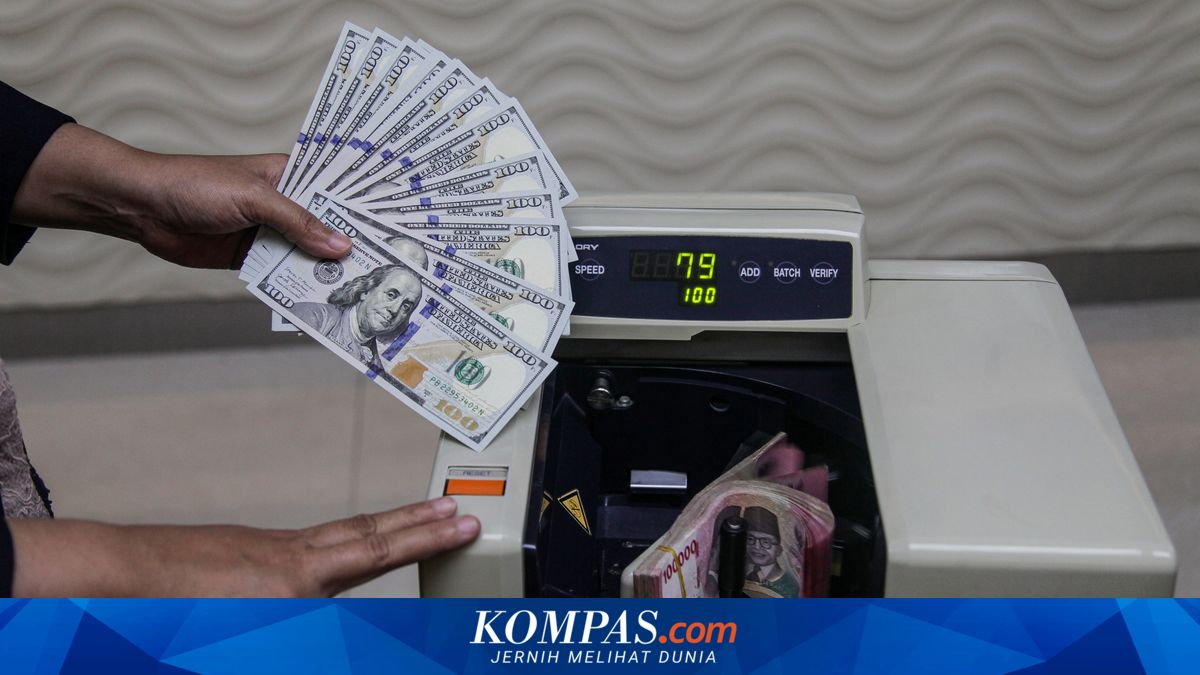
JAKARTA, KOMPAS.com - The weakening exchange rate of the rupiah, which has breached the level of Rp 17,500 per US dollar, is considered not yet to reflect a crisis condition like that which occurred in 1998.
Head of Economics at Bank Permata, Josua Pardede, assesses that the current rupiah condition cannot be directly equated with the 1998 crisis situation, even though it is at a high psychological level.
This is because Indonesia’s current economic fundamentals are far stronger than during the monetary crisis period, both in terms of government foreign debt and still strong foreign exchange reserves.
Based on Bank Indonesia (BI) data, Indonesia’s foreign debt remains maintained at $437.9 billion in February 2026, while the RI’s foreign exchange reserves are still at $146.2 billion in April 2026.
“We need to provide education that the current rupiah condition, which is above Rp 17,000 per US dollar, cannot be equated with the conditions during the 1998 monetary crisis,” he stated during the PIER Economic Review Quarter 1 2026 media briefing on Tuesday (12/5/2026).
According to him, the public without direct exposure to foreign exchange (valas) actually does not need to worry too much about the current rupiah weakening.
Meanwhile, for business actors with valas exposure, they can certainly carry out mitigation through various hedging instruments,” he added.
Josua explained that the current rupiah weakening is mainly triggered by external factors, particularly global uncertainty due to conflicts in the Middle East and the failure to reach an agreement in negotiations between Iran and the US.
That condition triggers an increase in crude oil prices and the strengthening of the US dollar, which then puts greater pressure on developing countries, including Indonesia.
“Those two factors on Indonesia are relatively larger compared to some other countries, so the transmission of impact to the rupiah is also faster,” said Josua.
In the short term, Permata Bank predicts the rupiah will still move in the current range.
However, the future direction of the rupiah movement will very much depend on the development of global geopolitical conflicts.
Josua said that if conflict tensions ease and oil prices fall back below $100 per barrel, pressure on the rupiah has the potential to decrease.
Nevertheless, there are still domestic factors that need to be addressed by the government,” he emphasised.