
Rupiah becomes Asia's worst-performing currency as it nears Rp18,000 per US dollar
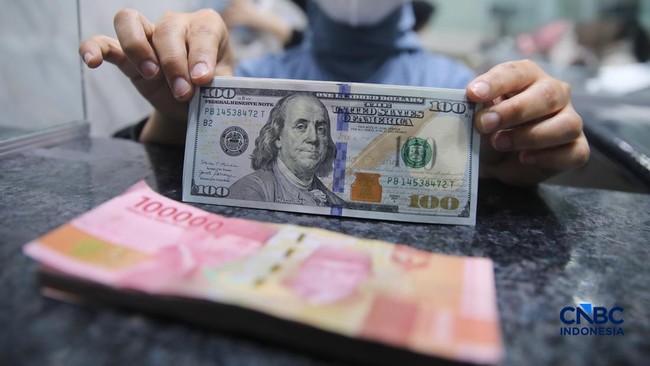
Jakarta, CNBC Indonesia - The rupiah continued to weaken against the US dollar, bringing the Indonesian currency close to Rp18,000 per US dollar. According to Refinitiv, on Friday, May 1, 2026, the rupiah closed 0.51% weaker at Rp17,865 per US dollar. For the week, it depreciated 0.99% point-to-point. Among Asian currencies, the rupiah was the worst performer, slumping nearly 1% over the past week. While the Japanese yen and Hong Kong dollar also weakened, their declines were marginal. In Southeast Asia, the rupiah was the weakest. Conversely, the South Korean won was the strongest, surging 0.86%, followed by the Indian rupee which appreciated 0.72%. Despite Bank Indonesia’s (BI) various stabilisation measures—including bond market intervention, spot market intervention, and NDF market interventions both offshore and domestic—the rupiah continues to face pressure. BI also deployed one of its strongest tools, raising the benchmark interest rate (BI Rate) by 50 basis points. This marks the first rate hike since April 2024. With this increase, the BI Rate now stands at 5.25%. BI Governor Perry Warjiyo stated that the decision aims to strengthen the rupiah’s stability amid worsening global conditions due the Middle East conflict, while keeping inflation for 2026 and 2027 within the target range of 2.5±1%. However, the rupiah’s strengthening was only temporary. It briefly appreciated on the rate hike announcement but weakened the following day. Currently, the Garuda currency continues to breach record lows. Several factors are driving the rupiah’s further depreciation. The first is external geopolitical tensions from the US-Iran conflict in the Middle East, which has dominated global headlines since late February. The conflict has global markets on edge, as the Middle East plays a critical role in global energy supply. The Strait of Hormuz, a narrow passage vital for global oil and gas trade, is a particular concern. Disruptions in the region prompt immediate risk assessments. Energy prices could surge, global inflation may reignite, and the US Federal Reserve may find it harder to lower rates. In such conditions, investors typically gravitate towards perceived safe havens, such as the US dollar. As a result, the US Dollar Index (DXY) has rebounded, briefly touching 100 during this uncertain period. A stronger DXY typically intensifies pressure on other currencies, including the rupiah. However, it is客观 that the rupiah’s depreciation is relatively steep compared to other Asian currencies, including neighbours like Malaysia’s ringgit and Singapore’s dollar. This implies that pressure on the rupiah is not solely external; domestic factors have rendered it more vulnerable than regional currencies. The second factor is domestic concerns over the government’s fiscal policy direction. Since the start of the year, markets have scrutinised the government’s management of the state budget. One key concern is the 2025 budget deficit reaching 2.92% of GDP, or approximately Rp695 trillion. This is concerning as it is close to the legally mandated 3% GDP ceiling for the budget deficit. A deficit near the upper limit signals shrinking fiscal space. Worries intensify as government spending remains high while revenue growth is insufficient to offset it. These conditions have led investors to question whether the government can maintain fiscal discipline in the coming years. Beyond fiscal policy, markets are also monitoring the government’s economic policies, which increasingly involve state intervention. A recent example is the plan to strengthen state control over strategic commodity exports, including coal and palm oil. The government also intends to mandate that all foreign exchange earnings from natural resource exports be fully retained in state-owned banks from June 1, 2026. Intended to strengthen domestic forex supply and support rupiah stability, such significant changes nonetheless raise concerns about market mechanisms, business certainty, and potential supply chain disruptions. This has made markets more sensitive to new policies. When communication is unclear, investors typically opt to de-risk first. such a stance could exacerbate pressure as demand for the US dollar rises while appetite for rupiah assets wanes.