
Rupiah Approaches 18,000 Level Again as Budget Deficit Risk and Rising Oil Prices Loom
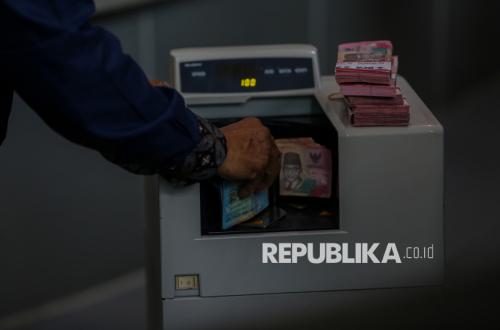
The rupiah exchange rate against the US dollar has weakened again, approaching the level of Rp 18,000 per US dollar. The rupiah’s depreciation comes alongside a rise in global oil prices and projections of a widening state budget deficit (APBN). Quoting Bloomberg, the rupiah weakened by 44.5 points, or 0.25 percent, to Rp 17,988.5 per US dollar at the close of trading on Thursday (11/6/2026).
Currency and Commodities Observer Ibrahim Assuaibi stated that the Organisation for Economic Co-operation and Development (OECD) projects Indonesia’s 2026 state budget deficit will widen to touch the fiscal rule limit of 3 percent based on gross domestic product (GDP). This fiscal deficit estimate is higher than the government’s initial target, which in the 2026 state budget assumptions set the deficit at 2.7 percent of GDP. The 3 percent deficit projection for 2026 is also higher than the realised deficit in 2025, which stood at 2.9 percent of GDP. This deficit expansion is primarily triggered by pressure on global commodity prices.
Higher oil prices are expected to increase the budget deficit by 0.6 percent of GDP through increased spending on subsidised fuel, if the capping of subsidised fuel prices is maintained. The OECD noted that the Indonesian government has signalled strongly that it intends to keep the deficit below the safe ceiling of 3 percent of GDP. Ibrahim explained that to realise this commitment, the government is believed to need to take compensatory steps or a policy mix amounting to 0.3 percent of GDP. These steps include spending cuts in other sectors and the potential imposition of windfall taxes on the country’s leading commodity exporters.
From a macroeconomic perspective, Indonesia’s economic growth is projected to slow to 4.7 percent in 2026, before recovering to 5 percent in 2027. Ibrahim stated that the weakening growth rate is influenced by rising energy costs and high policy uncertainty, which are expected to weigh on consumption and investment amidst a projected weakening labour market. Meanwhile, the inflation rate is projected to creep up to 3.4 percent in 2026, triggered by the gradual transmission of high global energy prices to domestic prices, even though the government is currently freezing subsidised fuel prices.