
Rupiah and Won Fall as Yen and Singapore Dollar Kick the Dollar in Asia
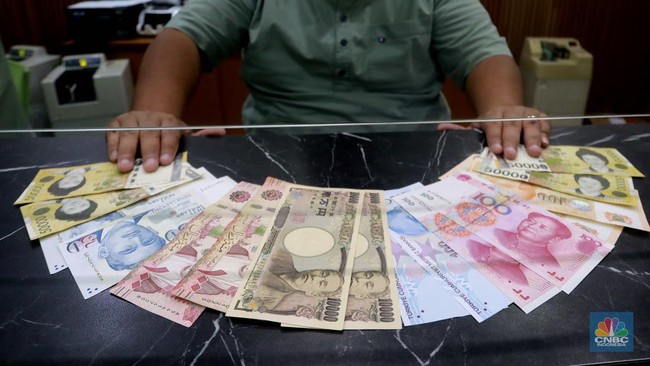
Jakarta, CNBC Indonesia - The majority of Asian currencies were observed weakening against the United States (US) dollar in trading today, Wednesday (17/6/2026). This movement represents a correction amid global market dynamics that are still digesting developments regarding the US-Iran peace process.
Referring to Refinitiv data, as of 09.05 WIB, out of 10 monitored Asian currencies, six currencies experienced weakening against the US dollar, two currencies managed to strengthen, one currency was stagnant, one other had not yet recorded growth, while Malaysia was on a public holiday for Awal Muharram.
The South Korean won became the currency with the sharpest weakening in Asia this morning. The currency depreciated by 0.28% to the position of KRW 1,513.18/US$. This position indicates significant selling pressure on the currency in the region.
The won’s weakening was followed by the Vietnamese dong, which corrected 0.27% to the position of VND 26,311/US.TheIndonesianrupiahwasalsoobservedtohaveweakenedby0.25.
Furthermore, the Taiwan dollar was pressured to the position of TWD 31.561/US, depreciating0.15, while the Philippine peso weakened slightly by 0.04% to PHP 60.274/US$. The Malaysian ringgit had not yet recorded new trading data in this session.
On the other hand, the Japanese yen and the Singapore dollar were still able to record appreciation. The Japanese yen strengthened 0.07% to the position of JPY 160.34/US, whiletheSingaporedollarroseslightlyby0.03. The Chinese yuan was observed stagnant at the position of CNY 6.7562/US$.
Meanwhile, the dynamics of the US dollar index (DXY), which measures the strength of the greenback against six major world currencies, remains a focus for investors. The pressure on Asian currency movements today indicates a renewed increase in market participants’ level of caution.
Market participants continue to monitor news that the United States is processing a peace agreement with Iran. This news was previously projected to be able to suppress the pace of oil prices and restore investor interest in risky asset instruments.
For information, US and Iranian officials previously stated that both parties agreed on a framework to end the conflict, halt the US blockade against Iran, and reopen the strategic Strait of Hormuz route.
The potential drop in oil prices due to this easing is essentially a positive sentiment that could alleviate energy inflation concerns, which in turn could suppress expectations of a benchmark interest rate hike from the US central bank (The Federal Reserve/The Fed).
However, market participants currently appear to be adopting a more defensive and cautious stance. This attitude emerged in response to a statement by US President Donald Trump to The New York Times, which emphasised that if Iran fails to finalise the nuclear points, the United States would not hesitate to reactivate military measures against Tehran, or to position the US as a protective power in the Middle East with the condition of compensation amounting to 20% of the total revenue in the region.
Source: jawawa.id (https://jawawa.id/newsitem/rupiah-and-won-fall-as-yen-and-singapore-dollar-kick-the-dollar-in-asia-1781664727)
Originally published by CNBC Indonesia (https://www.cnbcindonesia.com/research/20260617085728-128-743238/rupiah-won-jatuh-giliran-yen-dolar-singapura-tendang-dolar-di-asia), translated from Indonesian