
Rupiah and Ringgit Strengthen as Asian Currencies Seek Dominance
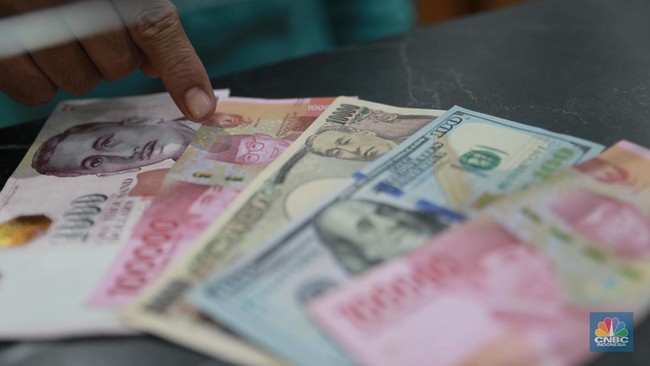
Jakarta, CNBC Indonesia - The majority of Asian currencies weakened against the United States dollar in trading on Friday (12/6/2026) ahead of the weekend. However, the rupiah managed to strengthen amid a weakening of the US dollar index in global markets.
Referring to Refinitiv data as of 09.23 Western Indonesia Time, out of 10 Asian currencies, seven weakened against the US dollar, while three others strengthened.
The rupiah was one of the currencies moving in the green zone. The Garuda currency strengthened 0.14% to a position of Rp17,950/US.ThisstrengtheningmeanstherupiahremainsbelowthepsychologicallevelofRp18, 000/US.
Besides the rupiah, the Malaysian ringgit also strengthened 0.17% to a position of MYR 4.057/US.TheChineseyuanalsoappreciated0.16.
On the other hand, the deepest pressure this morning was experienced by the Taiwan dollar, which weakened to a position of TWD31.644/US, oracorrectionof0.27.
The Japanese yen weakened 0.20% to a position of JPY 160.25/US, followedbythePhilippinepesowhichfell0.13. The Thai baht corrected to THB32.82/US$, a depreciation of 0.12%, the Singapore dollar weakened 0.10%, while the Vietnamese dong fell slightly by 0.04% against the US dollar.
On the other side, the US dollar index (DXY) was observed weakening 0.07% to a position of 99.789 at the same time. The weakening of the US dollar occurred after US President Donald Trump cancelled plans for a new military strike against Iran at the last minute.
The US dollar usually strengthens when geopolitical uncertainty increases, because investors seek safe assets such as US government bonds. Conversely, when expectations of peace increase, the US dollar tends to weaken as fund flows return to risky assets.
Trump stated that negotiations with Tehran have risen to the highest level in Iran’s leadership. The deal is also said to have gained support from a broad coalition of regional powers.
Iran’s semi-official Fars news agency reported that Tehran is likely to approve the deal, although it has not yet given an official response.
Monex USA trading director Juan Perez assessed that the currency market is beginning to get used to the pattern of escalation and de-escalation in the conflict.
“I think we are starting to get used to the pattern of escalation which then opens space for de-escalation, and that is reflected in the foreign exchange market,” said Perez, as quoted by Reuters.
Perez added that the prospect of continued aggression, violence, and war is usually very positive for the US dollar. However, when hope emerges that aggression can stop suddenly through a peace deal, interest in risky assets will increase and pressure the US dollar.
This condition provided room for some Asian currencies to strengthen, including the rupiah. Even so, the strengthening was not evenly distributed as the majority of regional currencies were still moving weaker against the US dollar this morning.