
Rupiah and Dong Lead Asia as Currencies Strengthen Amid Pressure on Others
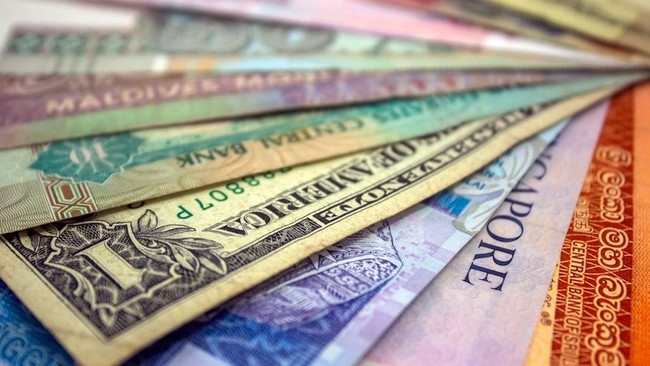
Weakness dominated Asian currencies during trading on Wednesday (07/10/2026). However, this pressure was not uniform, as the Indonesian Rupiah and the Vietnamese Dong managed to strengthen amidst the rise of the US Dollar Index this morning.
According to Refinitiv data as of 09:15 WIB, seven out of nine monitored Asian currencies moved lower against the US Dollar. The Rupiah and the Vietnamese Dong were the two currencies that remained in the green.
The Rupiah recorded the largest gain, appreciating 0.08% to the level of Rp1.7875/US.TheVietnameseDongfollowedwithanincreaseof0.02.
On the other hand, the Taiwan Dollar experienced the deepest pressure, depreciating 0.26% to TWD31.86/US.TheThaiBahtfollowedwithadeclineof0.24.
The Japanese Yen corrected by 0.20% to JPY158.41/US, whiletheSouthKoreanWonweakenedby0.19. The Philippine Peso fell 0.12% to PHP62.769/US, followedbytheSingaporeDollar, whichweakened0.11.
The Malaysian Ringgit recorded the smallest decline of 0.05% to a position of MYR4.084/US$.
At the same time, the US Dollar Index (DXY) was observed to strengthen by 0.20% to the level of 102.038 at 09:15 WIB.
The strengthening of the Dollar in this morning’s Asian trading occurred after the greenback had corrected in the previous session. The DXY was recorded to have fallen 0.27% on Tuesday as pressure eased in global bond markets and US Treasury yields declined.
The 10-year US Treasury yield fell by approximately 4 basis points to 5.271%, while the 30-year tenor weakened by 2 basis points to 5.641%. This decline in yields occurred after the auction of three-year US government bonds received a positive response from the market.
Pressure on the Dollar in previous trading also stemmed from reduced expectations for a Federal Reserve interest rate hike in October. The probability of a rate hike of at least 25 basis points this month fell to around 20%, down from approximately 70% last week.
“It seems the urgency for the Fed to raise interest rates has decreased slightly following softer PCE data and recent non-farm payroll reports,” said Gavin Friend, Senior Markets Strategist at National Australia Bank, as quoted by Reuters.
Although the likelihood of a hike in October is shrinking, the market has not yet fully abandoned expectations of further tightening. According to the CME FedWatch tool, the probability of an interest rate hike at the December meeting remains around 84.5%.
Investors are now awaiting the minutes from the Fed’s September meeting and comments from several US central bank officials to seek clues regarding the future direction of interest rates. During the September meeting, the Fed raised interest rates in response to inflationary pressures.