
Running Out of Expensive Missiles, US Now Relies on Thousands of Cheap Drones for Warfare
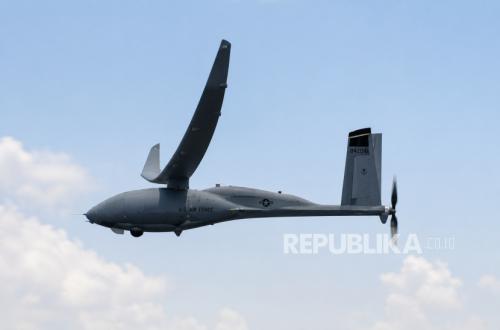
The United States is accelerating changes to the way it wages war. After the war against Iran strained supplies of a number of expensive, high-precision missiles, US Central Command, or CENTCOM, is now building a strike drone force that can come from the air, the sea surface, and even beneath the sea surface.
On 13 August 2026, CENTCOM announced efforts to form Task Force Falcon Strike, the first multidomain and multinational drone strike task force under that command. Falcon Strike will use one-way attack unmanned systems operating from the air, on the sea surface, and under the sea, and will involve US personnel alongside regional partners.
The announcement appears more significant when read together with a development that occurred just one day later. On 14 August, the Pentagon signed a framework agreement with Boeing and RTX to increase production capacity for SM-3 Block IB and SM-3 Block IIA interceptor components, a key part of the Aegis missile defence system.
Two events in two days illustrate the pressure being faced by the American war machine. Washington must scale up production of high-tech conventional weaponry again, while at the same time seeking to expand the use of unmanned weapons that are cheaper and can be deployed in much larger numbers.
The backdrop is the prolonged war with Iran. Reuters reported in early August that the US Army had used nearly its entire stockpile of ATACMS and Precision Strike Missiles, or PrSM, in five months of war with Iran. Around half of the global inventory of Tomahawk cruise missiles has also been used, while stocks of Patriot and THAAD interceptors are under severe strain.
That situation reveals one of the classic problems of modern warfare. High-precision missiles can produce extraordinary destructive power, but their production costs are high, their supply chains are complex, and their stockpiles cannot be replaced as quickly as the weapons are fired in a prolonged conflict. Drones offer a different answer.
That does not mean drones can replace Tomahawks, Patriots, THAAD, or precision ballistic missiles. However, for a number of missions, unmanned systems allow the military to obtain striking power at lower cost while reducing the need to fly manned aircraft into areas protected by enemy air defence systems. This is where Falcon Strike acquires its strategic significance.
Falcon Strike is not designed as an ordinary air drone squadron. CENTCOM explicitly stated that the unit will operate unmanned systems from above the sea, on the sea surface, and beneath the sea surface. That means the threat can come from three different directions.
Air drones can penetrate enemy territory and strike targets on land. Unmanned surface vessels can move towards port installations or enemy ships, while underwater systems open up the possibility of attacks or operations from a space that is far more difficult to detect.
The model reflects the concept of multidomain warfare. The enemy is forced not only to watch the sky, but also the surface and depths of the sea at the same time.
Source: jawawa.id (https://jawawa.id/newsitem/running-out-of-expensive-missiles-us-now-relies-on-thousands-of-cheap-drones-for-warfare-1787759907)
Originally published by Republika (https://news.republika.co.id/berita/tjx82a451/kehabisan-rudal-mahal-as-kini-andalkan-ribuan-drone-murah-untuk-berperang), translated from Indonesian