
Rumah Zakat Marks 28 Years as a Pillar of National Resilience and Human Sovereignty
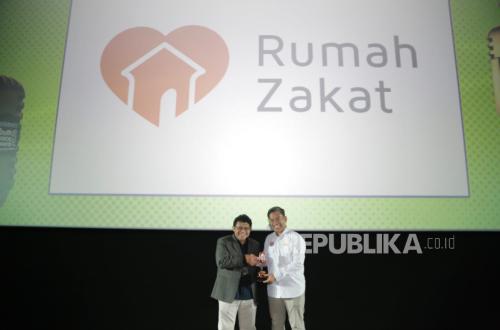
Rumah Zakat has marked its 28th anniversary by asserting that its journey is not merely a statistical milestone but proof of consistency, adaptability, and a manifestation of a great mandate. Entering this mature phase, the institution has transformed from a local movement into a national and global driver of good, with an impact that transcends territorial boundaries. Welcoming this anniversary, Rumah Zakat has adopted a theme laden with geopolitical, sociological, and spiritual weight: ‘Safeguarding National Resilience and Borderless Human Sovereignty’. This is not a clichéd celebratory slogan but a manifesto of a movement amidst complex global challenges testing human endurance.
When discussing national resilience, the discourse often becomes trapped in military dimensions or macroeconomic indicators. In reality, the most fundamental pillar of a nation’s strength lies in the resilience of its grassroots communities. A nation cannot be robust if its village populations are vulnerable to hunger, crushed by extreme poverty, lack access to healthcare, and are isolated from proper education. The national aggregate of zakat collection, which continues to reach tens of trillions of rupiah annually, proves that Islamic philanthropy is no longer a mere complement but a crucial support for the national economy in poverty alleviation. Through systematic and measured programme orchestration, such as the Empowered Village initiative, Rumah Zakat has built socio-economic defence fortresses directly from the upstream level. This resilience is reflected in the periodic distribution of benefits across sectors, including health services through elderly-friendly integrated health posts and stunting prevention programmes, educational scholarships, and micro-enterprise development that helps local entrepreneurs escape the trap of harmful debt.
The concept of ‘Human Sovereignty’ underscores the belief that every individual has the right to a life of honour and dignity. In line with the national zakat law, modern zakat management must prioritise service effectiveness to achieve equitable social welfare. Rumah Zakat views the management of Zakat, Infaq, and Sedekah funds not merely as a routine of Islamic philanthropy but as an instrument to restore human dignity. Extreme poverty often strips individuals of their sovereignty, leaving them without choices for their future. Consequently, empowerment programmes are strictly allocated and directed towards the most vulnerable groups as a priority for poverty alleviation. The true indicator of success in modern zakat management is not the volume of emergency aid distributed, but the consistency in assisting beneficiaries to transform from zakat recipients (mustahik) into zakat payers (muzaki). Human sovereignty is achieved when vulnerable communities can gradually stand on their own feet sustainably.
The world today faces multidimensional crises that disregard geopolitical borders, from the threat of climate change impacting domestic food security to international humanitarian conflicts causing endless suffering. For Rumah Zakat, the call to humanity must not be confined by passports or territorial boundaries. Moving ‘Without Borders’ carries three crucial meanings. First, it means without geographical limits, signifying logistical and volunteer readiness to reach the outermost, underdeveloped, and frontier regions domestically, as well as international corridors. A concrete example of long-term food security innovation is the processing of sacrificial meat into ready-to-eat canned food reserves, which are highly flexible for distribution to disaster areas or regions facing extreme food shortages. Second, it means without innovation limits, through the integration of advanced digital technology ecosystems to ensure real-time transparency, accountability, public fund security, and timely aid distribution. Third, it means without limits to collaboration, by inclusively embracing all elements: individual and community zakat payers, corporate partners through CSR-based philanthropy strategies, the government, and thousands of volunteer activists serving as the frontline of humanity. This 28-year journey ultimately rests on fidelity to the principles of institutional governance, adhering to the pillars of being sharia-compliant, regulation-compliant, and loyal to the Republic of Indonesia.