
Rules to be Amended: Free Nutritious Meal Kitchens to Lose Flat Rp 6 Million Daily Incentive
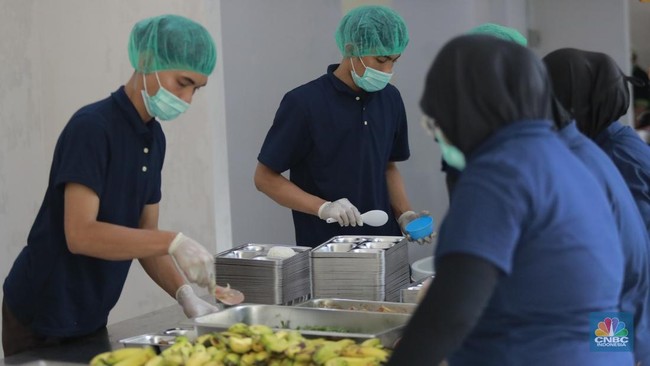
The National Nutrition Agency (BGN) is still exploring avenues for budget efficiency regarding the Free Nutritious Meal (MBG) programme. One such method involves amending the regulations for providing incentives to Nutrition Fulfilment Service Units (SPPG), which have previously received a flat rate of Rp 6 million per kitchen per day.
Head of the BGN, Sudaryono, stated that changing the incentive scheme could make the MBG budget even more efficient, noting that potential savings could reach tens of trillions of rupiah. “We are striving for that; we are trying to be more selective. If the incentive changes from Rp 6 million per day to Rp 2,000 per portion, it becomes more efficient, with savings estimated in the tens of trillions,” Sudaryono said following a meeting with Commission IX of the House of Representatives (DPR RI) in Jakarta on Thursday night.
He argued that the previous scheme, which provided a flat Rp 6 million daily incentive to each kitchen, was inequitable because production capacities vary across SPPGs. Some kitchens produce 2,000, 2,500, or up to 3,000 portions per day.
“The previous rules were established by my predecessors. Some kitchens produce 3,000 portions, some 2,000, and some 2,500. Paying them all the same Rp 6 million is unfair,” he noted. He explained that if a kitchen producing only 2,000 portions receives Rp 6 million, the incentive per portion becomes higher than that of a kitchen producing 3,000 portions. Under the new proposed system, a kitchen would need to produce 3,000 portions to earn the Rp 6 million, ensuring the incentive remains at a consistent Rp 2,000 per portion.
Consequently, the BGN is preparing new regulations to transform the incentive structure. Sudaryono confirmed that he has submitted a Head of Agency Regulation (Perbadan) and expects it to be issued shortly.
During the meeting, Sudarytono explained that the new scheme being drafted would restructure the MBG cost components to a total of Rp 15,000 per portion. Of this amount, Rp 10,000 would be allocated for food ingredients, Rp 2,000 for kitchen incentives, and Rp 3,000 for kitchen operational costs.
Under this scheme, payments to SPPGs will also be adjusted based on operational conditions. The BGN will no longer pay incentives when a kitchen is suspended or closed for holidays. “For example, if a kitchen earns Rp 56 million per day, previously they were still paid during suspensions or holidays. Now, they will not be paid during those periods. Paying during suspensions and holidays was an error,” he added.
This regulatory change is part of the BGN’s broader strategy to curb spending and ensure the MBG budget is utilised effectively. Previously, the BGN had already reduced its 2026 budget ceiling from Rp 268 trillion to Rp 229 trillion.
Sudaryono stated that budget scrutiny is ongoing. “From the initial 2026 budget ceiling of Rp 268 trillion, we have implemented efficiencies, bringing the current budget to Rp 229 trillion for 2026. This means we have achieved an efficiency of approximately Rp 39 trillion,” said Sudaryono.
He emphasised that efficiency efforts will continue as long as there is room for improvement. “Ultimately, this budget is the people’s money. Every single rupiah is important. As the head of the agency, I cannot use this arbitrarily as if it were my own money. This is public money, and every rupiah must be accountable and provide maximum benefit,” he concluded.
Source: jawawa.id (https://jawawa.id/newsitem/rules-to-be-amended-free-nutritious-meal-kitchens-to-lose-flat-rp-6-million-daily-incentive-1788501463)
Originally published by CNBC Indonesia (https://www.cnbcindonesia.com/news/20260904111815-4-764937/aturan-mau-diubah-dapur-mbg-tak-dapat-insentif-rata-rp-6-juta-hari), translated from Indonesian