
Rueibin Chen and the Mission to Build Cultural Bridges Through Piano
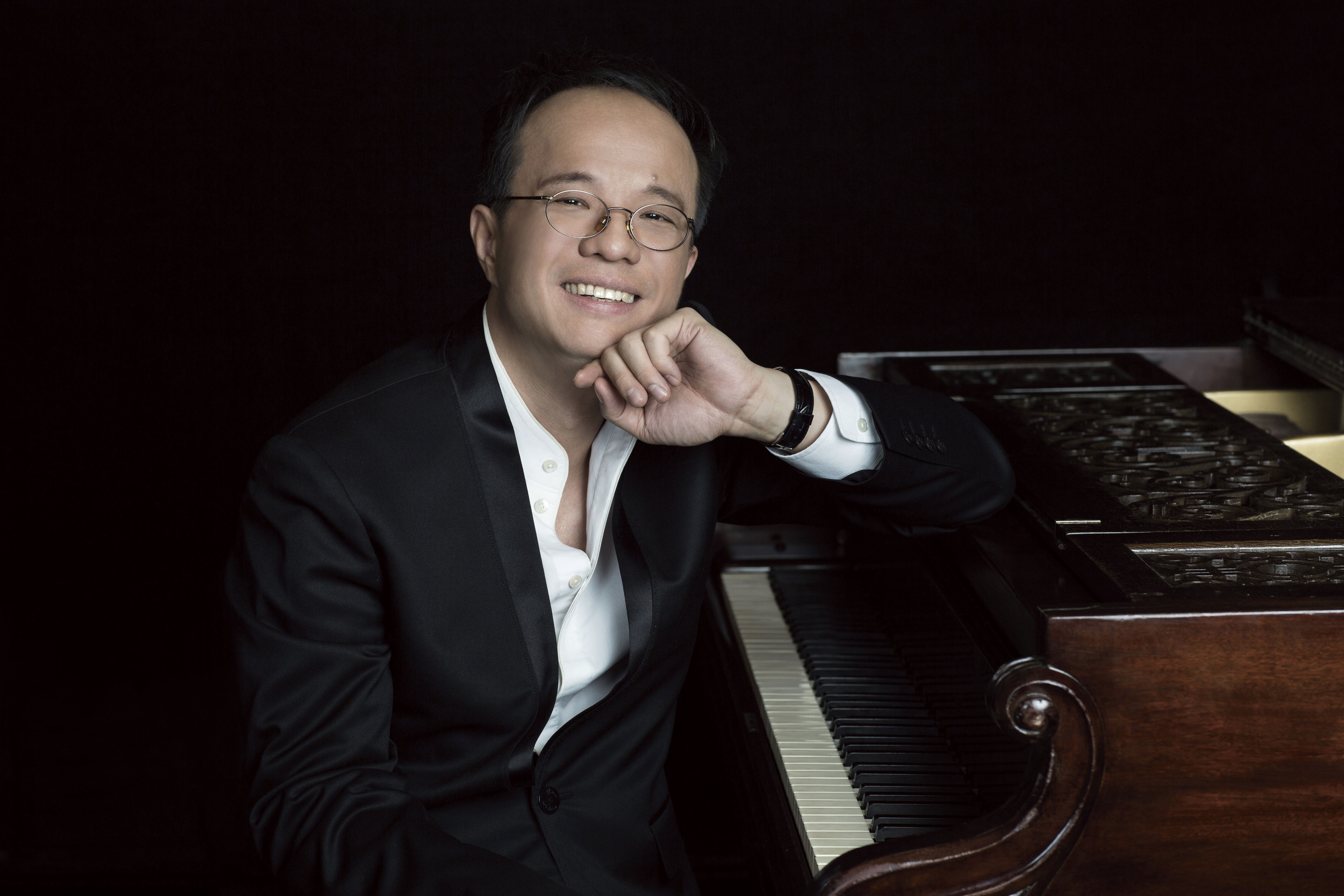
Behind the grandeur of the world-class Aula Simfonia Jakarta, a major narrative of Johannes Brahms’ Piano Concerto No. 1 will soon be composed. On 20 June, Indonesia will witness how the piano keys under the fingers of internationally acclaimed pianist Rueibin Chen, of Taiwanese descent and Austrian citizenship, engage in dialogue with the Jakarta Simfonia Orchestra. For Chen, his arrival in Indonesia bringing the distinctive musical colours of Germany-Austria is not merely a stopover on a Southeast Asian tour. “My arrival in Jakarta is only the first movement of a far more magnificent symphony,” he said when met in the Kemayoran area of Central Jakarta on Wednesday (17/6).
The world knows Rueibin Chen as a pianist with an impressive international reputation. However, the foundation of his musicality was actually made fragile by loneliness in his childhood. At the age of 13, he had to leave his hometown in Taiwan to venture alone to the world’s music capital, Vienna, Austria. “It was a very difficult time. At 13, I went alone without being able to speak German. I had to do everything by myself, like studying, managing my life, and preparing for competitions. That sense of loneliness was very tormenting,” said Chen. Back then, communication technology was not as fortunate as it is today. During his first ten years living in Europe, Chen never once returned home. “We didn’t have the internet or Wi-Fi. I could only call my parents twice a year. That was it,” he added. Being emotionally isolated as an Asian teenager in Europe made the piano his sole ally for self-expression. Nevertheless, that childhood suffering ultimately transformed into a hidden blessing. “When I play Brahms or Rachmaninoff now, I know they also went through very difficult times. So music represents everything for me,” said the only student of Asian descent of the legendary Russian pianist, Lazar Berman.
International critics often bestow two nicknames upon Chen: “Horowitz Fingers” for his explosive virtuosity, and “Angel Fingers” for his tenderness. For Chen, being compared to Vladimir Horowitz is the highest honour. Horowitz also became his inspiration to treat the piano as a complete orchestra. Even so, he does not wish to live in the shadow of that Western legend. As for the nickname “Angel Fingers”, it does not mean he only produces gentle music. “My mission is to use this strong technique to express my own soul, my Eastern cultural roots, and the fire within me today,” Chen revealed.
As a musician who carries the legacy of European classical technique and possesses Chinese cultural heritage, he has a mission to build cultural bridges. When he brings compositions with local Eastern content to magnificent stages, he witnesses the power of music to dismantle barriers of difference. Chen recalled his experience performing in Europe and the United States, where he encountered two very contrasting types of audiences. “There were Western audience members who had never even set foot in Asia. Yet through the melodies presented, they gained warm imagination and fantasy about Eastern culture, and were then driven to study it more deeply,” he recounted. Meanwhile, the group of audience members who had lived separated from their homeland for decades felt a profound emotional bond when they heard their cultural roots woven and played on a magnificent stage. “When they hear their own cultural roots being played, they cry. For me, that emotional moment is proof of how powerful the force of music is,” Chen concluded.
Chen’s choice to perform Brahms’ Piano Concerto No. 1 was not only based on his strong emotional connection to the figure of Brahms, but also because this composition is deemed very suitable to satisfy the high-standard thirst of classical music connoisseurs in Indonesia. “I feel that audiences and young musicians in Indonesia have a great passion for music. Indonesia is very rich in cultural roots,” Chen praised. He also admitted to being very interested in collaborating with both classical and traditional Indonesian musicians. Chen invited imagining what would happen when Russian piano technique meets the mystical rhythms of Indonesia’s traditional cultural heritage. “I think that collaboration will create a ‘cultural earthquake’ that shakes the global stage,” he concluded.