
Rubio asserts US will maintain status quo regarding Taiwan
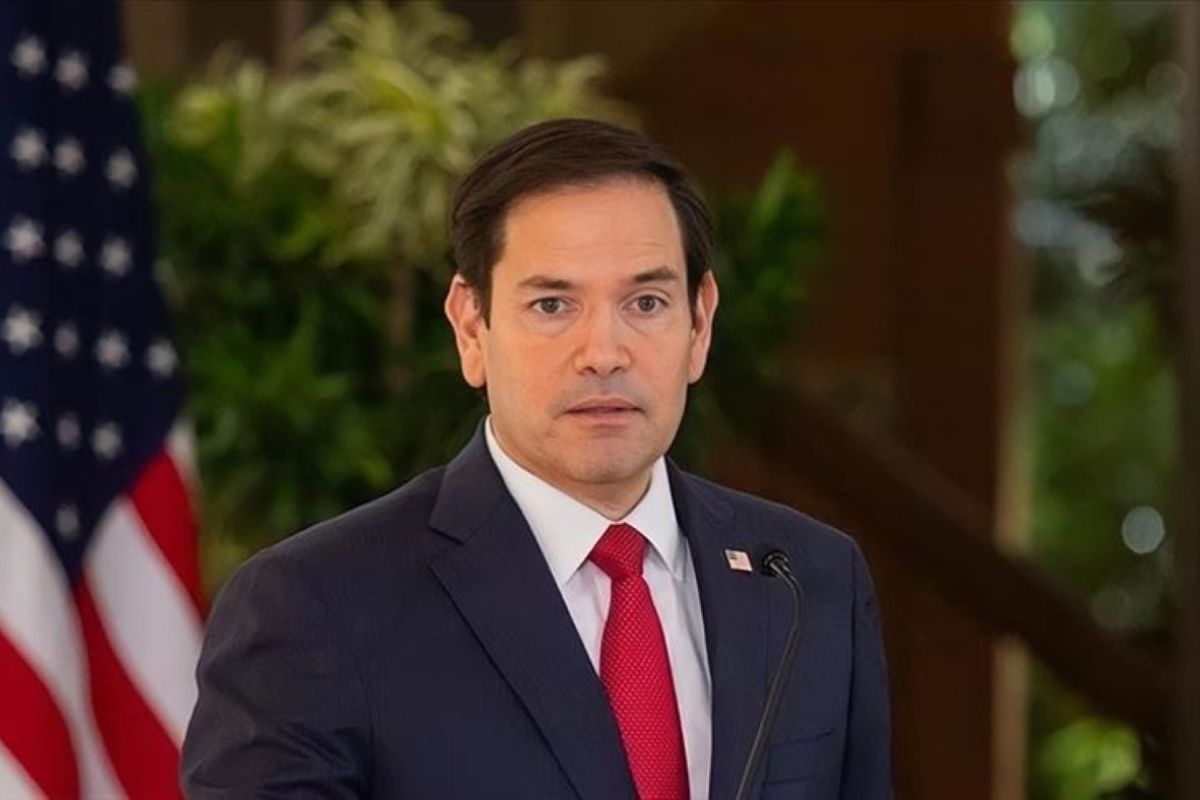
Washington (ANTARA) - US Secretary of State Marco Rubio reaffirmed on Tuesday (2/6) that there has been no change in Washington’s policy towards Taiwan. He emphasised that maintaining the ‘status and quo’ is the best way to preserve stability around the self-governing democratic island.
Rubio’s statement was made while testifying before a Congressional panel after US President Donald Trump stated last month that arms sales to Taiwan could serve as a ‘very good bargaining chip’ in relations with China. That statement triggered concerns among US allies in Asia, as it was widely interpreted as an indication that the Trump administration’s commitment to Taiwan—which China claims as part of its territory—might depend on the broader state of relations between Washington and Beijing.
However, Rubio asserted to members of the Senate Foreign Relations Committee that there is ‘no change’ in US policy. ‘The most important thing to understand is that we want to see the status quo maintained as it is now. That is our policy. That is what we have said. And that is what we continue to say,’ said Rubio, who travelled to Beijing in mid-May alongside Trump to meet Chinese President Xi Jinping.
Responding to various questions from senators regarding the visit, Rubio emphasised that as the US and China are the two most influential nations in the world, both have no choice but to continue dialogue to reduce the potential for conflict. ‘Clearly, there are a number of very troubling issues in our relationship with China,’ he said. ‘Therefore, what we are trying to do is manage a period of strategic stability, while recognising that there are areas in our relationship that will continue to face competition, not just for a few years, but perhaps for decades.’
When questioned regarding a long-delayed $14 billion arms sale package to Taiwan, Trump stated that the package was ‘temporarily suspended’ and dependent on China. This was stated during an interview with Fox News aired shortly after his first trip to China since 2017. ‘To be honest, it is a very good bargaining chip for us. The value is a lot of weapons,’ Trump said.
These comments caused concern in Taiwan and other regions, as they were perceived to suggest that the US might be more flexible regarding its security commitments to achieve deals with other parties. However, on Tuesday, Rubio, who also serves as Trump’s national security advisor, insisted it was inappropriate to link the status of the arms package to pressure from China. ‘They constantly talk about arms sales to Taiwan, but that is in no way a factor hindering our decision-making process,’ he said, referring to the Chinese leadership. ‘This is something that must be decided by the president regarding the timing and manner of its implementation.’
In another session before the US House Appropriations Committee subcommittee, Rubio also discussed various foreign policy and national security issues, including the Iran conflict, NATO, critical minerals, and the Ebola outbreak in the Democratic Republic of the Congo.
Regarding the Iran conflict, this was one of the most discussed topics, as it marked his first testimony before Parliament since the US and Israel launched joint airstrikes against Iran in late February. The high-ranking US diplomat acknowledged that ongoing negotiations to end the conflict between the US and Iran, conducted through mediators, are not proceeding easily. According to Rubio, one cause is Iran’s ‘somewhat fractured’ new regime, which ‘takes days to obtain responses from their system.’
Nevertheless, he asserted that Iranian officials have been willing to ‘negotiate aspects of their nuclear programme that a month ago, or even a year ago, they refused to even discuss, let alone negotiate.’ ‘That is no guarantee that it will ultimately result in a deal acceptable to the Senate or the American people. However, we will be able to engage them in a process to truly test how far they are willing to go,’ he said.
On Tuesday, Trump also stated that the US and Iran are continuing negotiations, contradicting reports from Iranian state media suggesting that officials from both nations had ceased exchanging messages in recent days.