
Rubbish Mountain Already as Tall as 17-Storey Building, Jakarta PSEL Project Accelerated
Coordinating Minister for Food Affairs Zulkifli Hasan stated that the government is accelerating the construction of waste-to-energy electricity facilities (PSEL) in various regions. He conveyed this after the signing of a cooperation agreement between the DKI Jakarta Provincial Government and Danantara Indonesia.
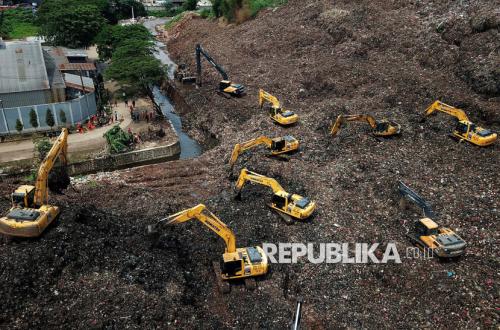
After the agreement signing, Zulkifli revealed that Jakarta’s waste generation reaches around 9,000 tonnes per day. The majority, approximately 87%, still relies on open dumping at the Integrated Waste Processing Site (TPST) Bantargebang, which has now exceeded its capacity.
“If measured, the height of the waste pile at Bantargebang is already equivalent to a 16–17 storey building,” he said on Monday (4/5/2026).
He explained that the government has issued Presidential Regulation No. 109 of 2025 to accelerate emergency urban waste handling through waste-to-electricity processing technology. This policy also speeds up the selection process for business entities for PSEL projects.
The DKI Provincial Government, he continued, has proposed two locations for PSEL construction, namely in Bantargebang and Tanjung Priok Muara. Within six months since the regulation was issued, several similar projects in other regions have also begun, including in Bali, Bogor, and Bekasi.
Nationally, the government targets the construction of waste processing facilities in around 71 districts/cities divided into 22 agglomeration zones. “Previously it took 11 years without completion, now we are accelerating it to reach dozens of regions simultaneously,” said Zulkifli.
He emphasised that the cooperation signing is not merely symbolic but a direct commitment to Jakarta residents. The government targets resolving the waste accumulation issue, which causes odours and environmental disturbances, within the next two years.
“This is a contract with millions of Jakarta residents. Waste will no longer continue to pile up and flood their environment, insya Allah,” he said.
This programme is a follow-up to President Prabowo Subianto’s directive targeting 100% national waste management by 2029. Zulkifli noted that Jakarta is a priority because the capital’s waste problems often serve as a national benchmark.
“If Bantargebang is not resolved, people say Indonesia’s waste is not resolved. But if it’s sorted here, even if other regions follow, the perception will be different,” he said.
He also appreciated the support from the DKI Jakarta Provincial Government and the Ministry of Home Affairs in promoting PSEL implementation. According to him, this project will transform waste, which has long been a problem, into a source of electricity for the city.
The government plans to proceed with the next phase by developing similar projects in 11 other regions, including Yogyakarta, Lampung, Semarang, Surabaya, Medan, and the Jabodetabek agglomeration areas, as well as preparing additional new locations in several regions.