
RSPO RT2026 Discusses Fires in Indonesia, Single Export Gate and Independent Smallholder Inclusion
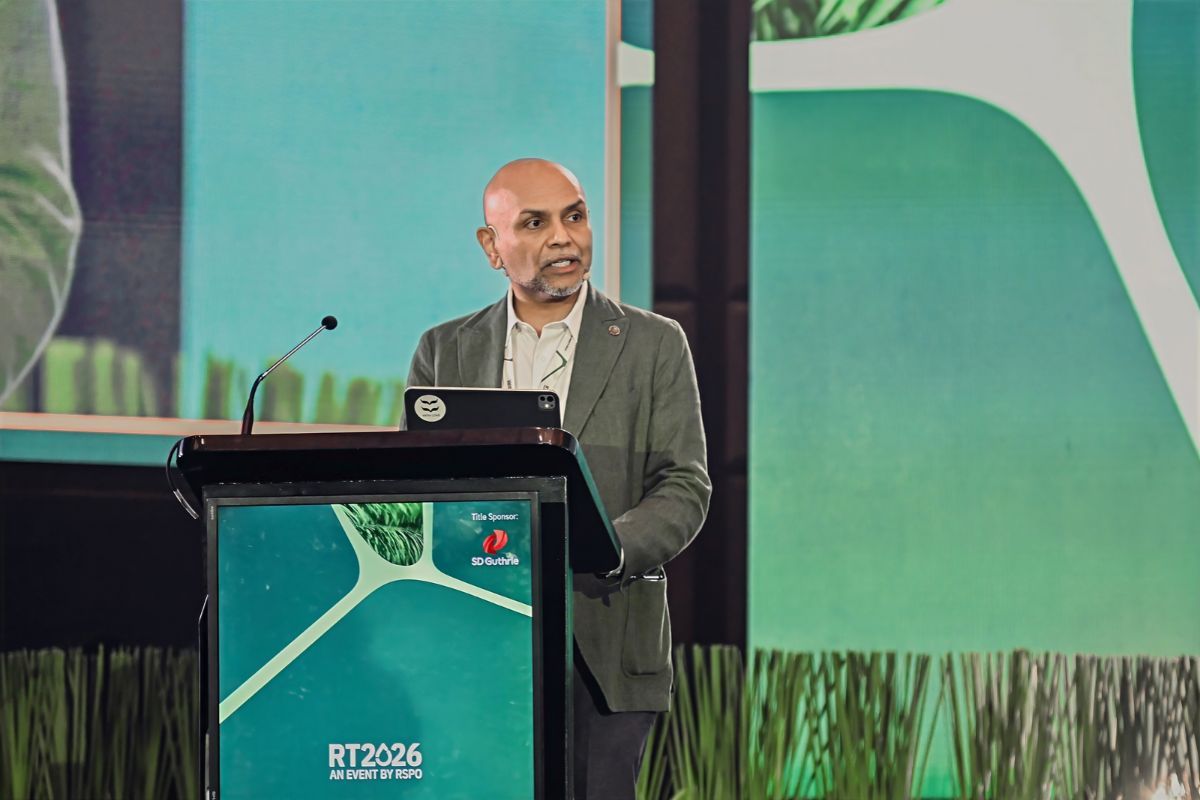
Jakarta (ANTARA/PRNewswire) — The Roundtable on Sustainable Palm Oil’s (RSPO) annual conference, RT2026, brought together global stakeholders to mobilise concrete action for a more sustainable palm oil industry. It aimed to ensure the RSPO’s core mandate continued to deliver tangible environmental and social progress amid changing geopolitical conditions and global market dynamics.
Forest and land fires in Indonesia: data show RSPO-certified concessions were affected at a much lower rate than the industry average
The RSPO’s flagship conference took place during a challenging period for Indonesia. Amid one of the strongest El Niño events in history, forest and land fires burned more than 1.9 million hectares across the archipelago between January and September 2026, according to satellite analysis by Nusantara Atlas.
In his keynote address, RSPO Chief Executive Officer Joseph D’Cruz responded to public criticism of the sector while commending RSPO members’ frontline efforts to extinguish fires in Sumatra and Kalimantan.
“We are not an industry that hides from public scrutiny. We are a partnership that monitors itself more rigorously than any outside party monitors us.”
Presenting preliminary satellite monitoring data from Nusantara Atlas for January to September 2026, Dr David Gaveau, founder of TheTreeMap, said: “When we examined fires within RSPO-certified concessions and cross-checked the data with the RSPO, we found that 14,500 hectares of land had burned or been affected by fire within these concessions. This accounts for about 0.8% of the 1.9 million hectares burned across Indonesia during 2026.”
D’Cruz added: “If particular concessions show an unusual pattern of fires, we will identify and investigate them. In addition, the analysis shows that no land belonging to RSPO-certified independent smallholders was burned. To date, there is no data or evidence indicating that RSPO-certified units deliberately started fires.”
D’Cruz issued a strong call for RSPO members to make use of the available data, facts and evidence:
“We must all show a willingness to defend what we have built. When we choose to remain silent, we allow the worst actors to define our industry, undermine two decades of hard work and let those who have never understood it disparage a system on which millions of livelihoods depend.”
Connecting independent smallholders with global buyers
Rural livelihoods are particularly evident among smallholders, who produce nearly half of Indonesia’s total palm oil. Indonesia is home to 77% of the world’s RSPO-certified independent smallholders. RT2026 recognised 45 new independent smallholder groups from Colombia, Indonesia, Malaysia, Peru and Thailand that had completed their initial RSPO certification.
The RSPO Independent Smallholder Business Matching event also brought prospective credit buyers together with smallholders from around the world. The RSPO recognised exemplary members for their practical support of smallholders through purchases of RSPO Credits between November 2025 and September 2026: Kao Corporation, Nestlé S.A. and Unilever PLC, along with prominent first-time buyers Lakeland Dairies Co-operative Society Limited and Pitak Palm Oil Company Limited.
What Indonesia’s single export gate means for sustainable palm oil
Indonesia’s Single Export Gate is one of the sector’s most significant developments, reshaping the country’s palm oil export landscape. In 2026, government investment agency Danantara Indonesia established PT Danantara Sumberdaya Indonesia (DSI) to oversee and manage exports of strategic commodities. During a special dialogue, DSI Chief Executive Officer Luke Mahony explained how the new system and sustainable palm oil could complement one another to strengthen confidence in global markets.
“We welcome this dialogue with the RSPO because sustainability and market access must go hand in hand. DSI’s mandate is clear: we facilitate, not obstruct. We are here to uphold industry standards, simplify regulatory compliance and strengthen the world’s confidence in Indonesian palm oil,” Mahony said.
DSI aims to bring transparency and credibility to Indonesia’s commodity markets by drawing on data within the ecosystem and combining it with market realities, including sustainability from the RSPO’s perspective, supply, prices and production. Under DSI’s intermediary model, due to launch in January 2027, buyers and sellers will retain their business relationships, while DSI protects export continuity and maintains traceability across the supply chain.
About the RSPO
The Roundtable on Sustainable Palm Oil (RSPO) is a global partnership working towards a sustainable palm oil industry. Established in 2004, the RSPO is a non-profit, multi-stakeholder organisation that brings together members from across the palm oil value chain, including oil palm growers, palm oil processors and traders, consumer goods manufacturers, retailers, banks and investors, environmental and nature conservation non-governmental organisations (NGOs), and social and development NGOs.
As a partnership for progress and positive impact, the RSPO facilitates global change towards sustainable palm oil production and consumption. It communicates environmental and social benefits to inspire change, catalyses collaboration to drive progress, and sets certification standards to provide credible assurance.
The RSPO is officially registered as an international association in Zurich, Switzerland, with its operational headquarters in Malaysia and Indonesia and representative offices in China, Colombia, the Netherlands, the United Kingdom and the United States.
Source: jawawa.id (https://jawawa.id/newsitem/rspo-rt2026-discusses-fires-in-indonesia-single-export-gate-and-independent-smallholder-inclusion-1793854389)
Originally published by Antara (Indonesian) (https://www.antaranews.com/berita/5833179/rspo-rt2026-bahas-kebakaran-di-indonesia-gerbang-ekspor-tunggal-dan-inklusi-petani-swadaya), translated from Indonesian