
RSCM Successfully Separates Conjoined Twins in Hours-Long Operation
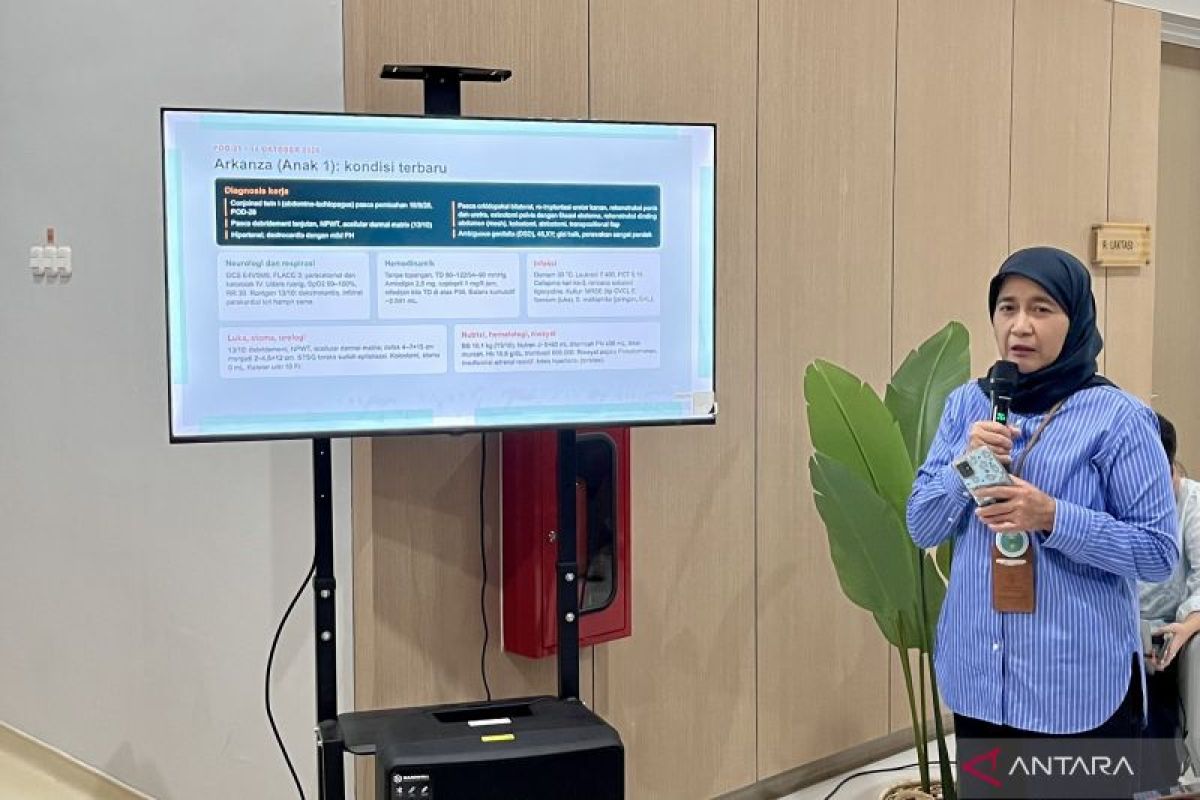
Jakarta (ANTARA) – A team of doctors at Dr Cipto Mangunkusumo National Central General Hospital (RSUPN/RSCM) has successfully separated twin boys joined at the abdomen and pelvis (abdomino-ischiopagus), identified as NA 1 and NA 2. The operation set a record for the longest procedure in the hospital’s history.
Prof. Dr. dr. R.A. Setyo Handryastuti, head of RSCM’s conjoined-twin separation surgical team, said in Jakarta on Monday that the operation on the first patient lasted 29 hours, while the second took 23 hours and 55 minutes.
“This is the longest conjoined-twin separation operation ever performed by RSCM, with the total time spent on treatment reaching 36 hours when preparation is included,” Prof. Setyo said at a press conference at RSCM Kiara in Jakarta.
The separation operations took place on 15–16 September. After more than a month of intensive care in the paediatric intensive care unit (PICU), the two boys, who were born in December 2024, are now stable and have been moved to a general ward.
“Their post-operative wounds are healing, they have no fever, and their oral nutritional intake is optimal, so today they have officially been transferred to a general ward,” she said.
Prof. Setyo explained that the cases involving NA 1 and NA 2 were highly complex. Although vital organs such as the heart, lungs, stomach, kidneys and bladder were separate, the twins shared several important structures, including part of the liver tissue, the portal vein, the large intestine with one functioning anus, the pelvic bones (ischium), and joined urinary and reproductive tracts.
RSCM deployed a multidisciplinary team comprising paediatric surgeons, reconstructive plastic surgeons, paediatric orthopaedic surgeons, urologists, paediatric anaesthetists and rehabilitation specialists to separate the twins and reconstruct their anatomy.
RSCM paediatric orthopaedic specialist Dr. dr. Aryadi Kurniawan said closing the abdominal wall posed a particular technical challenge because the abdominal cavities of both babies were left widely open after separation.
Aryadi said the orthopaedic team cut part of the pelvic bones to help bring them into a closer position after the separation, enabling the paediatric and plastic surgery teams to close the abdominal walls.
RSCM said the twins’ treatment is not yet complete. They will need further reconstructive operations, including procedures on their urinary tracts and reproductive organs, as well as long-term monitoring of their growth and development.