
Rp3 Trillion Project Underway: Bekasi to Process 500,000 Tonnes of Waste into 27 MW of Electricity
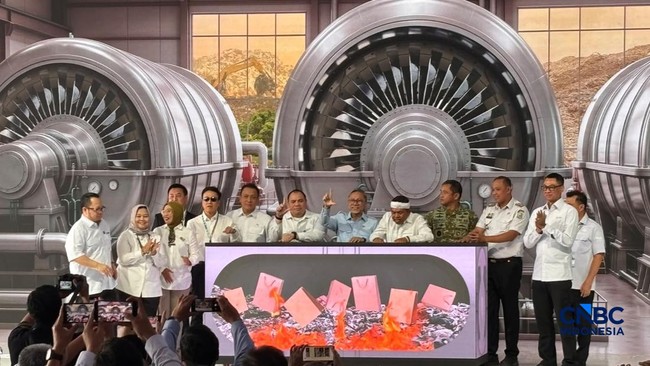
The Daya Anagata Nusantara Investment Management Agency (BPI Danantara) has inaugurated the construction of a Waste-to-Energy Processing Facility (PSEL) in Ciketing Udik, Bantar Gebang, Bekasi City, West Java, on Wednesday (26/8/2026). The facility is targeted to have a processing capacity of 500,000 tonnes of waste per year. The PSEL, with an investment value of Rp3 trillion, will process 70% of the total waste generated in the area.
Danantara CIO Pandu Sjahrir said that the PSEL’s operations will reduce the need for landfill space by up to 90% and create 1,000 new jobs. He noted that the project has undergone an evaluation process since January 2026 involving six consortia, leaving two selected partners.
“This project is targeted to manage more than 500,000 tonnes of waste per year, or around 70% of the processed waste in Bekasi City. From an environmental perspective, the Bekasi City PSEL is also projected to reduce waste emissions from the landfill by up to 80% and cut carbon emissions by 640,000 tonnes of CO2 equivalent per year,” he said at the groundbreaking ceremony for the Ciketing Udik PSEL Project in Bantar Gebang, Bekasi, on Wednesday (26/8/2026).
The infrastructure development is designed to supply electricity for 55,000 homes in the Bekasi area. In addition to reducing carbon emissions by 640,000 tonnes per year, the project adopts the European Industrial Emissions Directive (EU IED) environmental standard in its operations.
“From an energy perspective, this initiative will produce green energy that can supply the needs of 55,000 households in Bekasi City. And this Rp3 trillion initiative, from an investment standpoint, is estimated to create around 1,000 green jobs and reduce landfill land requirements by about 90%,” he said.
Coordinating Minister for Food Zulkifli Hasan said the government continues to oversee the simplification of waste regulations to accelerate the resolution of 1,800 tonnes of waste per day in Bekasi. He is targeting 70-75% of the national waste problem to be fully resolved by 2029.
“Bekasi City’s new waste is 1,800 tonnes. At most, 1,800 can be processed. God willing, by 2029 we can resolve 70 to 75% of this waste. Since Indonesia’s independence until today, the problem has only grown. But in these next 2-3 years we can solve it,” Zulkifli said.
The government has streamlined hundreds of waste management regulations that were previously considered to hinder the entry of renewable energy investors. From hundreds of regulations, they have now been simplified to just three core rules to facilitate project execution on the ground.
“The regulations on waste management, waste to energy, there were even more, sir. Hundreds of regulations. That is why in 11 years there were only two. We tidied this up. From here, only three remain. We oversee the entire process until it can be implemented like this,” he said.
The inauguration of the second PSEL construction is part of Danantara’s efforts to carry out its mandate for urban waste management through environmentally friendly technology as stipulated in Presidential Regulation No. 109 of 2025. The facility in Bekasi City is the second project to begin construction after the start of the Denpasar Raya PSEL in July 2026.
The Bekasi City PSEL is targeted to operate in mid-2028. Under Presidential Regulation No. 109 of 2025, the electricity generated will be purchased and distributed to PLN.
PLN President Director Darmawan Prasodjo explained that the installed capacity of the Waste-to-Energy Power Plant (PLTSa) from the Bekasi PSEL project reaches 36 Megawatts (MW). The amount to be distributed to Bekasi residents is estimated at 27 MW. PLN will build a hub substation to connect the PSEL facility to the main substation, which will then distribute electricity to residents.
“Technically, the distance is 10 kilometres from the main substation. But, with the Mayor’s permission, it turns out the electricity load in Bekasi is high, so we are dedicating the electricity from the Bekasi PSEL to Bekasi City,” he said.
“Initially we wanted to connect it to the main substation which then goes everywhere, but we are building a hub substation only 5 kilometres from here. Because this is only 27 Megawatts with 36 MW installed, it will use ordinary electricity poles to the hub substation, which is specifically dedicated to Bekasi City. So the Mayor can say that once the PSEL is commissioned, the electricity comes from waste. Bekasi City’s waste comes here, then we send the electricity production back to Bekasi City,” he explained.
“We are very proud to be here, that together we can solve this very complex problem, and we can say that the main product is not electricity, but a clean environment. Electricity is only a by-product of this programme,” he added.
As part of the Bekasi City PSEL inauguration, a Power Purchase Agreement (PPA) was signed with PT PLN (Persero). The agreement serves as the commercial basis for the absorption of electricity generated from the Bekasi City PSEL facility into the PLN grid, providing offtake certainty and long-term operational sustainability for the project.
The Power Purchase Agreement will be established between PLN and each BUPP for all PSEL projects at a purchase price of US$0.20 per kWh for all capacities. The facility in Bekasi City will process up to 1,500 tonnes of waste per day into clean energy in the form of electricity. The Bekasi PSEL will synergise with pyrolysis waste processing technology.
Source: jawawa.id (https://jawawa.id/newsitem/rp3-trillion-project-underway-bekasi-to-process-500-000-tonnes-of-waste-into-27-mw-of-electricity-1787741550)
Originally published by CNBC Indonesia (https://www.cnbcindonesia.com/news/20260826145223-4-762408/proyek-rp3-t-jalan-bekasi-olah-500000-ton-sampah-jadi-27-mw-listrik), translated from Indonesian