
Rp200 Billion Budget for Slum Redevelopment, Expert Warns Not Merely to Beautify Areas
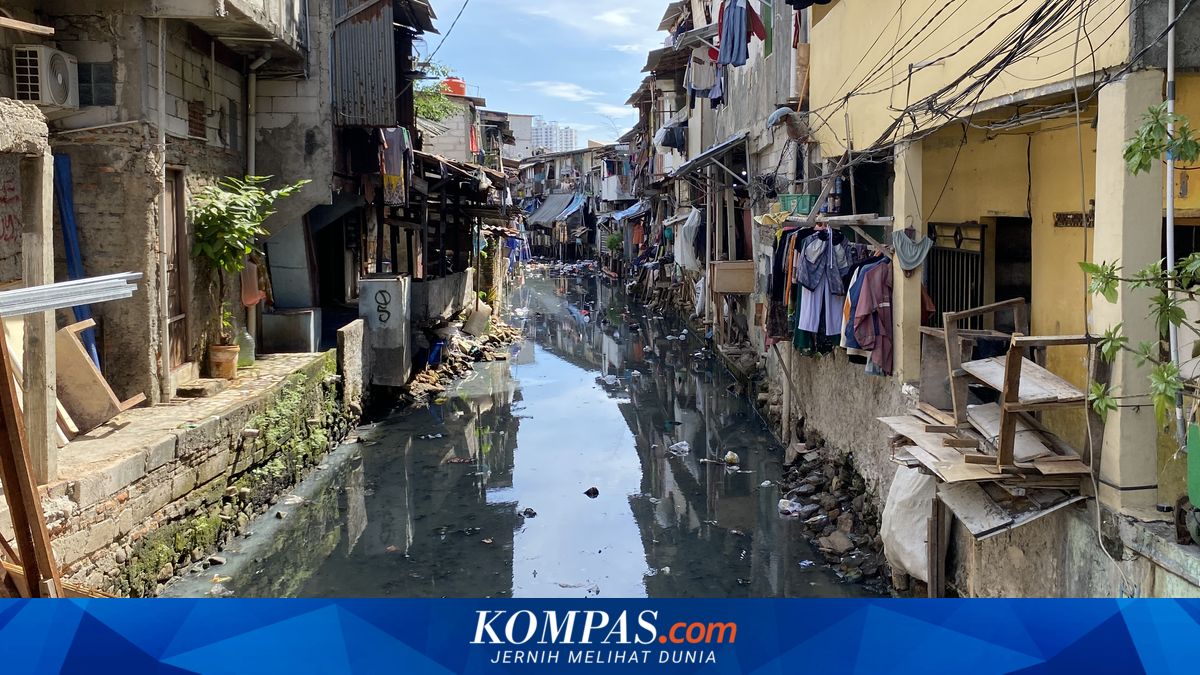
The Jakarta Provincial Government (Pemprov) through the DKI Jakarta Department of People’s Housing and Settlement Areas (DPRKP) allocated on average Rp200 billion annually for the redevelopment of slum areas in Jakarta.
Urban planning expert Bakti Setiawan cautioned that the reduction in the number of RW kumuh in Jakarta should not be viewed solely through changes to the area’s appearance. He said a locality cannot be regarded as completely free from slum status if basic issues such as sanitation, social conditions, and residents’ economic conditions have not been addressed.
‘This is evidenced in the Permen PUPR on slum housing; its orientation is indeed toward the physical aspects,’ Bakti told Kompas.com on Tuesday (19 May 2026).
Basic aspects such as MCK (public toilets), drainage, waste management, and the density of an area must be given attention.
‘The basic aspects are important, but don’t forget the other dimensions namely human, social, and economic,’ he added.
He said many village renewal programmes look good at first, but do not last long. This is because the programmes focus only on physical improvements. As a result, areas that have been redeveloped could revert to slum status if residents’ economic conditions and social life are not improved.
‘Because they tend to address only the physical aspects, sustainability is not guaranteed,’ he said.
Meanwhile, the head of DPRKP DKI Jakarta, Kelik Indriyanto, said the total budget for slum area redevelopment disbursed since 2018 to 2025 amounted to around Rp 1.9 trillion. ‘In total, the budget for slum redevelopment undertaken during the period 2018 to 2025 is Rp 1.9 trillion. Accordingly, the average annual allocation stands at around Rp 200 billion,’ Kelik said in an official statement on Wednesday (20 May 2026).
Meanwhile, renewal patterns are being carried out in several locations such as Kampung Akuarium, Kunir, Palmerah, and Tanah Tinggi with a comprehensive redevelopment of residents’ homes along with the area’s infrastructure, facilities, and utilities.