
Rp2,500 Trillion in Credit Unused; BI Observes Private Sector Movement
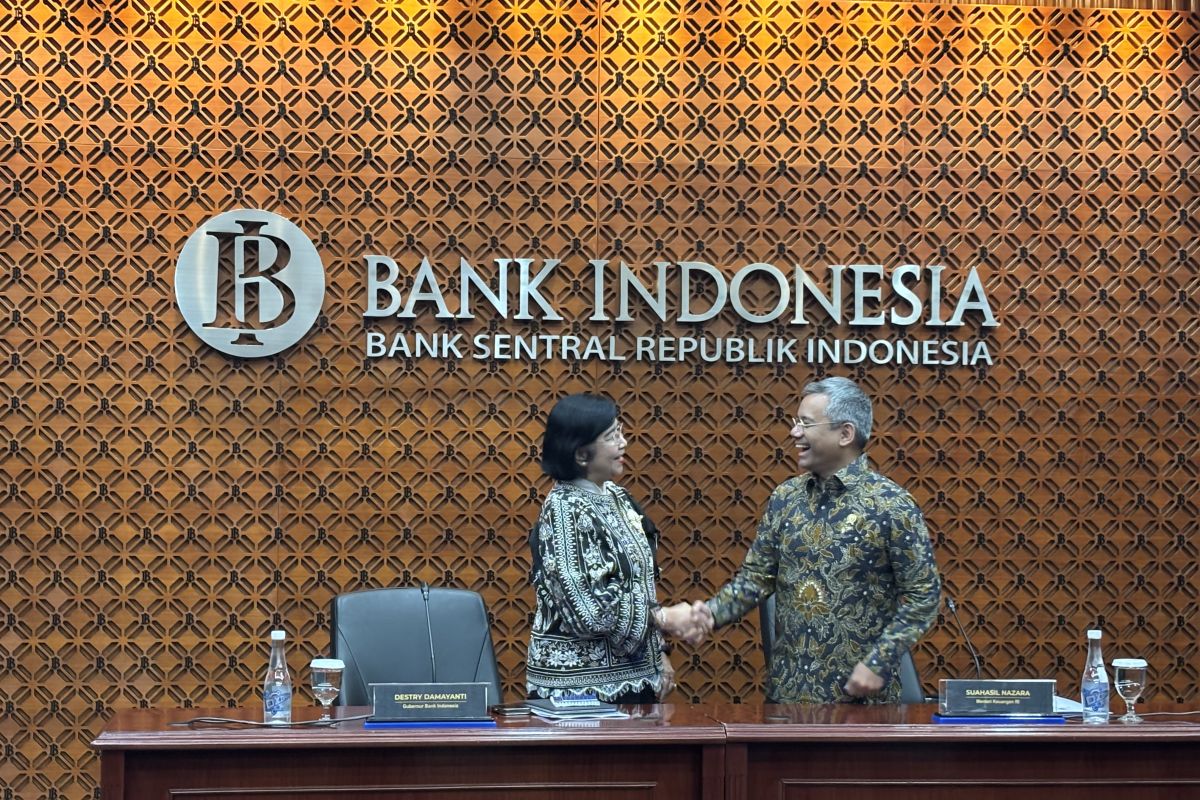
Jakarta (ANTARA) - Bank Indonesia (BI) has observed that undisbursed loan facilities still hover around Rp2,548 trillion as of July 2026, amidst a rising demand for financing from the private sector.
Speaking at the Monetary & Fiscal Policy Synergy Press Conference at Bank Indonesia in Jakarta on Thursday, BI Governor Destry Damayanti stated that the high level of undisbursed loans is influenced by both credit demand and supply factors.
Up to the second quarter of 2026, credit growth was largely supported by activities related to the government, while demand from the private sector remained relatively limited. However, BI is beginning to see changes in recent data.
“In the latest data, we see that the private sector has started to move upwards. This means that from the demand side, there is an emerging movement towards utilising credit,” said Destry.
Regarding the supply side, Destry noted that some banks previously preferred to place liquidity into securities, including Government Securities (SBN) and Bank Indonesia Rupiah Securities (SRBI), while credit demand remained weak.
Under the Macroprudential Incentive (KLM) scheme, banks can receive a maximum incentive of two per cent or 200 basis points (bps) on their third-party funds (DPK) if they maintain their ratio of non-repository SBN and SRBI holdings relative to total funding below 19 per cent.
According to her, the incentive is provided through a reduction in bank current accounts at BI as part of the fulfilment of the mandatory minimum reserve requirement (GWM) which must be met on average.
BI hopes this scheme will encourage banking liquidity to flow more significantly into economic financing.
Signals of credit strengthening began to appear in August 2026. Banking credit grew by 13.65 per cent year-on-year, supported by a 25.11 per cent surge in investment credit and 11.45 per cent in working capital credit.
“This is a very positive development because it means credit growth is entering productive sectors. For us, this serves as a signal that economic activity continues to circulate with increasing economic capacity due to the aforementioned investment credit,” she added.