
Rp104 Trillion Stolen by Hackers; Binance Pledges to Cover Losses
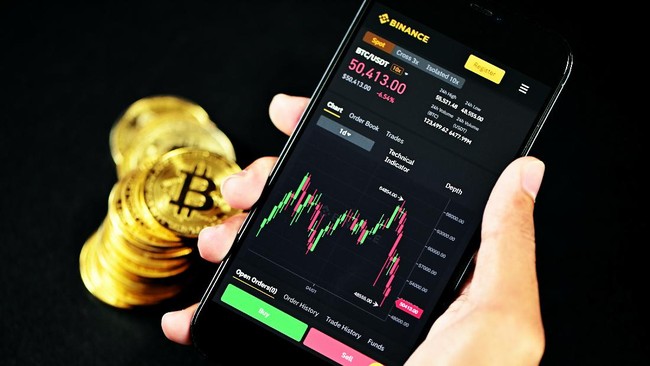
Jakarta, CNBC Indonesia — Global crypto-asset exchange Binance has reportedly suffered a hacking attack, with losses estimated at US$6.3 billion, or around Rp104 trillion (assuming an exchange rate of Rp16,500 to the US dollar). Binance says it will cover all losses arising from the attack.
The incident has raised concerns about the security of digital assets, the fate of the stolen funds and the potential impact on the stability of the crypto market.
About US$3 billion, equivalent to Rp49.5 trillion, of the affected assets has been frozen, according to an update from Binance’s security team.
Investigations by several blockchain analytics firms have pointed to the suspected involvement of a North Korean state-sponsored hacking group. Analysts, meanwhile, say the incident has not yet indicated a serious threat to Binance’s financial capacity.
As the case develops, Bitcoin prices are also under pressure. On Friday (30 October 2026), Bitcoin was trading below US$78,000.
One of the main issues now under scrutiny is how to return frozen crypto-assets to their owners. Freezing transactions does not, by itself, mean the funds can be returned immediately.
Ari Redbord, head of global policy at TRM Labs and a former US federal prosecutor and Treasury Department official, explained that freezing only stops funds from moving. Their return requires a separate legal process.
“Freezing stops the money from moving, while its return is handled through a legal process,” Redbord said.
He said law enforcement agencies typically need to obtain a court order or seizure warrant before working with stablecoin issuers to release or reissue frozen assets to their rightful owners.
Stablecoins are considered the crypto-assets that are relatively easiest to recover because their issuers control the token contracts.
“Tether and Circle can freeze, burn and reissue tokens. This mechanism allows frozen USDT and USDC to be returned to victims,” he said.
Recovering Bitcoin and Ethereum, however, is much more complicated. Neither asset has an issuer able to freeze transactions directly or control the assets in the way stablecoin issuers can.
Investigators must therefore trace funds through crypto exchanges and other digital-asset services. Funds that continue to move may still be stopped when they reach a platform willing to co-operate with law enforcement.
Eric Jardine, head of research at blockchain analytics firm Chainalysis, said returning frozen assets requires co-ordination between law enforcement, crypto exchanges and token issuers.
He stressed that there is no fixed timeframe for recovering assets.
“There is no standard recovery timeline. Freezing can technically be done quickly, but returning the funds can take months or years,” Jardine said.
Although Bitcoin and Ethereum cannot be frozen directly by an issuer, that does not mean they are impossible to recover. Jardine said transactions on public blockchains remain traceable, allowing investigators to follow funds until they reach an exchange or another centralised platform.
At that point, authorities can intervene with the help of a platform willing to co-operate.
TRM Labs said it had a high degree of confidence that the attack on Binance was linked to TraderTraitor, a hacking group sponsored by the North Korean government.
That conclusion was based on intelligence analysis drawing on activity both on and off blockchain networks.
The same group was previously identified by the US Federal Bureau of Investigation (FBI) as responsible for the US$1.5 billion hack of crypto exchange Bybit in February 2025.
TRM Labs found several similarities between the Binance attack and other incidents linked to North Korea. One was the preparation carried out well before the theft, including the collection of transaction signatures in advance.
TRM Labs estimates that digital assets worth about US$6.36 billion were moved from Binance wallets across 10 blockchain networks. Most of the transfers took place within roughly 20 minutes.
Preparations for the attack are believed to have begun at least 36 hours before the theft. The perpetrators reportedly used Tornado Cash, a cryptocurrency transaction-mixing service, to fund their wallets before carrying out the hack.
The findings are also consistent with Chainalysis’s analysis. Jonathan Levin, the firm’s co-founder and chief executive, said Chainalysis believes the approximately US$6.4 billion Binance hack was probably carried out by the TraderTraitor group, based on links to several previous attacks.
Despite the large value of the stolen assets, analysts say the incident does not necessarily threaten Binance’s financial position.
Sean Farrell, head of digital-asset strategy at Fundstrat Global Advisors, said the hack has so far not indicated a material solvency risk for the company.
“The most important point for the market is that the incident does not currently appear to pose a significant solvency risk to Binance,” Farrell said.
He estimated that about US$3.3 billion in assets had yet to be frozen. Assuming the frozen stablecoins can eventually be returned, Binance’s emergency fund, known as the Secure Asset Fund for Users (SAFU) and valued at around US$1.2 billion, could cover about a third of the remaining losses.
Binance is expected to cover the rest of the shortfall using its own funds.
Source: jawawa.id (https://jawawa.id/newsitem/rp104-trillion-stolen-by-hackers-binance-pledges-to-cover-losses-1793451026)
Originally published by CNBC Indonesia (https://www.cnbcindonesia.com/tech/20261031182610-37-781174/rp104-triliun-lenyap-digondol-hacker-binance-janji-ganti-rugi), translated from Indonesian