
Royalty Increase Postponed: How Will the Mining Profit-Sharing Scheme Resemble That of Oil and Gas?
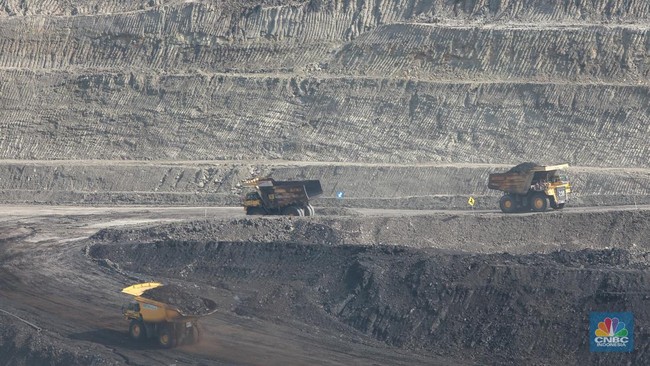
Jakarta, CNBC Indonesia - The Minister of Energy and Mineral Resources (ESDM), Bahlil Lahadalia, has decided to suspend the plan to increase mineral royalty rates starting from copper, gold, silver, nickel, to tin. This is because the proposal for the royalty rate increase is still at the public consultation stage.
Bahlil acknowledged that in recent days, his side had indeed conducted exercises and socialisation regarding the planned changes to royalty rates. This was done to gather input from business actors before official regulations are issued.
“And after hearing input from the public and business friends, I also received input, so I think I will put this on hold to build a good formulation that is mutually beneficial. The state benefits and the businesspeople must also benefit,” said Bahlil when met at the Ministry of ESDM, quoted on Tuesday (12/5/2026).
Mining Profit-Sharing Scheme
Amid the postponement of the royalty increase, the government is also examining changes to the management pattern of the mining sector with a profit-sharing scheme said to be similar to the oil and natural gas (migas) sector.
According to Bahlil, the study stems from the mandate of Article 33 of the 1945 Constitution, which states that natural resources are controlled by the state and used to the greatest extent for the prosperity of the people.
“Article 33 of the 1945 Constitution states that all wealth contained in the bowels of the Indonesian earth, both on land, sea, and all other space, is controlled by the state and used to the greatest extent for the prosperity of the people. That means these assets are state assets,” said Bahlil.
He then emphasised that mining companies are essentially only given permission to manage these resources. Therefore, the government is now seeking the best formulation so that the distribution of benefits between the state and business actors remains balanced.
“Businesspeople are only given permission to manage it. Regarding the scheme, the government will certainly look at what is win-win. What is the win-win? Good for the state, good for the private sector. And that hasn’t finished me doing the exercise yet,” he said.