
Roy Suryo's Legal Team Accuses Police of 'Smuggling' Article in Fake Diploma Case
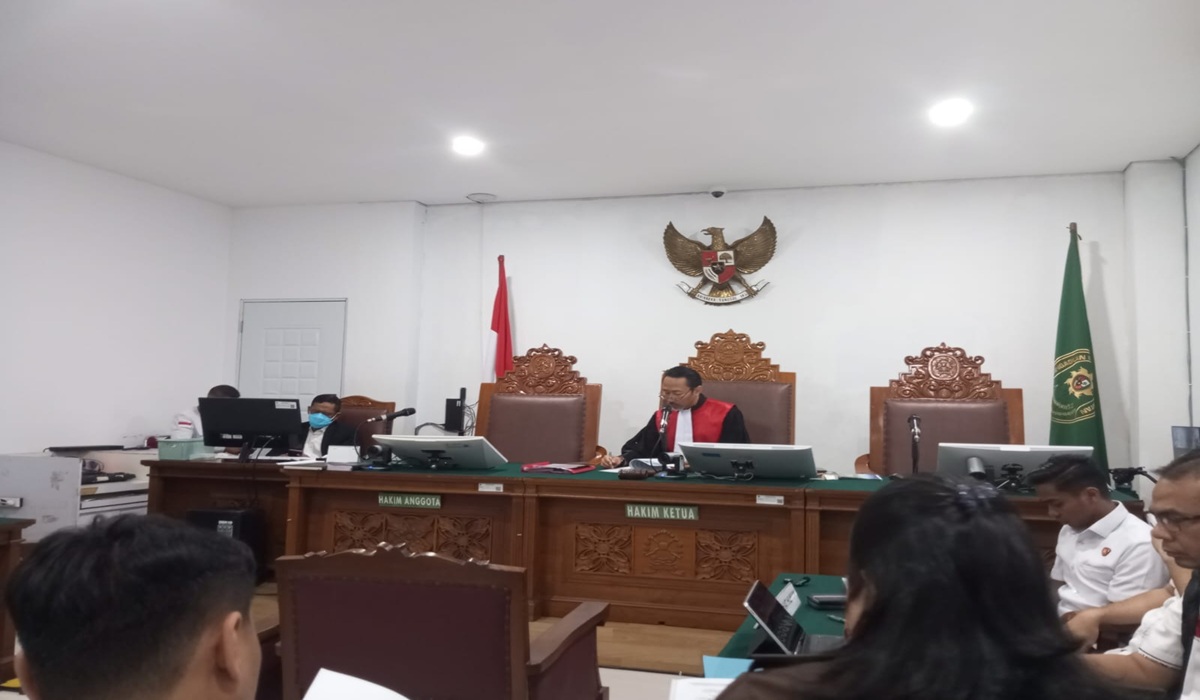
Roy Suryo’s legal team has accused Polda Metro Jaya investigators of ‘article smuggling’ in naming their client a suspect in the alleged fake diploma case of Indonesia’s 7th President Joko Widodo, or Jokowi. The accusation was made during a pre-trial hearing at the South Jakarta District Court on Monday (13 July), on the agenda of reading the reply to the response of the Respondent, namely Polda Metro Jaya.
Roy Suryo’s legal team stated that the police report filed by Joko Widodo on 30 April 2025 essentially concerned alleged defamation arising from the spread of information about the diploma via social media. However, they noted that investigators instead inserted Article 32 paragraph (1) of the ITE Law as the basis for the suspect designation.
Article 32 paragraph (1) of the ITE Law reads: “Any person who deliberately and without right or against the law, in any way, alters, adds to, reduces, transmits, damages, deletes, moves, or conceals Electronic Information and/or Electronic Documents belonging to another person or to the public.”
“There has been ‘smuggling of criminal articles’, namely the Respondent (the investigators) has smuggled in Article 32 paragraph (1) of the ITE Law, whose elements in fact do not correspond to the narrative of the events described,” said the reply from Roy Suryo’s legal team at the hearing.
The legal team argued that Article 32 paragraph (1) of the ITE Law is essentially intended to protect the integrity, confidentiality and authenticity of electronic information or documents from actions such as altering, reducing, damaging, moving or concealing another person’s electronic data.
Meanwhile, based on the narrative in the police report, the matter at issue only related to the uploading of video clips and documents accompanied by accusations regarding Joko Widodo’s diploma.
According to them, such actions would be more appropriately categorised as alleged defamation or an attack on honour, not as a criminal offence relating to the alteration or destruction of electronic documents as regulated in Article 32 of the ITE Law.
“That the act of uploading video clips or photographs of documents accompanied by false accusations (slander) on social media is more appropriately categorised as the criminal offence of defamation and an attack on honour, not data interference, which is the intent and purpose of applying Article 32 of the ITE Law,” the reply continued.
On that basis, Roy Suryo’s legal team considered that from the initial reporting stage there has been no evidence satisfying the elements of Article 32 paragraph (1) of the ITE Law. They argued that investigators applied the article through analogy, even though this is prohibited in criminal law.
The reply stated that the use of analogy to establish a criminal offence contradicts Article 1 paragraph (2) of the new Criminal Code, which stipulates that the determination of a criminal offence must not rely on analogy.
Beyond the issue of the article applied, the legal team also considered that investigators had only emphasised the quantity of evidence in their possession without explaining its quality.
They stressed that in a case of alleged violation of Article 32 of the ITE Law, the evidence should be capable of demonstrating activity involving electronic documents, such as unauthorised access, data alteration, digital traces and the results of a digital forensic audit proving the elements of the offence. Therefore, Roy Suryo’s legal team asked the sole judge of the pre-trial to examine not only the quantity of evidence held by investigators, but also its conformity with the elements of Article 32 paragraph (1) of the ITE Law, which formed the basis for naming Roy Suryo a suspect.
Source: jawawa.id (https://jawawa.id/newsitem/roy-suryos-legal-team-accuses-police-of-smuggling-article-in-fake-diploma-case-1783947094)
Originally published by Media Indonesia (https://mediaindonesia.com/politik-dan-hukum/910460/kuasa-hukum-roy-suryo-tuding-penyidik-lakukan-penyelundupan-pasal), translated from Indonesian