
Rowing for Independence in a Sea of Geopolitics
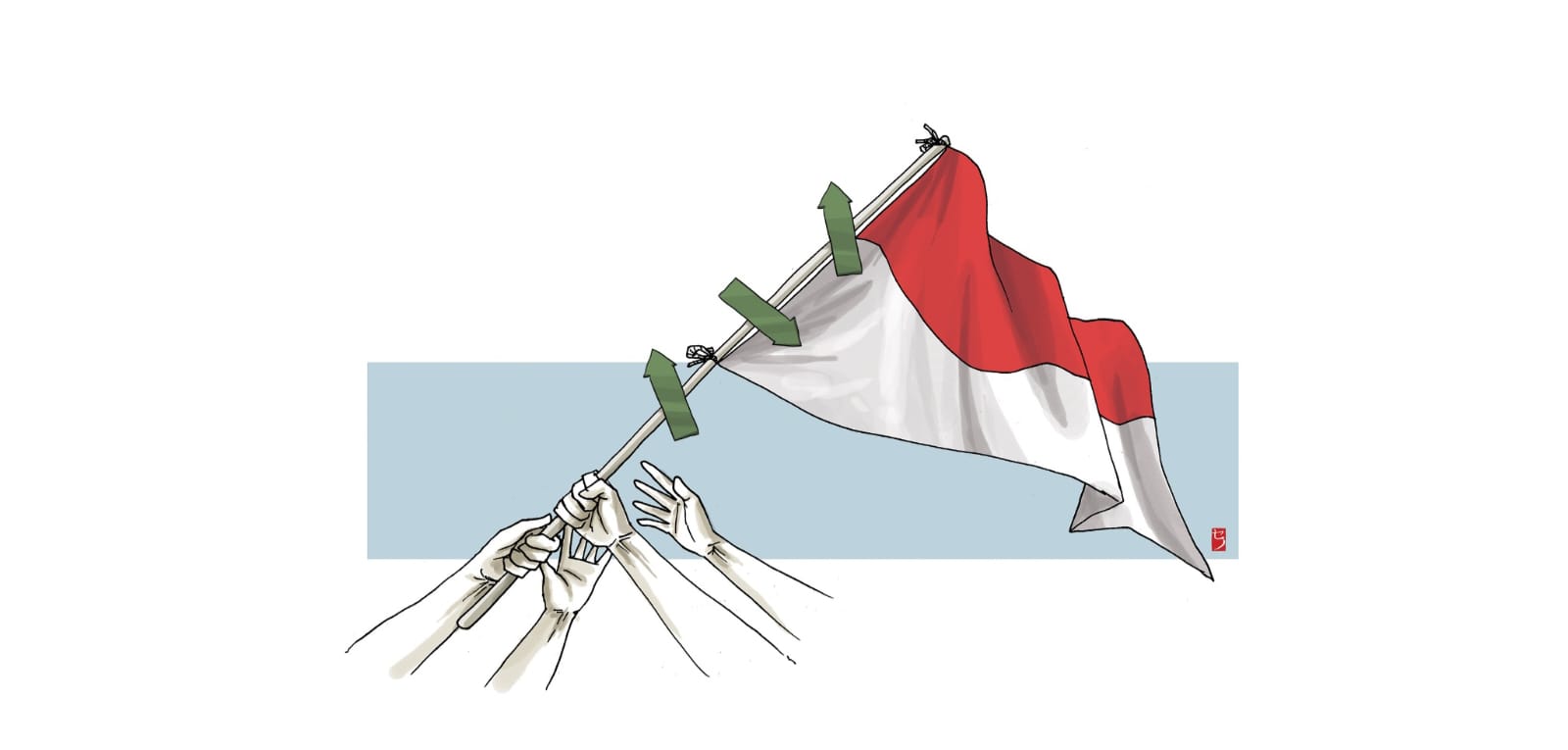
Every 17 August, the Indonesian nation commemorates the proclamation of independence as a milestone marking the end of colonialism. Yet independence is not the final destination of a nation’s voyage. It is only the beginning of a long journey. The 1945 Proclamation was akin to launching a ship called Indonesia into the ocean of history, with its own vessel and its own captain. However, owning a ship is far easier than steering it, for waves and storms of interest blow from every direction.
In a world that is increasingly interconnected yet increasingly divided by geopolitical rivalry, Indonesia’s greatest challenge is no longer winning independence, but preserving the freedom and autonomy to chart its own course. It is here that diplomacy finds its deepest meaning. A nation’s independence is not measured solely by the flying of its flag within its own territory or by the recognition of its sovereignty by other states. Independence is also measured by the nation’s ability to make its own strategic choices without being dictated to by external forces. In international relations, diplomacy is the primary instrument for safeguarding that independence.
In today’s multipolar world, diplomatic independence can no longer be understood merely as the ability to pursue a free and active foreign policy. Independence also demands the capacity to maintain strategic self-reliance amid the strong pull of global geopolitical and geo-economic interests. Every country naturally wishes to possess strategic self-reliance, namely the freedom to choose its foreign policy without pressure from other states. Yet strategic self-reliance requires a clear moral compass. Indonesia’s foreign policy moral compass has long been guided by values-based diplomacy, often referred to as metadiplomacy.
Metadiplomacy is essentially the conduct of foreign policy guided by the values of humanity, equality and justice, rather than being transactional for short-term pragmatic interests. That is the essence of Indonesia’s diplomatic independence: a blend of strategic self-reliance and metadiplomacy. If the former ensures that Indonesia keeps hold of the helm of its own voyage, the latter serves as the compass ensuring that the voyage does not lose its way.
This idea was in fact bequeathed by Mohammad Hatta through his monumental 1948 speech, ‘Rowing Between Two Reefs’. At that time the world was entering the Cold War era, divided into two opposing blocs. Hatta’s metaphor was born in a bipolar world. Eight decades later, however, the geopolitical landscape has fundamentally changed. The two great reefs have now transformed into a far wider and more turbulent geopolitical ocean. The rivalry between the United States and China is only one major current. Around it swirl the interests of BRICS, the OECD, ASEAN, the Global South, the Indo-Pacific, the Middle East, cyber security, artificial intelligence, the energy transition, strategic minerals and climate change. Indonesia is no longer merely rowing between two reefs, but also navigating an ocean full of intersecting geopolitical whirlpools.
It is here that strategic self-reliance gains its relevance. Strategic self-reliance is not a rejection of international cooperation, but rather the ability to maintain independence in determining the direction of foreign policy without isolating oneself from international society. The decision to strengthen ASEAN centrality is an effort to maintain an anchor of regional stability. Indonesia’s membership of BRICS opens new avenues of cooperation with emerging economies. At the same time, Indonesia continues its process towards OECD accession as part of its national economic transformation. Indonesia also remains active in the G20, the United Nations, the OIC and the Global South.
Some consider these steps contradictory. Yet, read from the perspective of diplomatic independence, they reveal Indonesia’s effort to expand its room for manoeuvre. The aim is not to shift from one axis to another, but to avoid dependence on a single axis. Indonesia is not seeking a patron, but enlarging its strategic options. Today, the measure of diplomatic independence is no longer simply whether a country refrains from joining a particular military or political alliance, but also the extent to which Indonesia has the freedom to determine its own course amid an increasingly turbulent geopolitical ocean.
Independence and strategic self-reliance must not be interpreted as self-exclusion from world affairs. Indonesia in fact possesses capital that goes beyond mere strategic self-reliance. The history of Indonesian diplomacy shows a consistent tradition of building bridges rather than walls, and of expanding dialogue rather than deepening polarisation. The 1955 Asia-Africa Conference, for example, gave birth to solidarity among newly independent nations, continuing through Indonesia’s role in the Non-Aligned Movement, ASEAN diplomacy, and various peace initiatives and South-South cooperation. This tradition shows that Indonesian diplomacy was never built on a logic of domination, but on a logic of partnership that respects independence.
In an increasingly fragmented world, that tradition is becoming ever more relevant. At a time when many countries are being pushed to choose one camp, Indonesia has the opportunity to play the role of bridge builder, honest broker and trusted partner to various parties. Such a role arises not because Indonesia possesses the largest military force or the most dominant economy, but because of its consistency in combining national interests with a commitment to international peace and justice. It is here that metadiplomacy provides a dimension that distinguishes Indonesian diplomacy from mere hedging or power politics.
Source: jawawa.id (https://jawawa.id/newsitem/rowing-for-independence-in-a-sea-of-geopolitics-1787201428)
Originally published by Media Indonesia (https://mediaindonesia.com/opini/923829/mendayung-merdeka-di-lautan-geopolitik), translated from Indonesian