
Roundup - 2027 State Budget Draft to Spur Economy and Improve Basic Services
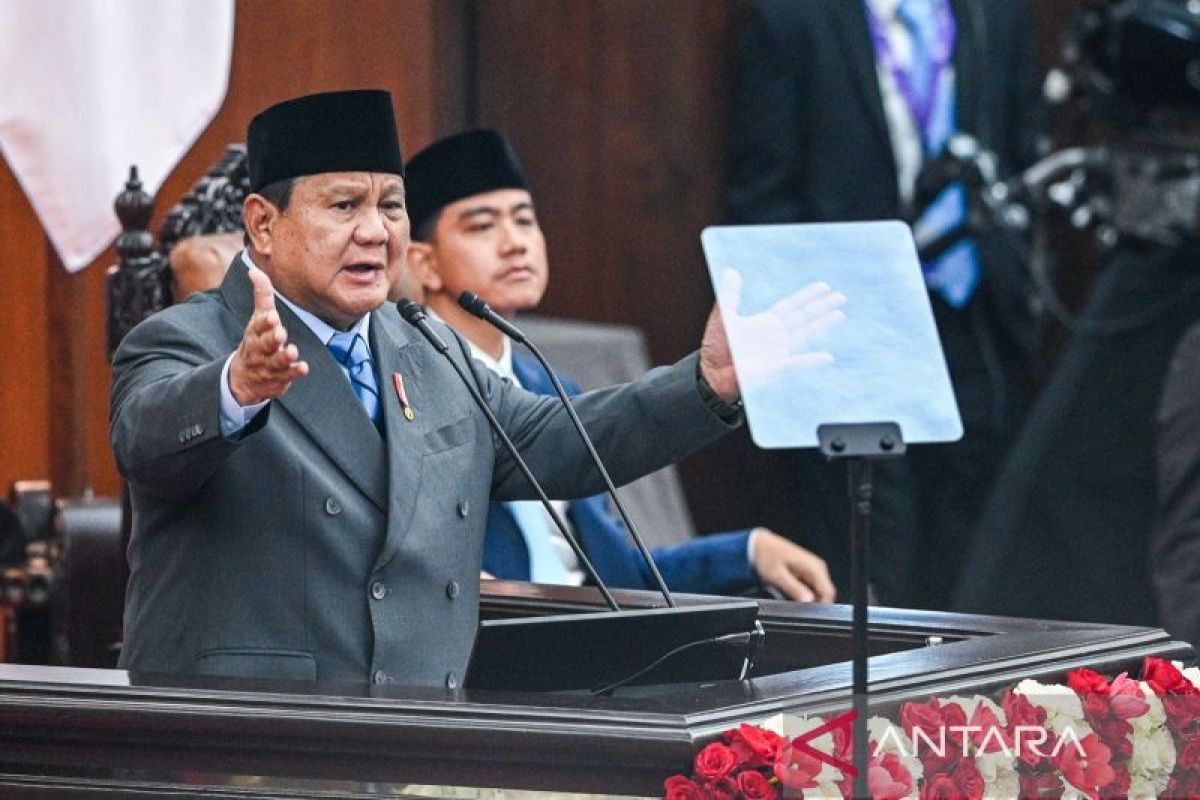
President Prabowo Subianto has positioned the 2027 State Budget Draft (RAPBN) as an instrument to drive economic transformation while accelerating improvements to basic services, from education and health to food, energy, and social protection. Delivering the Government’s Statement on the Draft Law concerning the 2027 Fiscal Year State Budget and its Financial Note at the parliament complex in Jakarta on Friday, Prabowo said the state budget is not merely a state financial document. “The state budget is not just a state financial document. The state budget is our tool of struggle. A tool to protect the people. A tool to strengthen the nation. A tool to realise the ideals of independence in achieving a better life,” he said. The government has designed state spending for 2027 at Rp4,097.2 trillion, with state revenue of Rp3,426 trillion. The budget deficit is planned at 2.40 percent of gross domestic product (GDP), with financing of around Rp671.2 trillion. The government is targeting 6 percent economic growth in 2027 and inflation of 2.5 percent. Other macro assumptions include a 10-year Government Securities (SBN) interest rate of 6.9 percent, an exchange rate of Rp17,500 per US dollar, and an Indonesian crude oil price of 75 US dollars per barrel. The government is also targeting a reduction in the poverty rate to 6.0-6.5 percent and an open unemployment rate of 4.30-4.87 percent. The 2027 RAPBN is directed at eight national priority work programmes: food sovereignty; energy and water self-sufficiency; education; health; downstreaming and industrialisation; infrastructure, housing, and disaster resilience; strengthening the people’s economy and village development; and poverty reduction. These priorities are reinforced through defence and security policies, law enforcement, governance, digitalisation acceleration, and economic diplomacy. According to Prabowo, economic transformation towards high-value-added activities must proceed in tandem with social protection and community empowerment. In the health sector, the government plans to renovate 10,000 community health centres (puskesmas) across 7,285 sub-districts throughout Indonesia starting in 2027. Each puskesmas is planned to receive a renovation budget of around Rp4 billion, with additional support for facilities in remote and outermost regions. The government will also renovate or build 514 public health laboratories in all regencies and cities, with a completion target of 2030 at the latest. Additionally, 441 regional general hospitals (RSUD) will be built or revitalised to improve healthcare service capacity in the regions, including the handling of cancer, heart disease, stroke, kidney disease, and maternal and child health. Prabowo said Indonesia still needs an additional 84,781 general practitioners, 127,580 dentists, and 55,712 specialist doctors. To address the shortage of health workers, the government has opened nine new medical faculties and 170 specialist and sub-specialist study programmes. In education, the government is targeting the renovation of all schools requiring improvement by 2029 at the latest. “All schools must be in good, safe, clean, and fit-for-learning condition. All schools must have proper toilets,” the President said. The government is also continuing the provision of interactive smart screens to support teaching and learning activities. The government will establish a Strategic Mineral and Commodities Exchange, targeted to begin operations on 1 January 2027 under the supervision of the Financial Services Authority (OJK). The exchange is directed at building an Indonesian reference price for a number of strategic commodities. “We do not only want to be a producer of world commodities. We must become a price setter for world commodities,” Prabowo said. The government will also strengthen the consolidation of goods and services procurement to improve spending efficiency. According to Prabowo, data from the Government Goods/Services Procurement Policy Institute (LKPP) shows that the consolidation of regional government procurement yielded efficiencies of 20.86 percent in 2025 and 25.43 percent in 2026. If procurement consolidation, electronic catalogues, and data-based planning are applied more widely, the government estimates efficiency could reach 30 percent of procurement spending of around Rp1,200 trillion. “That means the efficiency could reach around Rp360 trillion. This is not a small figure,” he said. The government plans to strengthen the LKPP institution into a Government Procurement Agency to support this policy. In the energy sector, the government will accelerate the development of solar power plants to increase energy self-sufficiency and reduce dependence on imported fuels. The government is also preparing incentives for one million domestically produced electric motorcycles to strengthen the national electric vehicle industry and its supply chain. Furthermore, the government is continuing the optimisation of state-owned enterprise assets to make them more productive and able to cooperate with the private sector through open and accountable mechanisms. The government is also preparing the Danantara Development Management Fund (DDMF) as an instrument to prepare and finance a number of long-term strategic projects. Projects being prepared include the development of a national vehicle and the construction of a Giant Sea Wall on the north coast of Java. The government is also planning the establishment of an Indonesian International Financial Centre in Jakarta and Bali. The area is designed to encompass banking, insurance, capital markets, financial technology, Islamic finance, investment management, and commercial dispute resolution activities. Prabowo said the government wants to create a financial centre capable of attracting global capital and talent while strengthening Indonesia’s position in financial transactions.