
Rote Ndao K-SIGN to Create 26,000 Local Jobs
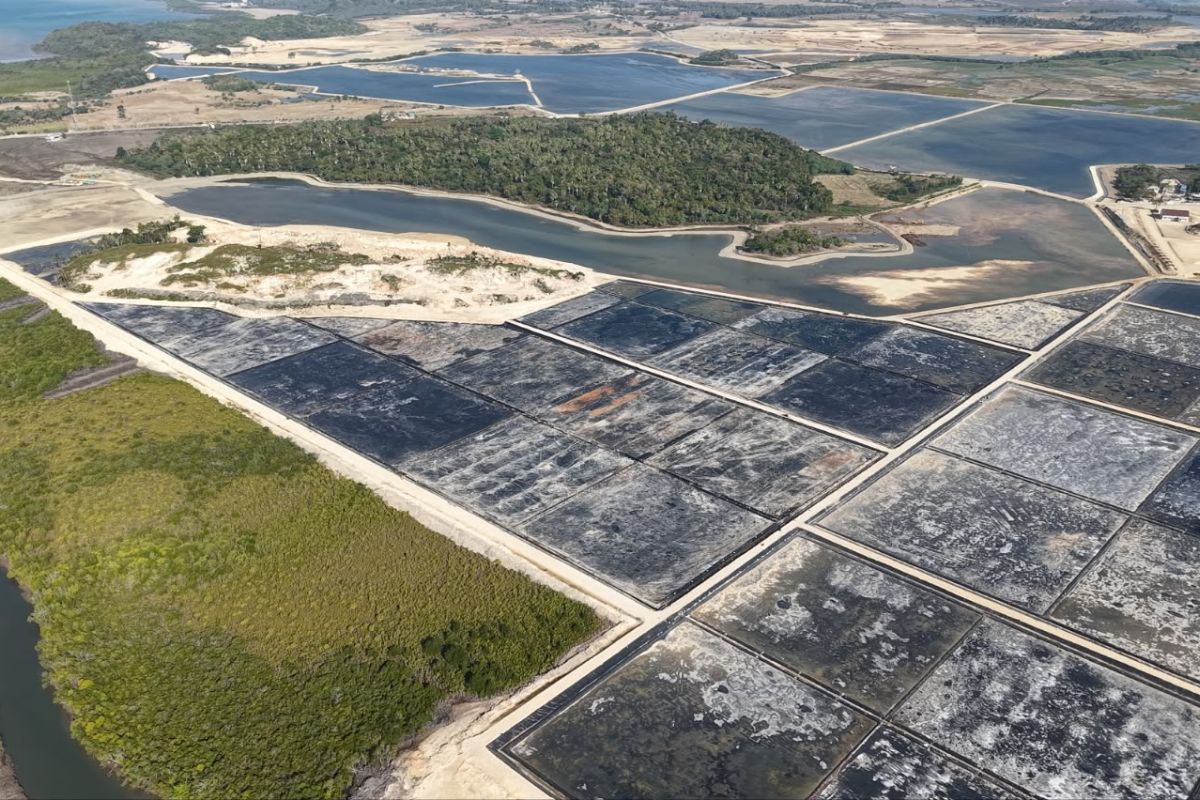
Kupang (ANTARA) – The East Nusa Tenggara (NTT) provincial government is targeting the National Salt Industry Centre (K-SIGN) in Rote Ndao regency to become a national hub for salt production and downstream processing. It is expected to employ around 26,000 local workers and increase residents’ incomes to as much as 2.5 times the regional minimum wage.
Stefania Tanggu Boro, head of the NTT Marine Affairs and Fisheries Office, said in Kupang on Saturday that K-SIGN’s development was intended not only to increase salt production, but also to build an industrial ecosystem that would create added value for the local economy.
“The target is quite concrete. The office estimates K-SIGN could employ around 26,000 people, based on two workers per hectare across the planned development area of 13,000 hectares. Residents’ incomes are also targeted to rise to as much as 2.5 times the local minimum wage,” she said in Kupang, discussing the K-SIGN national strategic project in Rote.
She explained that the area was designed to develop the salt industry from upstream to downstream, enabling NTT to benefit not only as a raw-material producer but also from processing higher-value salt products.
The government has included several industrial facilities in the K-SIGN development plan, including salt-processing facilities, a laboratory, a national salt warehouse and proposed production of associated minerals such as magnesium sulphate and potassium.
The development of these downstream industries is expected to attract investment in table salt, the food industry and the chemical industry, which have long required supplies of high-quality salt.
“The Coordinating Minister for Food Affairs has stressed that Rote Ndao salt must not be sold only as a raw material. It must be processed so that it has greater added value and the region’s residents also benefit from its economic returns,” she said.
Stefania said K-SIGN also aims to support national salt self-sufficiency by 2027 by increasing production capacity and the quality of locally produced salt.
The government is targeting salt-farm productivity of 200 tonnes per hectare, with sodium chloride (NaCl) content above 97 per cent, to meet industrial demand.
With an initial development area of 2,000 hectares, theoretical output could reach 400,000 tonnes if productivity of 200 tonnes per hectare is achieved. That would far exceed NTT’s current salt production, which remains in the tens of thousands of tonnes a year.
However, she acknowledged that developing a project on such a large scale would require stronger community involvement, particularly among residents living near the construction site.
The three affected villages—Lakamola, Serubeba and Matasio—have been involved through land-plot surveys and public consultations held on 7 August 2026. The government also plans to use community-owned land through partnership arrangements, so residents are not merely affected by the development but can share in its economic benefits.
“From a process perspective, the community has been involved. However, that involvement still needs to be strengthened, whether in managing the area, employment opportunities or developing local businesses,” she said.
She hopes K-SIGN will not only increase salt production and reduce reliance on supplies from outside the region, but also create a new centre of economic growth in NTT.
Source: jawawa.id (https://jawawa.id/newsitem/rote-ndao-k-sign-to-create-26-000-local-jobs-1793443945)
Originally published by Antara (Indonesian) (https://www.antaranews.com/berita/5823699/k-sign-rote-ndao-mampu-serap-26-ribu-tenaga-kerja-lokal), translated from Indonesian