
Rosan Stresses Research and Industry Collaboration to Boost Downstreaming
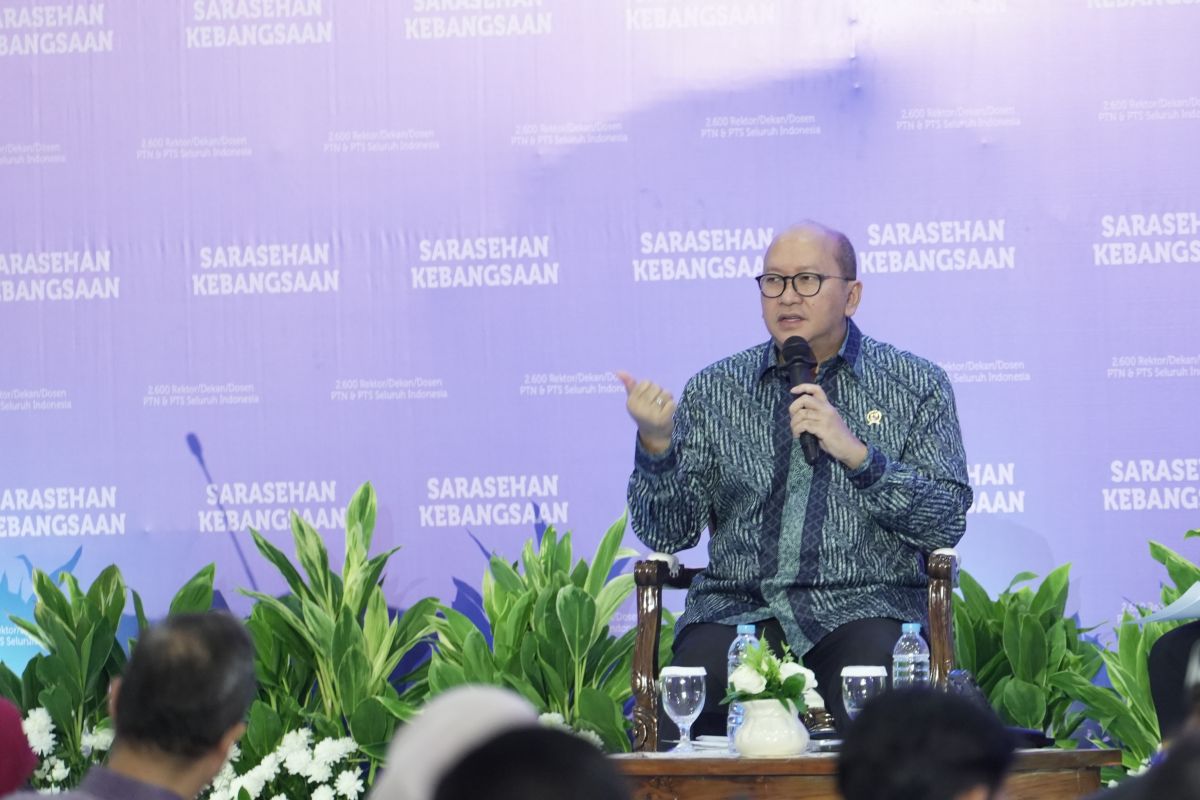
Jakarta (ANTARA) - The Minister of Investment and Downstreaming/Head of the Investment Coordinating Board (BKPM), Rosan Roeslamni, has emphasised the importance of collaboration between the research world and industry as the key to accelerating downstreaming, which can generate added value for the national economy.
According to Rosan in an official statement in Jakarta on Sunday, investment and downstreaming aim not only to increase the added value of natural resources but also to serve as a foundation for establishing a national industry that is productive, transparent, competitive, and provides tangible benefits for worker welfare.
He asserted that Indonesia’s downstreaming policy direction must be capable of creating a sustainable industrial ecosystem. Investment inflows should not only be measured by the magnitude of capital but also by their ability to create quality employment, increase national productivity, strengthen technological mastery, and provide greater added value to the national economy.
These remarks were made by Rosan during his keynote speech at the 2026 National Seminar on Science, Technology, and Industry Convention (KSTI), organised by the Ministry of Higher Education, Science, and Technology at the Jakarta International Convention Centre (JICC), Jakarta, on Saturday (27/6).
“We believe that the presence of professors, lecturers, and students in universities, especially in the field of research and development, certainly provides a very positive contribution. Therefore, we only need to consider future collaboration so that the positive outcomes generated from investment and downstreaming can be implemented within existing industries and produce extraordinary benefits in the future,” said Rosan.
Rosan revealed that downstreaming policies have shown positive results. Throughout 2025, Indonesia’s realised investment reached Rp1,931.2 trillion, representing a 12.7 per cent year-on-year growth, surpassing the government target with a 101.3 per cent achievement.
This realisation also successfully absorbed more than 2.7 million direct workers, an increase of 10.4 per cent compared to the previous year.
He added that the connection between research activities and industrial needs is a vital factor in building a healthy and sustainable national industry. “Research connected to industry is one of the important factors in building a healthy and sustainable industry. Regulatory certainty, good governance, and ease of doing business will increase investor confidence while creating fair business competition,” he added.
To strengthen the national innovation ecosystem, the government has prepared Super Tax Deduction incentives of up to 300 per cent for research and development activities, and up to 200 per cent for education and training activities.
According to Rosan, these policies will yield optimal benefits if accompanied by the commitment of all stakeholders to strengthen collaboration in order to produce innovations that can be applied in the industrial sector.
Furthermore, he emphasised that improving the quality of human resources (SDM) is an inseparable part of the national downstreaming agenda. Industrial development, he stated, must go hand in hand with increasing workforce competence through training, research, skill enhancement, occupational safety, and the creation of harmonious industrial relations.