
Rosan: Sambalagi HPAL Project Strengthens National EV Battery Industry Ecosystem
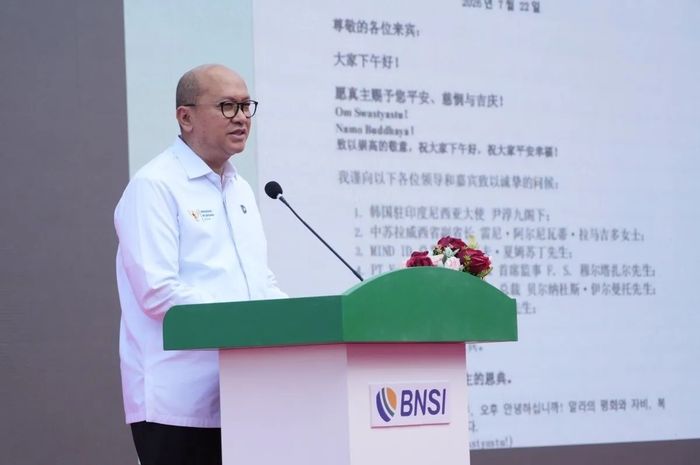
Ntvnews.id, Jakarta - Minister of Investment and Downstreaming/Head of the Investment Coordinating Board (BKPM) Rosan Perkasa Roeslani stated that the High Pressure Acid Leaching (HPAL) project at Sambalagi in Morowali, Central Sulawesi, represents an important step in strengthening the electric vehicle (EV) battery industry ecosystem in Indonesia.
According to Rosan, the project marks progress in national mineral downstreaming because it not only increases the added value of mineral resources but also builds an integrated, competitive and sustainable EV battery industry ecosystem.
“Sambalagi HPAL is setting a new standard, not merely following existing ones. This project is tangible proof that collaboration between Indonesia, South Korea and China can work in harmony with the national interest, namely building resource sovereignty, creating jobs and improving the welfare of the community,” said Minister Rosan.
The statement was made after the autoclave, the main equipment for the Sambalagi HPAL project, arrived on Wednesday, 22 July 2026. The project is part of the National Strategic Projects (PSN) for the development of an integrated nickel industry located within the Indonesia Green Industrial Park (IGIP) in Morowali.
The Sambalagi HPAL facility is being developed by PT Bahodopi Nickel Smelting Indonesia (BNSI), a company formed through a collaboration between PT Vale Indonesia Tbk, GEM Co. Ltd. of China and EcoPro of South Korea.
The facility will process limonite ore into Mixed Hydroxide Precipitate (MHP), the main raw material for EV batteries, with a production capacity of approximately 90,000 tonnes of nickel content per year.
During the construction phase, the project is expected to absorb around 6,000 workers. Once operations begin, some 3,600 workers will be employed, including in the mining and processing sectors.
With this development, Indonesia is expected to transform from an exporter of raw materials into one of the main players in the global EV industry supply chain.
“We have designed the green industrial cluster from upstream to downstream, and HPAL is its first gateway,” he said.
Beyond driving nickel downstreaming, the Sambalagi HPAL project has also been designed with a sustainability concept in mind. From the planning stage, the facility is projected to move towards Net Zero Emissions through the use of waste heat recovery systems and solar energy to support low-carbon operations.
The government has also expressed appreciation for the company’s commitment to delivering benefits to local communities through infrastructure development, the provision of social facilities, training for local workers and the establishment of an HPAL Research Centre as part of efforts to strengthen national technological self-reliance.
“We are building a complete downstreaming ecosystem and a better future for the people of Central Sulawesi and Indonesia. This is the true meaning of downstreaming: creating value, creating opportunity and creating hope.”
Source: jawawa.id (https://jawawa.id/newsitem/rosan-sambalagi-hpal-project-strengthens-national-ev-battery-industry-ecosystem-1784897436)
Originally published by ntvnews.id (https://www.ntvnews.id/ekonomi/01111666/rosan-proyek-hpal-sambalagi-perkuat-ekosistem-industri-baterai-kendaraan-listrik-nasional), translated from Indonesian