
Rosan: Sambalagi HPAL Project Strengthens Indonesia's EV Battery Ecosystem
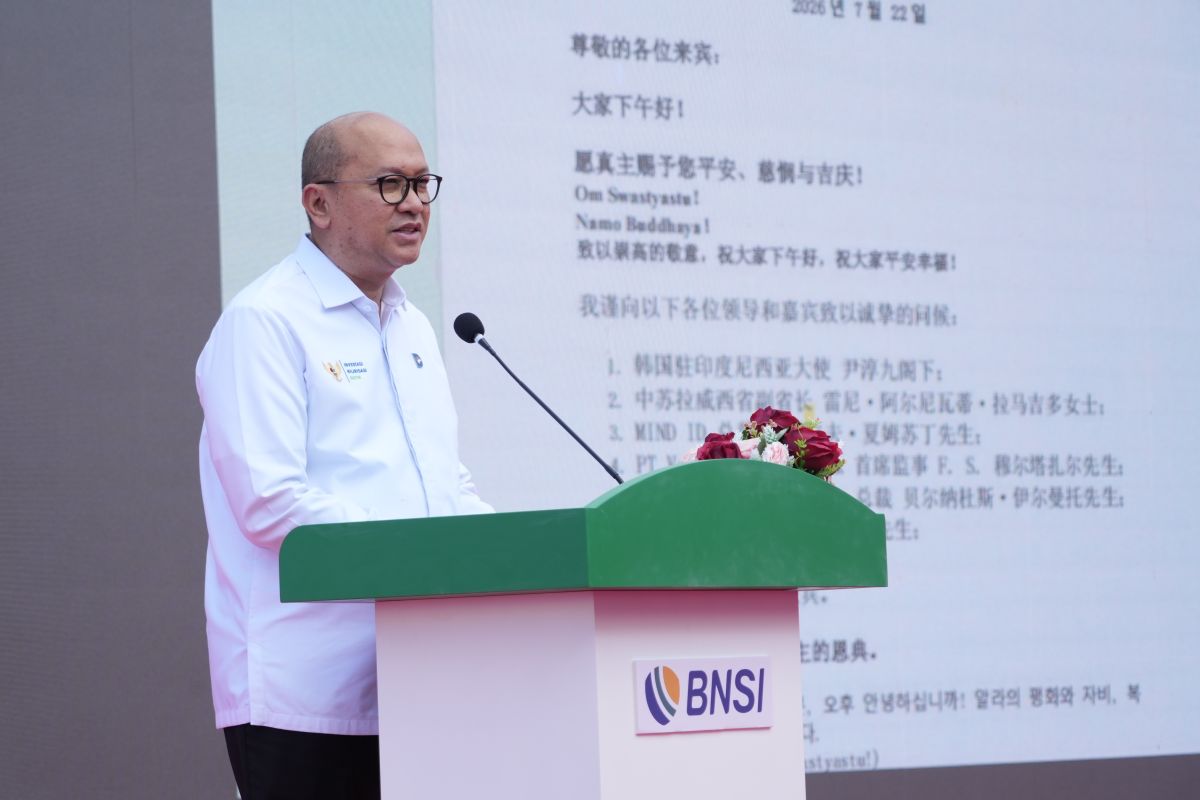
Jakarta (ANTARA) - Minister of Investment and Downstreaming/Head of the Investment Coordinating Board (BKPM) Rosan Perkasa Roeslani has stated that the High Pressure Acid Leaching (HPAL) project at Sambalagi in Morowali, Central Sulawesi, will strengthen the national electric vehicle (EV) battery industry ecosystem.
Rosan said the Sambalagi HPAL project demonstrates that Indonesia’s mineral downstreaming has entered a more advanced stage.
In an official statement issued in Jakarta on Thursday, he said the project not only creates added value from minerals but also builds an integrated, competitive and sustainable EV battery industry ecosystem.
“Sambalagi HPAL sets a new standard, rather than merely following existing ones. This project is tangible proof that collaboration between Indonesia, South Korea and China can proceed in line with the national interest, namely building resource sovereignty, creating jobs and improving community welfare,” Minister Rosan said.
He expressed this confidence following the arrival of the autoclave, the main equipment for the Sambalagi HPAL project, on 22 July 2026. The project is part of the National Strategic Projects (PSN) for integrated nickel industry development, located within the Indonesia Green Industrial Park (IGIP) in Morowali.
The installed autoclave has a capacity of 1,268 cubic metres and is described as the latest generation. According to data from GEM Co., Ltd., the construction contractor, the unit is the largest-capacity facility ever deployed in an HPAL project.
The Sambalagi HPAL project is being developed by PT Bahodopi Nickel Smelting Indonesia (BNSI), a partnership between PT Vale Indonesia Tbk, China’s GEM Co. Ltd. and South Korea’s EcoPro.
The facility will process limonite ore into Mixed Hydroxide Precipitate (MHP), the key raw material for the EV battery industry, with a production capacity of around 90,000 tonnes of nickel content per year.
In terms of employment, the project is projected to absorb around 6,000 workers during the construction phase and some 3,600 workers once operational, including mining and processing facility activities.
Rosan stressed that the construction of the Sambalagi HPAL facility forms part of the government’s strategy to complete the national nickel value chain, from MHP production, nickel sulphate, precursor and cathode active material, through to EV batteries.
As such, Indonesia is expected to no longer be merely an exporter of raw materials, but to become a key player in the global EV supply chain.
“We have designed the green industrial cluster from upstream to downstream, and HPAL is its first gateway,” he said.
Beyond strengthening nickel downstreaming, the project has also been designed with sustainability principles in mind. The Sambalagi HPAL facility is projected to move towards Net Zero Emissions from the planning stage, through the use of waste heat recovery systems and solar energy to support low-carbon operations.
The government also expressed appreciation for the companies’ commitment to delivering benefits to local communities through infrastructure development, social facilities, training for local workers, and the establishment of an HPAL Research Centre to strengthen national technological self-reliance.
“We are building a complete downstreaming ecosystem and a better future for the people of Central Sulawesi and Indonesia. This is the true meaning of downstreaming: creating value, creating opportunity, and creating hope,” Minister Rosan said.