
Rosan Roeslani: Rp3.923 Trillion in Investment, Danantara to Strengthen Indonesian Businesses
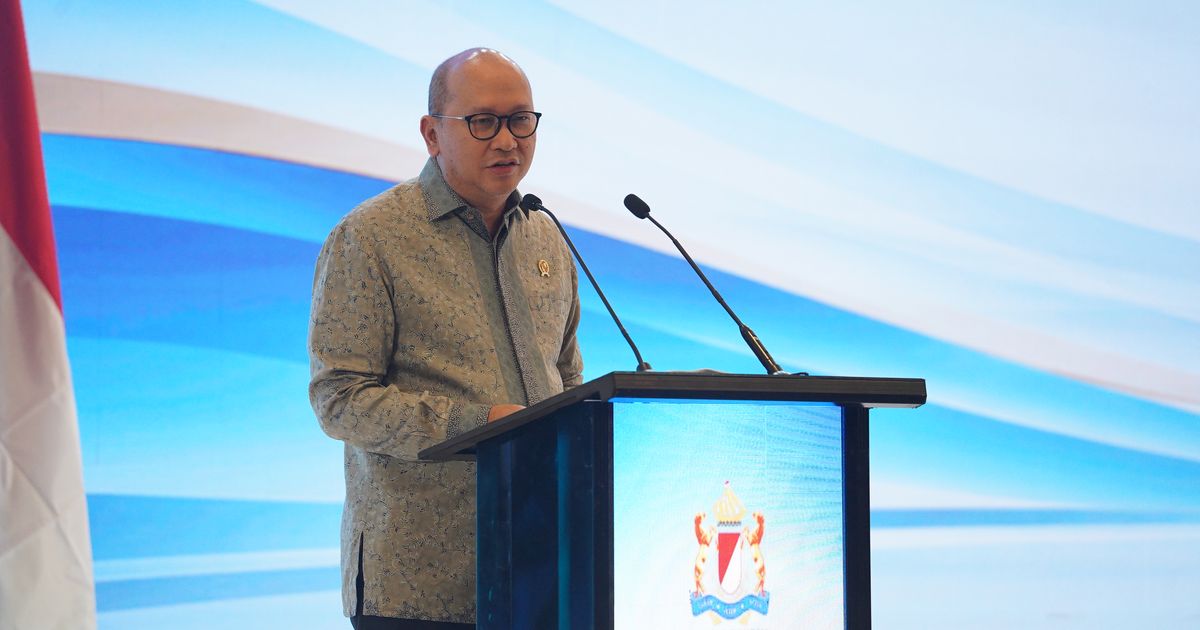
JAKARTA, Investortrust.id — Investment and Downstreaming Minister and Investment Coordinating Board (BKPM) head Rosan Perkasa Roeslani said Indonesia recorded Rp3,923.2 trillion in realised investment from the fourth quarter of 2024 to the third quarter of 2026. He said the achievement demonstrated investors’ continued long-term commitment to Indonesia amid pressure on capital markets and rising global uncertainty.
Rosan stressed that the figure represented investment actually realised in Indonesia, not merely pledges, memoranda of understanding or project plans. The investment was reflected in spending to build production facilities and conduct various business activities.
“Over the past two years, the figure has nearly reached Rp4,000 trillion, or Rp3,923.2 trillion. This is over two years under the government of President Prabowo Subianto,” Rosan said at the opening of the Indonesian Chamber of Commerce and Industry (Kadin) National Leadership Meeting at Hotel Borobudur in Jakarta on Thursday (29 October 2026).
At the forum, Rosan also said Danantara was intended to strengthen Indonesian businesses through investment partnerships. Private-sector involvement, including that of regional businesses, was an important part of expanding production capacity and creating added value for the economy.
Rosan said public attention had recently focused largely on volatility in the capital market. However, direct investment also needed to be considered to provide a fuller picture of business confidence in Indonesia.
He explained that direct investment in factories, smelters and production facilities involved long-term decisions. Investors had to allocate capital, build assets, prepare a workforce and assess the sustainability of business operations over many years.
“When people invest, whether our colleagues in Kadin or those from overseas, it is a long-term commitment,” he said.
Rosan contrasted this with securities trading on the capital market, where investors can buy and sell more quickly. Building production facilities, by comparison, reflects an investor’s commitment to business activities that cannot easily be moved at short notice.
“When we invest, build a factory or build a smelter, it will remain there. Not for one year, two years or five years,” said the Danantara chief executive.
According to Rosan, long-term investment decisions depend heavily on stability and certainty. Investors consider political stability, security and the consistency of the investment climate before committing capital.
That certainty is needed so businesses can plan, calculate risks and forecast returns. Unpredictable changes can disrupt business calculations and project implementation.
“We don’t like surprises. We don’t like things that cannot be predicted. We want everything to be measurable, structured and certain,” Rosan said.
He explained that realised investment is recorded on the basis of spending that has actually taken place. For example, if an investor plans a Rp10 trillion project but has spent only Rp2 trillion on its implementation, the recorded figure is Rp2 trillion.
If the investor spends a further Rp3 trillion the following year, that expenditure is then included in the recorded total. The full value of a planned project is therefore not automatically counted as realised investment.
“The investment realisation we record is the amount that has already been spent in Indonesia. It is not an MoU or an agreement,” he said.
Rosan said the investment target for the government’s five-year term was Rp13,032.8 trillion. He illustrated the scale of the challenge by comparing it with cumulative investment from 2014 to 2024, which he put at about Rp9,100 trillion.
Achieving the higher target will require more projects, an improved business climate and participation from both domestic and foreign investors. Rosan said the government must ensure that investment interest continues through to project implementation.
For January to September 2026, Rosan said realised investment reached Rp1,539.2 trillion, or 75.4% of the target for the year. According to figures he presented, it generated 2,194,496 jobs.
He said the investment target used by his ministry was set within the development-planning framework of the National Development Planning Agency (Bappenas). Meeting it formed part of efforts to support national economic growth. “From January to September 2026, total investment entering the country was Rp1,539.2 trillion,” he said.
Rosan emphasised that investment played a major role in driving the economy. After household consumption, it is one of the main pillars of growth, through the development of production capacity, purchases of capital goods and job creation. Sustained investment is therefore needed both to maintain economic activity and to increase Indonesia’s ability to produce goods and services.
One development Rosan highlighted was the growing contribution of downstreaming to investment realisation. He said the share of downstreaming investment had risen from about 25% in 2024 to around 31% in 2026. In the third quarter of 2026 alone, it accounted for about 34%.
According to Rosan, the figures showed that manufacturing was becoming increasingly important in Indonesia’s investment structure. Downstreaming is intended to lengthen production chains and increase the added value retained in the country.
He said about 78% of downstreaming investment was located outside Java, concentrated mainly in Sulawesi and North Maluku. This distribution demonstrated the role of natural-resource-based investment in stimulating industrial activity in the regions.
However, Rosan stressed that investment success should be assessed by more than the amount of capital entering the country. The government wants quality investment that improves the capabilities of Indonesian workers, brings knowledge and technology, and creates better jobs.
“We see quality investment as investment that can also improve our human resources. There should be a transfer of knowledge and technology, and, of course, the creation of quality jobs,” he said.
Rosan cited the development of the nickel industry as an example of the shift from selling raw materials to higher-value products. In his presentation, he compared nickel exports before downstreaming, which he put at about US$3.3 billion, with exports of nickel and its derivatives in 2025, which he said had reached around US$30 billion.
He used the comparison to illustrate the benefits of domestic processing for export value, foreign-exchange earnings, job creation and Indonesia’s position in global supply chains.
According to Rosan, industrial development must be accompanied by opportunities for Indonesian businesses to grow. Large companies and investment projects need to establish commercial relationships that enable domestic suppliers to expand their capacity.
In this context, Rosan called for the success of micro, small and medium-sized enterprises (MSMEs) to be measured by their growth in scale. He wants more micro businesses to become small businesses, small businesses to become medium-sized enterprises, and medium-sized enterprises to grow into large companies. “If they remain MSMEs, when will they move up?” he said.
Rosan explained that his hope of seeing the number of MSMEs decline referred to businesses moving into higher categories. He does not want companies to remain at the same capacity year after year.
He said the large number of business operators should be matched by improvements in productivity, sales, management capabilities and market access. Such progress would increase the contribution of ordinary businesses to the economy.
He stressed that large companies belonging to Kadin had a responsibility to help smaller businesses. Support was particularly needed by MSMEs across the regions so they could join investment and industrial supply chains. “It is a duty for the larger Kadin members here to help MSMEs,” he said.
Rosan said about 1,000 MSMEs had taken part in partnerships facilitated by his ministry, with a value of around Rp20 trillion. He hoped these partnerships would have a tangible impact on business development in the regions.
He described Kadin’s network at provincial, regency and city levels as an important asset for expanding these connections. Kadin can link the needs of investment projects with the capabilities of local suppliers, while helping regional businesses build capacity.
According to Rosan, the relationship between investment and regional economies needed to be strengthened so that growth could reach more businesses.
Rosan also outlined Danantara’s role in developing national investment. He said the organisation wanted to build partnerships that strengthened the private sector and expanded economic activity. “Danantara’s role is to provide encouragement and strength, working together with the business community and the private sector,” he said.
As an example, Rosan cited waste-to-energy projects. He said Danantara required companies providing the technology to partner with local businesses.
The partnerships are intended to facilitate the transfer of knowledge and technology while strengthening Indonesian companies’ ability to carry out similar projects. Involving local businesses also creates opportunities for investment benefits to reach companies both in the centre and in the regions. “We require them to partner with local companies as well,” he said.
Rosan said Indonesia still had considerable room for economic development and that broad participation from businesses was needed. Danantara could not carry out the entire investment agenda on its own. Indonesian businesses were important for expanding projects, building production capacity and creating new opportunities.
He likened the agenda to enlarging the economic pie. As economic capacity grows, opportunities for private companies should also increase.
“The role of all of you, colleagues and friends here, can be much more important,” he told the meeting’s participants.
At the same time, Rosan acknowledged that the government still had much to do to improve the investment climate. He emphasised the importance of good governance, transparency, accountability and integrity in managing assets and conducting business.
In managing Danantara and the companies under it, he said, asset optimisation, higher productivity and efficiency remained ongoing priorities.
Rosan also said he planned to expand regular consultations with businesses in the coming year. The dialogue is expected to help the government and business community identify needs and develop investment partnerships.
Rosan warned that geopolitical tensions and changes in the global economy continued to pose risks. Higher oil prices, for example, could increase pressure on the state budget and affect the government’s capacity to finance various needs.
He urged businesses to remain prepared for changing conditions. In Rosan’s view, overcoming difficulties could strengthen companies’ maturity, resilience and decision-making capabilities.
As leaders of businesses in their regions and sectors, Kadin members also had a responsibility to sustain the confidence of other business operators. Leaders’ attitudes, he said, could influence companies’ confidence and willingness to keep moving forward. “Those of us in this room are the driving force of our business community,” Rosan said.
He urged Kadin to uphold the spirit of the “fighting entrepreneur” by continuing to create opportunities, strengthen partnerships and develop investment. The substantial capital already realised needs to translate into stronger industrial capabilities, the advancement of MSMEs and quality jobs for the public.
Source: jawawa.id (https://jawawa.id/newsitem/rosan-roeslani-rp3-923-trillion-in-investment-danantara-to-strengthen-indonesian-businesses-1793328643)
Originally published by investortrust.id (https://investortrust.id/business/120950/rosan-roeslani-investasi-rp3923-triliun-danantara-perkuat-pengusaha-nasional), translated from Indonesian