
Rosan Roeslani: Central Sulawesi and North Maluku Become National Investment Engines
JAKARTA, KAIDAH.ID – The provinces of Central Sulawesi (Sulteng) and North Maluku (Malut) have once again demonstrated their strategic role in driving national investment growth. Both regions have become the main pillars of downstream growth outside Java, particularly through the development of the nickel industry and the electric vehicle (EV) battery ecosystem.
Minister of Investment and Downstreaming/Head of BKPM, Rosan Roeslani, revealed that 75.5 per cent of downstream growth in the first quarter of 2026 occurred outside Java.
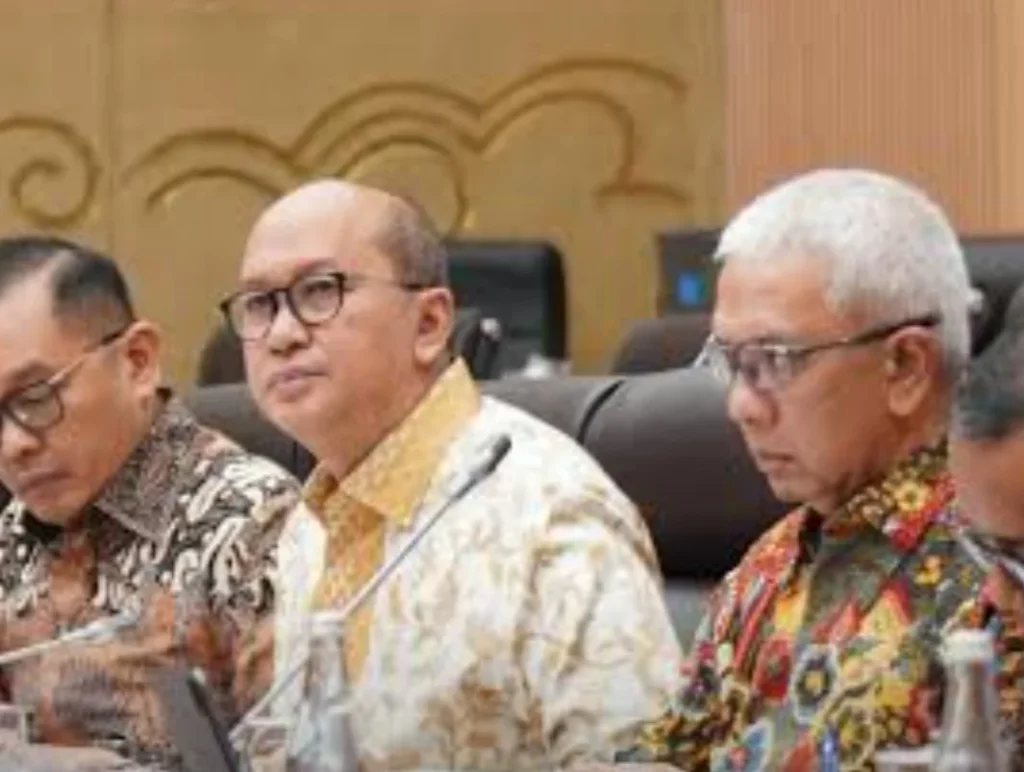
“The distribution of downstream growth in the first quarter of 2026 shows that 75.5 per cent of downstreaming is actually outside Java, especially in Central Sulawesi and North Maluku, supported by nickel downstreaming and the electric vehicle battery ecosystem,” Rosan said during a working meeting with Commission XII of the Indonesian House of Representatives on Monday, 15 June 2026.
According to Rosan, the natural resource downstream sector made a significant contribution to national investment realisation. In the first quarter of 2026, investment in the downstream sector reached Rp147.5 trillion, growing 8.2 per cent compared to the same period the previous year. This value is equivalent to 30 per cent of the total investment realisation entering Indonesia.
Investment realisation data for the first quarter of 2026 also placed Central Sulawesi and North Maluku among the top ten regions with the largest investment realisation in Indonesia. Central Sulawesi ranked fifth with an investment value of Rp32.1 trillion, or approximately 6.4 per cent of total national investment. Meanwhile, North Maluku was in sixth place with investment realisation of Rp25.2 trillion, contributing 5 per cent of total national investment.
Downstream investment in the first quarter of 2026 was still dominated by the mineral sector. The nickel industry recorded the largest investment at Rp41.5 trillion, followed by the copper sector at Rp20.7 trillion and the iron and steel industry at Rp17 trillion. These three sectors accounted for approximately 67 per cent of total national downstream investment.
Beyond the mineral sector, downstream investment also flowed into the plantation and forestry sector with a value of Rp29.8 trillion. The oil and gas sector contributed investment of Rp17.7 trillion, while the fisheries and marine sector reached Rp1.7 trillion.
The dominance of investment in the mineral sector indicates that nickel downstreaming remains the primary engine of natural resource-based investment in Indonesia. On the other hand, increased investment in the plantation, forestry, oil and gas, and fisheries and marine sectors shows the beginning of diversification in downstream investment across various national strategic sectors.