
Rosan Records Rp300.1 Trillion in Downstreaming Investment
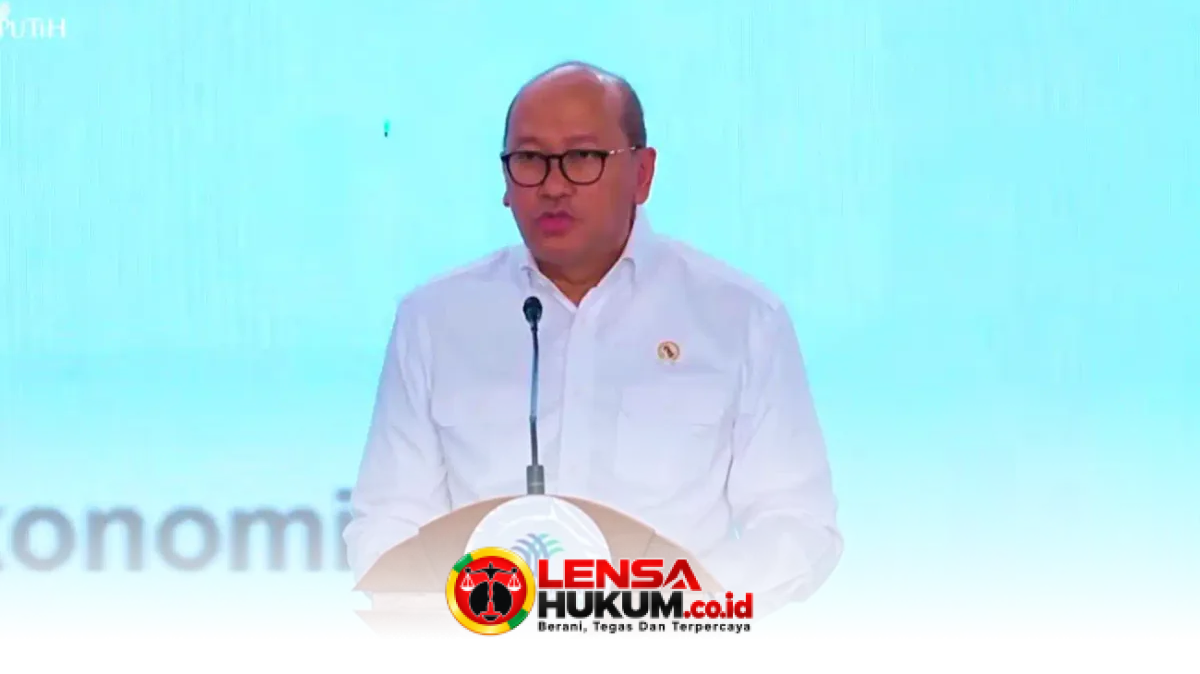
Indonesia’s downstreaming investment reached Rp300.1 trillion in the first half of 2026, or around 29.7 per cent of the national investment total of Rp1,010.6 trillion. Investment and Downstreaming Minister and BKPM head Rosan P. Roeslani reported the figures to President Prabowo Subianto on Thursday, 8 October 2026.
National investment in the period grew by 7.2 per cent compared with the first half of the previous year and created 1,448,862 jobs, a year-on-year increase of 15 per cent, according to data from the Ministry of Investment and Downstreaming/BKPM.
“Thankfully, investment in the first half of 2026 reached Rp1,010.6 trillion, growing by 7.2 per cent and absorbing more than 1.4 million people,” Rosan said.
Downstreaming investment rose by 6.9 per cent year on year. Its contribution has also increased from around 25 per cent over the past two years to nearly 30 per cent of total investment.
“Of total investment, the downstreaming figure has increased. Over the past two years, downstreaming’s contribution, which was previously 25 per cent, has reached 30 per cent of incoming investment,” Rosan said.
Minerals continued to dominate downstreaming investment, with a value of Rp206.5 trillion. This included Rp71 trillion in nickel, Rp53.8 trillion in bauxite, Rp37.4 trillion in copper, Rp30.2 trillion in iron and steel, and Rp5.9 trillion in silica sand.
The Ministry of Investment and Downstreaming/BKPM said plantations and forestry contributed Rp54.4 trillion, oil and gas Rp35.4 trillion, and fisheries and marine industries Rp3.8 trillion.
Foreign investment amounted to Rp212.8 trillion, or 70.9 per cent of downstreaming investment. Domestic investment totalled Rp87.3 trillion, or 29.1 per cent.
Downstreaming investment was also concentrated outside Java. Its value there reached Rp227.3 trillion, or 75.7 per cent of the first-half 2026 total, according to the ministry’s data.
“More than 75 per cent was realised outside Java. We expect downstreaming to continue to increase in the future,” Rosan said.
By comparison, total national investment outside Java reached Rp507.8 trillion, or 50.2 per cent, while investment in Java stood at Rp502.8 trillion, or 49.8 per cent, in the first half of 2026, according to the ministry.
The scale of processing activity has also increased energy requirements in industrial zones. Rosan said installed and under-construction electricity capacity in Weda Bay and Morowali totalled 15.9 gigawatts (GW).
“Electricity already installed and under construction here exceeds 7.1 GW. If we add Morowali, that is approximately another 8.8 GW, bringing the total to 15.9 GW. This is far greater than Singapore’s total electricity consumption of 13.1 GW,” Rosan said.
The government is also encouraging businesses to take part in renewable energy provision. One initiative is a 2-megawatt solar power plant grant in Sumenep regency, East Java, for island communities, including Gili Labak and Pagerungan Kecil village.
“They are ready and have spoken with Danantara about actively participating in the 100 GW solar panel programme, which we will soon discuss with the Coordinating Minister for Downstreaming,” Rosan said.
The government describes the programme as part of efforts to expand energy access and reduce reliance on diesel. The next areas targeted for downstreaming include semiconductors, bioethanol, coconut-derived products and seaweed.
Source: jawawa.id (https://jawawa.id/newsitem/rosan-records-rp300-1-trillion-in-downstreaming-investment-1791463825)
Originally published by lensahukum.co.id (https://lensahukum.co.id/rosan-catat-investasi-hilirisasi), translated from Indonesian