
Rosan: Presence of Coordinating Ministry for Downstreaming to Accelerate Energy Transition Agenda
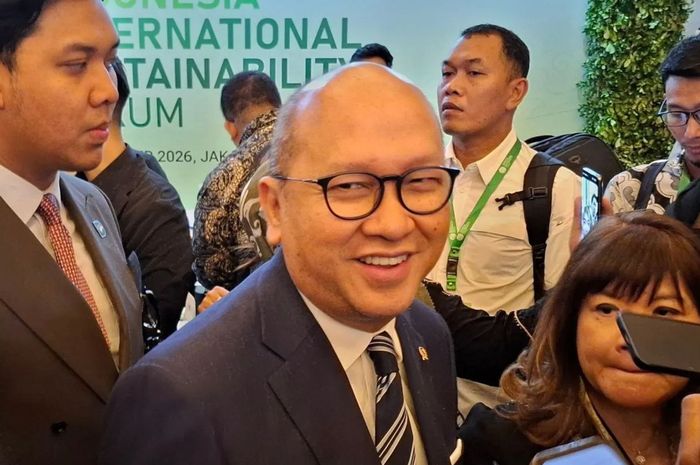
The Minister of Investment and Downstreaming/Head of the Investment Coordinating Board (BKPM), Rosan Roeslani, is confident that the establishment of the Coordinating Ministry for Downstreaming and Energy Transition will be able to accelerate the implementation of various government priority programmes in these two sectors more optimally.
“With the existence of a coordinating ministry for downstreaming and also energy transition, I am certain it will make the work more comprehensive and faster,” said Rosan when met after the opening of the Indonesia International Sustainability Forum (ISF) 2026 in Jakarta, Tuesday, 6 October 2026.
As a concrete form of the energy transition agenda, Rosan cited the government’s ambitious plan to develop solar power plants (PLTS) with a total capacity of 100 gigawatts (GW). Through this priority programme, approximately 13 GW of electricity capacity, which has traditionally been sourced from diesel-based plants, will be phased out and gradually replaced using solar panels.
“There is roughly 13 gigawatts that we will attempt to replace gradually and quickly with solar panels,” he stated.
In addition, the downstreaming sector remains positioned as one of the main pillars for attracting strategic investment. This policy is considered crucial so that Indonesia does not merely remain an exporter of raw materials, but is able to optimise added value domestically and strengthen the foundation of national industrialisation.
Rosan mentioned that investment realisation in the downstreaming sector currently contributes approximately 30 per cent of the total investment in Indonesia, and this positive trend is projected to continue increasing in the future.
Nevertheless, when asked about the coordination mechanism of his ministry under the new Coordinating Ministry, Rosan stated that his side is still awaiting official instructions from the government.
“We are just waiting for direction. We are waiting for direction,” he said briefly. When asked whether the institutional arrangement would later be formalised through a presidential regulation, he emphasised that he would comply with the existing decision. “Yes, we will just follow it later. The important thing is that our coordination remains good,” he added.
For information, this new structure was formed after President Prabowo Subianto officially inaugurated Bahlil Lahadalia as the Coordinating Minister for Downstreaming and Energy Transition on 1 October 2026, based on Presidential Decree Number 104/P of 2026, where Bahlil continues to concurrently hold the position of Minister of Energy and Mineral Resources (ESDM).
Following the inauguration, Bahlil stated that the coordinating ministry under his leadership is tasked with consolidating and accelerating downstreaming and energy transition targets outlined in the President’s Asta Cita programme, noting that approximately 90 per cent of downstreaming investment is concentrated in the energy and mineral resources sector.
Meanwhile, the Coordinating Minister for Economic Affairs, Airlangga Hartarto, previously stated on 2 October 2026 that the technical formulation regarding which technical ministries will fall under the coordination of the new Coordinating Ministry is still in the stage of cross-sectoral discussion, being worked on alongside the Ministry of Administrative and Bureaucratic Reform (KemenPANRB) through adjustments to organisational structure and work procedures.
Source: jawawa.id (https://jawawa.id/newsitem/rosan-presence-of-coordinating-ministry-for-downstreaming-to-accelerate-energy-transition-agenda-1791301902)
Originally published by ntvnews.id (https://www.ntvnews.id/ekonomi/01120877/rosan-kehadiran-kemenko-hilirisasi-dianggap-mampu-percepat-agenda-transisi-energi), translated from Indonesian