
Rosan: IWIP’s Electric Vehicle Battery Exports Strengthen Indonesia’s Downstreaming
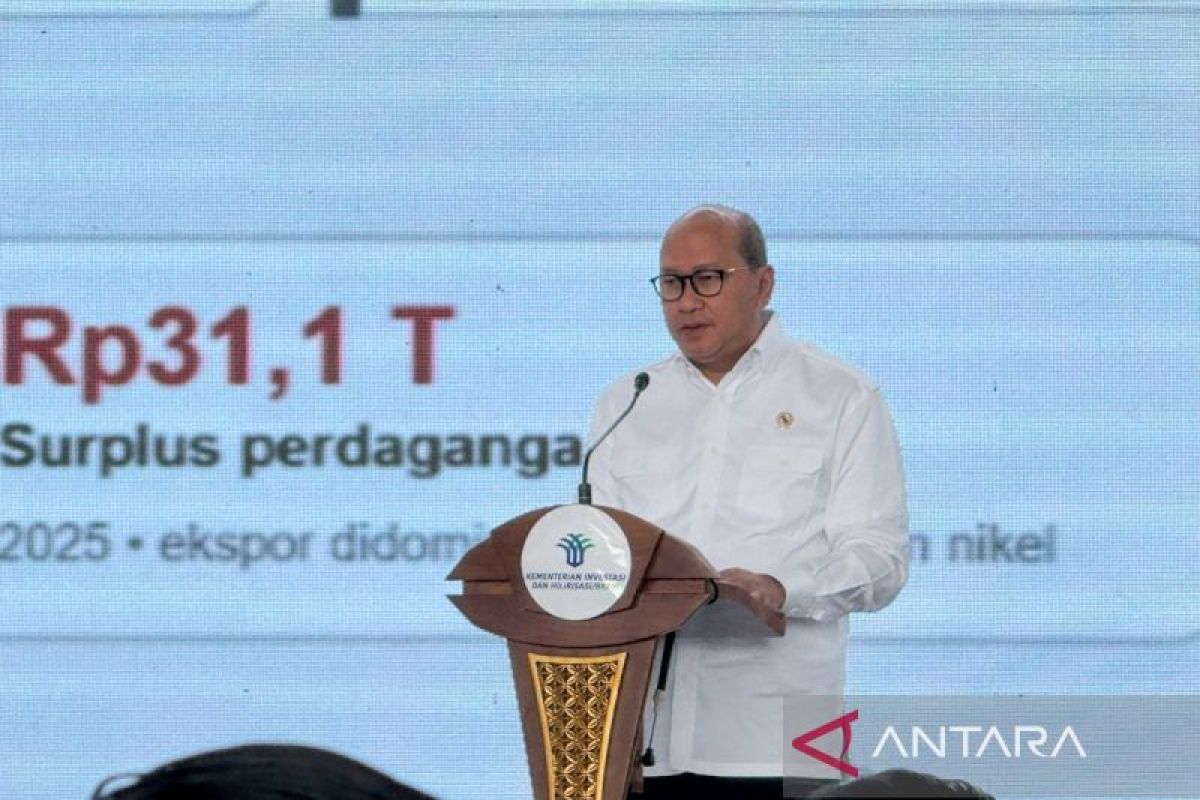
Halmahera Tengah, North Maluku (ANTARA) – Investment and Downstreaming Minister and Head of the Investment Coordinating Board (BKPM) Rosan Perkasa Roeslani said the first exports of electric vehicle batteries from the Indonesia Weda Bay Industrial Park (IWIP) would strengthen national downstreaming and global supply chains.
“This will mean the whole ecosystem is here. We will become part of the global electric vehicle battery supply chain, and, of course, downstreaming ultimately leads to industrialisation,” Rosan said at the groundbreaking and commercialisation ceremony for 11 nickel downstreaming projects, alongside the first electric vehicle battery exports from the Weda Bay Industrial Park in Central Halmahera, North Maluku, on Thursday.
President Prabowo Subianto inaugurated a series of strategic downstreaming projects worth about US$10 billion at IWIP in Central Halmahera Regency, North Maluku.
The inauguration marked an important step in accelerating the development of an integrated downstream industrial ecosystem, increasing the added value of natural resources domestically and strengthening Indonesia’s position in global industrial supply chains.
The programme included groundbreakings for seven strategic projects, the launch of commercial operations at three projects and the inauguration of one project’s first exports.
Together, the 11 projects are expected to create around 13,000 new jobs. On the same occasion, President Prabowo also inaugurated the first exports of lithium battery cells from IWIP, a key milestone in strengthening Indonesia’s national electric vehicle battery industry.
Rosan said IWIP’s development demonstrated how downstreaming policy could be put into practice through an integrated industrial ecosystem, from mineral processing to battery and electric vehicle manufacturing.
“With these new projects, we will have the whole electric vehicle battery ecosystem, including battery recycling,” Rosan said.
The four projects entering commercial operation or beginning exports are PT Blue Sparking Energy, which is developing nickel-based battery materials with annual capacity of 67,000 tonnes of mixed hydroxide precipitate (MHP); PT REPT Battero Indonesia, with annual electric vehicle battery-cell capacity of 8 GWh; PT Pioneer Aluminium Industries, with annual electrolytic aluminium capacity of 300,000 tonnes; and PT XCMG Indonesia Manufacturing, which is developing electric heavy equipment with annual capacity of 700 units.
The seven projects beginning construction are PT Guang Ching Nickel Cobalt, which will produce nickel-based battery materials; PT Inno Prima Material, which will manufacture battery separators; and PT Tinci Materials Indonesia, which will produce battery electrolytes.
The other projects are PT Weda Bay Aluminium and PT Bintang Karya Aluminium, which will develop electrolytic aluminium industries; Foton Guangqing Motor Indonesia, which will produce electric heavy vehicles; and PT Flatsolar Energy Indonesia, which will manufacture photovoltaic glass for the solar energy industry.
“Downstreaming and industrialisation are national priorities that will have a positive economic impact both nationally and in surrounding areas, which in this case is North Maluku,” Rosan said.
Investment in North Maluku has also made a tangible contribution to the regional economy. From 2021 to June 2026, realised investment in the province reached Rp423.7 trillion.
In the first half of 2026, investment realisation stood at Rp65.4 trillion, up 46 per cent from the same period a year earlier. Central Halmahera Regency recorded Rp55.7 trillion in investment during that period.
This development has coincided with North Maluku’s economic growth of 15.35 per cent in the second quarter of 2026, the highest among Indonesia’s 38 provinces.
Manufacturing now accounts for nearly half of the province’s gross regional domestic product, while North Maluku recorded a trade surplus of Rp31.1 trillion in 2025, with exports dominated by processed nickel products.
Nationally, investment realisation in the first half of 2026 reached Rp1,010.6 trillion, up 7.2 per cent and directly employing more than 1.4 million people.
Downstreaming accounted for nearly 30 per cent of realised investment, with more than 75 per cent of downstreaming investment located outside Java. The figures illustrate how investment is strengthening the industrial base while helping to distribute economic activity more evenly across regions.
The Ministry of Investment and Downstreaming/BKPM continues to promote a favourable investment climate, strengthen coordination with local governments and businesses, and oversee investment development to ensure it delivers broader economic benefits.
The development of industrial estates such as IWIP is expected not only to expand national production capacity, but also to create more jobs, increase the participation of local workers and strengthen links between industry and regional economies.
Source: jawawa.id (https://jawawa.id/newsitem/rosan-iwips-electric-vehicle-battery-exports-strengthen-indonesias-downstreaming-1791471236)
Originally published by Antara (Indonesian) (https://www.antaranews.com/berita/5777676/rosan-ekspor-baterai-kendaraan-listrik-iwip-perkuat-hilirisasi-ri), translated from Indonesian