
Rosan estimates PSEL Jakarta investment value to reach US$1 billion
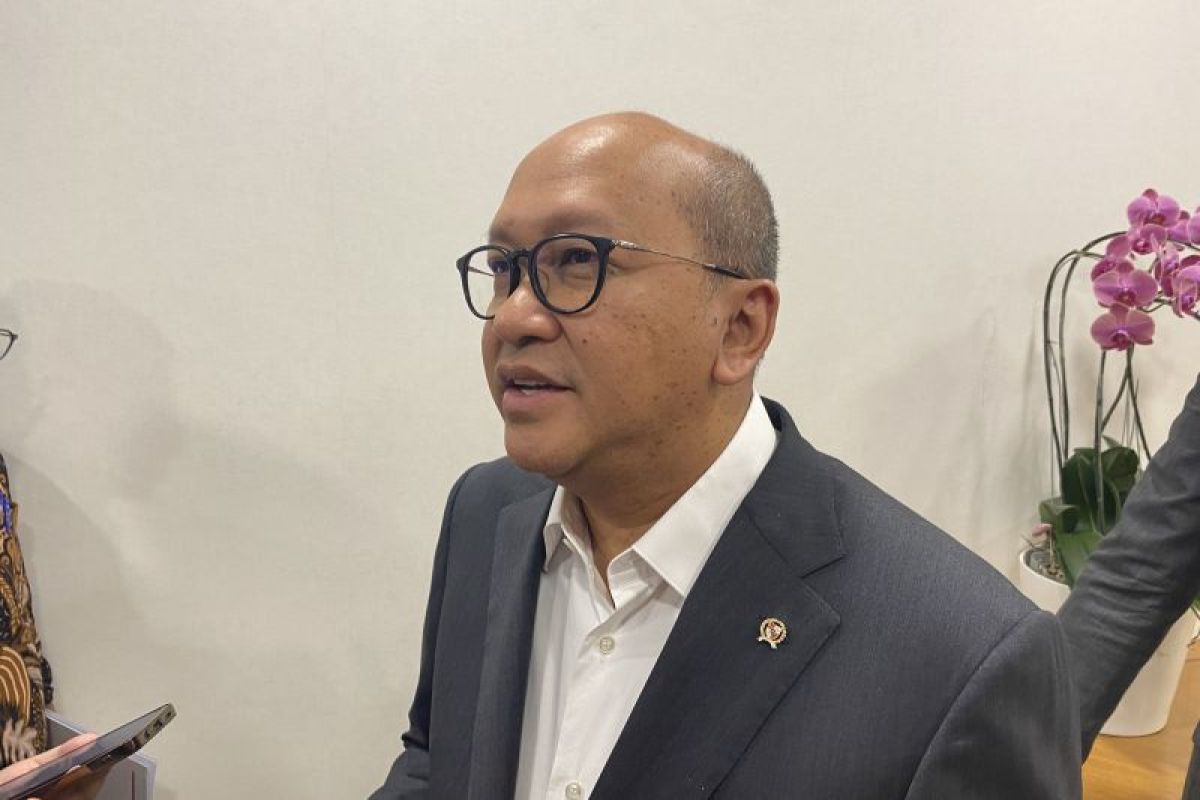
Jakarta (ANTARA) - CEO of Danantara Indonesia, Rosan Roeslani, estimates that the investment value for developing a Waste-to-Energy (PSEL) facility in Jakarta, with a total capacity of 8,000 tonnes per day, will reach around US$1 billion.
He stated that the investment requirement for processing is approximately Rp2 trillion for every 1,000 tonnes of waste per day.
“If I’m talking about 8,000 (tonnes per day), the investment is roughly 1 billion USD (US$1 billion),” said Rosan when met at the Office of the Coordinating Minister for Food, Jakarta, on Monday.
Rosan added that the PSEL project in Jakarta is expected to begin operations in early 2028.
According to him, the capacity of the facility being built has the potential to exceed 8,000 tonnes per day to process old waste accumulations at the Integrated Waste Processing Site (TPST) Bantargebang.
“We might build it to be (capacity) more than 8,000 (tonnes per day). Why? To be able to take old waste. Because the hope is that Bantargebang will be clean later. So, the construction might not be 8,000 (tonnes per day), it could be 10,000 or 12,000 (tonnes per day) so that the old waste can be processed,” he explained.
The technology used, Rosan clarified, allows waste processing without initial sorting.
All waste, including old waste, can still be processed directly without a separation process.
“From the technology we’ve applied, it doesn’t need to be separated. So it can be done directly like that. Because we also consider the environment, then issues of odour, land issues, we pay very close attention to all of that,” said Rosan.
On Monday, the DKI Jakarta Provincial Government and Danantara Indonesia signed a Memorandum of Understanding (MoU) regarding the acceleration of the PSEL facility development.
In accordance with Presidential Regulation (Perpres) No. 109 of 2025, the Coordinating Minister for Food coordinates the acceleration of urban waste management into electricity energy based on environmentally friendly technology.
According to the regulation, the acceleration of PSEL is carried out through the simplification of procedures and clear division of roles between the central government, regional government, Danantara Indonesia, PLN, and business entities.
Danantara plays the role of a strategic partner to the central and regional governments to accelerate project readiness, including preparing financing schemes and the process of selecting developer and operator business entities (BUPP).
The regulation was issued to accelerate the emergency handling of urban waste through the utilisation of waste-to-energy electricity technology.
In line with that, the Governor of DKI Jakarta has proposed two locations for PSEL development, namely in Bantargebang and Tanjung Priok Muara.
Coordinating Minister for Food Zulkifli Hasan (Zulhas) stated that the waste emergency in DKI Jakarta has become a concern for many parties and requires quick, coordinated, and integrated handling from upstream to downstream.
“Jakarta’s waste accumulation reaches 9,000 tonnes per day. Currently, 87 percent still relies on open dumping, such as Bantargebang which is far exceeding capacity. If measured, Bantargebang’s waste is like a 16-17 storey building,” said Zulhas.
He emphasised that the signing of the MoU is a form of commitment to the people of Jakarta to address the waste problem.
Zulhas is also optimistic that the waste problem can start to be resolved in the next two years.
“Jakarta today proves that the directive is not just numbers, but real action,” said Zulhas.