
Rosan: Downstreaming Is No Longer Just About Building Smelters
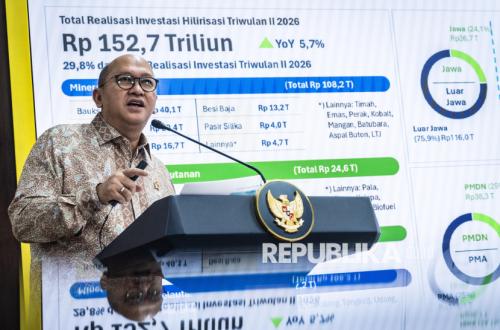
JAKARTA — Investment and Downstreaming Minister and Investment Coordinating Board (BKPM) Head Rosan Roeslani said Indonesia’s mineral downstreaming strategy is no longer limited to building processing facilities, or smelters. The Government is now promoting the development of integrated industrial ecosystems to increase the domestic added value of mineral resources.
Rosan explained that downstreaming covers the entire industrial chain, from mining and processing to manufacturing, clean energy and technology. The initiative forms part of the Government’s strategy to strengthen the national industrial base and reduce reliance on exports of raw materials.
“Indonesia is home to some of the world’s most important reserves of nickel, bauxite, copper and other strategic critical minerals. Our goal is to build industries. That is why downstreaming remains a central pillar of our economic strategy,” said Rosan, who is also Danantara Indonesia’s chief executive, at the Indonesia Sustainability Forum (ISF) in Jakarta several days ago, as quoted on Tuesday (20 October 2026).
Rosan said downstreaming had made a significant contribution to national investment. The sector accounted for around 30 per cent of Indonesia’s total investment, worth US$61 billion, an increase of 7.2 per cent.
He said Indonesia’s mineral wealth created opportunities to develop a broader range of industries. The Government wants to ensure that the processing of natural resources does not stop at intermediate products, but continues through to finished goods with higher economic value.
The electric vehicle battery industry is one example of this ecosystem’s development. Indonesia is beginning to build a production chain linking mining with mineral processing, battery-cell production and the electric vehicle industry.
“Three areas stand out. The first is electrification, from mines to battery cells to electric cars. Indonesia is now producing battery cells at two major plants, one with Hyundai and another with CATL and IBC, our state-owned company, which began operating in stages in August,” Rosan said.
Developing mineral value chains is also a focus for the MIND ID Group. The state-owned mining industry holding company is pursuing downstreaming strategies for several strategic commodities, particularly nickel, bauxite and copper.
For nickel, MIND ID’s involvement in Indonesia Battery Corporation (IBC) supports the establishment of a national electric vehicle battery supply chain. The development links Indonesia’s nickel resources with the needs of the battery and electric vehicle industries.
MIND ID is also strengthening bauxite downstreaming by developing a production chain that turns bauxite into alumina and then aluminium. The aluminium is intended to meet the needs of various domestic manufacturing sectors.
For copper, downstreaming is intended to broaden the use of this strategic mineral in the electricity, electronics and manufacturing industries. This creates opportunities to increase copper’s added value through the development of downstream industries.
The MIND ID Group is also preparing to develop the recycling industry as part of efforts to build a circular economy ecosystem. This complements the downstreaming strategy, ensuring that mineral use is not focused solely on production but also supports industrial sustainability.
With increasingly integrated industrial value chains, downstreaming is expected to deliver greater economic benefits to Indonesia. The Government sees strengthening processing industries through to finished products as an important part of its national economic development strategy.