
Rosan assures DSI will not disrupt commercial relations between exporters and buyers
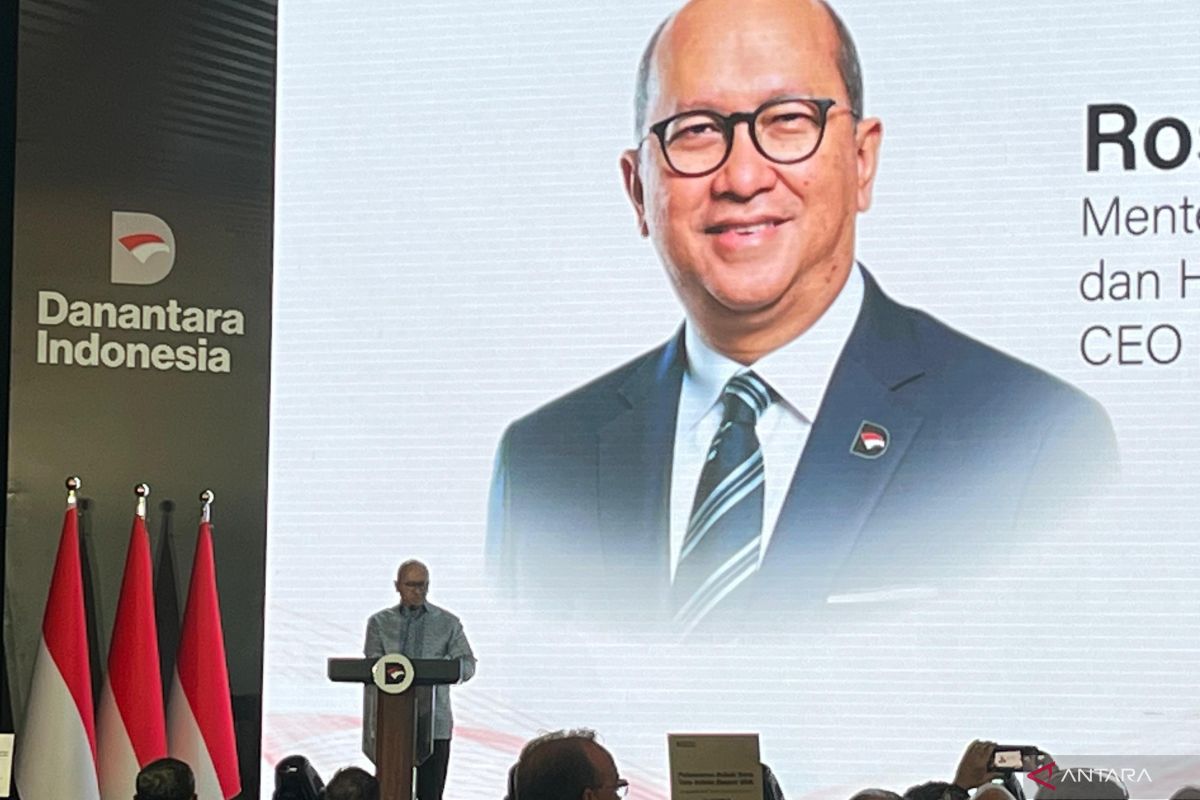
Jakarta (ANTARA) - Chief Executive Officer (CEO) of Danantara Indonesia Rosan Roeslani has affirmed that the presence of PT Danantara Sumberdaya Indonesia (DSI) is not intended to alter the commercial relationships that have long been established between exporters and buyers.
Rosan said that DSI, which began active operations on 1 June 2026, marks a new chapter in the management of national strategic commodity exports.
Speaking at the launch of the New Chapter in Natural Resource Export Governance held in Jakarta on Monday, Rosan said the company was established so that natural resource management could be carried out more effectively, transparently, and capable of providing added value for the national economy.
“So there is no need to doubt that you can carry out your exports directly and we continue to honour the sanctity of the contract, long-term contracts. But the nature of DSI at this time is more about evaluating, monitoring, and also ensuring that the most important thing is transparency of the transaction,” said Rosan.
“Therefore, implementation will be carried out gradually, measurably, and based on readiness, so that ongoing trade flows and commercial relationships are not disrupted,” Rosan added.
Rosan, who also serves as Minister of Investment and Downstreaming/Head of the Investment Coordinating Board (BKPM), explained that in the initial phase DSI will focus on three national strategic commodities: coal, crude palm oil (CPO), and ferroalloy.
Rosan revealed that the three commodities that are DSI’s initial focus have very large export values, reaching nearly US$70 billion.
Coal exports are valued at approximately US$30.35 billion, CPO at US$22.67 billion, and ferroalloy at around US$16.43 billion.
The magnitude of these export values, Rosan continued, demonstrates the importance of strengthening governance of strategic commodities so that they can provide greater benefits for the Indonesian economy.
“We want to improve the governance of these three commodities because they hold strategic significance for the Indonesian economy,” said Rosan.