
Rosan and Erick Thohir Push Sports Industry to Become an Economic Growth Engine
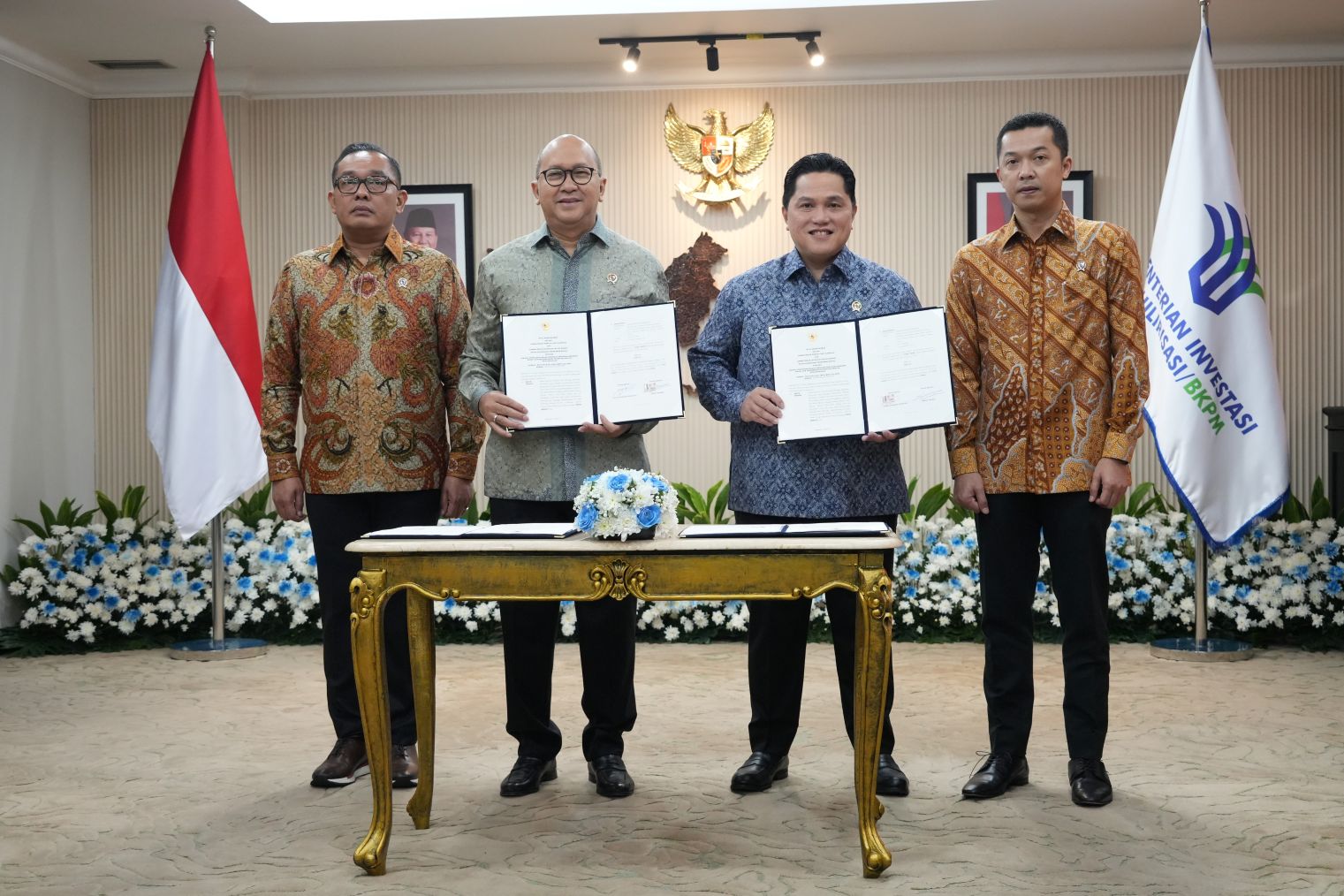
The Ministry of Investment and Downstreaming/Investment Coordinating Board (BKPM) is strengthening its synergy with the Ministry of Youth and Sports to encourage investment development within the sports sector.
This commitment was marked by the signing of a Memorandum of Understanding regarding the Synergy of Risk-Based Business Licensing Implementation and Investment Development in the Sports Sector.
The Minister of Investment and Downstreaming/Head of BKPM, Rosan Perkasa Roeslani, stated that investment development in the sports sector needs to provide a broader impact, not only in terms of increased investment value but also in social and economic benefits for the community.
According to Rosan, strengthening the investment ecosystem in the sports sector must be supported by regulatory certainty and inter-agency collaboration. Through this synergy, the government can create more effective licensing services while simultaneously opening wider investment opportunities across various sporting fields.
“With the existence of Government Regulation (PP) No. 28 of 2025, we are granted the authority that if permits from other ministries have not been issued within the agreed Service Level Agreement (SLA), the OSS system will automatically issue the permit. This provides certainty from a licensing perspective,” he said.
Meanwhile, the Minister of Youth and Sports, Erick Thohir, highlighted the immense potential of the sports industry and sport tourism as continuously growing sectors.
“The sports industry is worth approximately USD 521 billion or IDR 8,000 trillion, with an annual growth rate of 8 per cent, which is higher than the economic growth of many countries. This does not yet include sport tourism, which is valued at almost USD 600 billion and is also seeing significant growth,” said Erick.
Through this Memorandum of Understanding, both ministries have agreed on several areas of cooperation, including policy synergy in the implementation of risk-based business licensing in the sports sector.
This includes the potential for improved services, facilitation of supervision and monitoring of business actor compliance through the Online Single Submission (OSS) system, enhancement of human resource competence, and the interoperability of business licensing data and information.
Furthermore, the cooperation is directed towards developing investment opportunities and promoting capital investment in the field of sports. This is expected to strengthen the national sports industry ecosystem and provide service certainty for business actors.